Best Suet Feeders for Woodpeckers: Key Features
Best Suet Feeders for Woodpeckers: A Practical Guide to Attracting More Drumming Visitors
There's something almost prehistoric about a woodpecker working a suet feeder. The mechanical precision of that head, the grip of those zygodactyl toes, the absolute indifference to gravity — these birds operate by a completely different set of physical rules than the cardinals and chickadees that dominate most backyard setups. And if you've been trying to attract them without much luck, the problem almost certainly isn't the suet. It's the feeder.
Woodpeckers are not casual visitors. They're specialists, and they require equipment that matches how they actually move and feed. A standard tube feeder or platform setup that works beautifully for a dozen other species will leave woodpeckers awkward, frustrated, and gone within minutes. Getting the right suet feeder isn't just about aesthetics or brand loyalty — it's about understanding the biomechanics of a bird that evolved to cling vertically to bark while hammering through wood with its face.
This guide covers the best suet feeders for woodpeckers specifically, what features actually matter (and which ones are marketing noise), how to fill and maintain them properly, and what to expect once the right setup is in place.
Key Takeaways
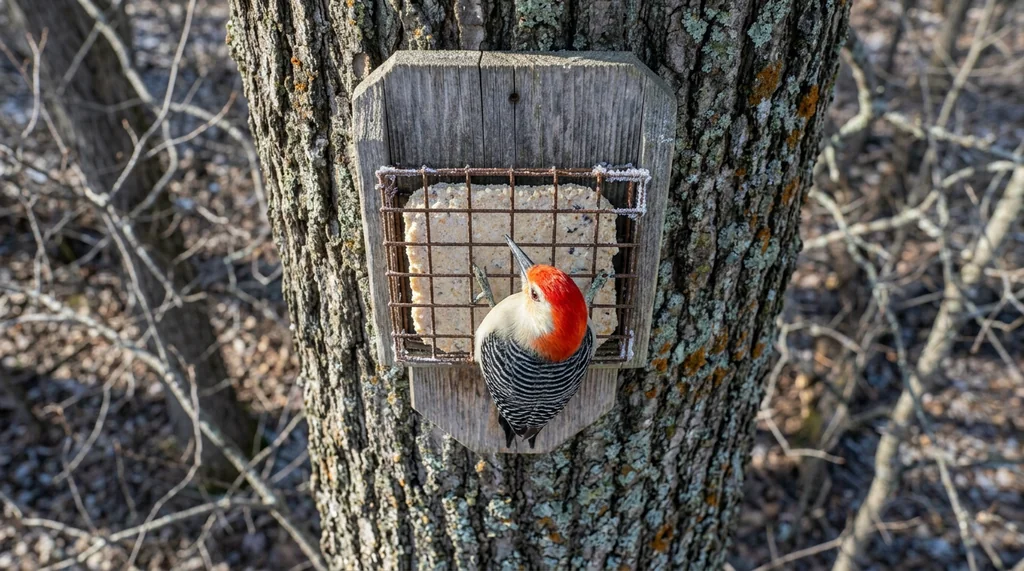
- A tail-prop extension of 4–6 inches below the suet cage is the single feature that most improves woodpecker visits, especially for larger species like Red-bellied and Pileated. Keep squirrels off with a squirrel-proof suet feeder setup.
- Upside-down suet feeders passively exclude starlings while accommodating woodpecker anatomy, reducing competition from a population exceeding 200 million birds.
- Mount suet feeders directly against a tree trunk or wooden post rather than hanging freely — trunk-mounted feeders consistently attract more woodpecker visits.
- Replace standard suet with peanut butter or insect-enriched suet cakes; above 70°F, switch to no-melt formulations stable up to 90°F to prevent spoilage.
- Clean suet feeders every 2–3 weeks in cool weather and weekly in summer using a 1:9 bleach-to-water solution to prevent rancid fat from repelling birds.
Why Woodpeckers Need Different Suet Feeders
Most suet feeders on the market are designed to be adequate for a wide range of birds rather than excellent for any particular one. The basic wire cage — a $5 to $10 rectangle of welded wire that holds a standard suet cake — works. But it works the way a folding chair works at a dinner party: technically functional, not optimized.
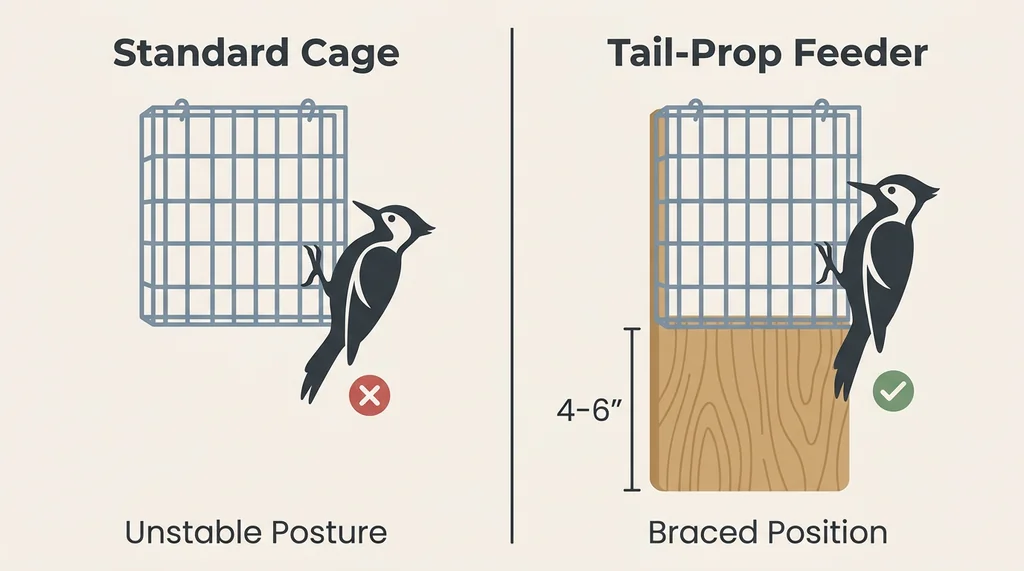
Woodpeckers feed in a vertical orientation. In the wild, they cling to tree bark, brace with their stiff tail feathers, and use their tail as a third leg. This isn't incidental — it's structural. The tail acts as a prop that allows the bird to transfer the force of its pecking without falling backward. A feeder that doesn't accommodate this tail prop position puts woodpeckers in a biomechanically compromised posture, which means shorter visits, less food consumed, and lower likelihood of return.
The other issue is cage depth. Standard suet cages hold a single 3.5-inch by 3.5-inch cake, which gives birds almost no clearance between the suet surface and the wire. Larger woodpecker species — Pileated, Northern Flicker, Red-bellied — have longer bills and need more working room. A cage that's fine for a Downy Woodpecker becomes cramped for anything bigger.
Finally, woodpeckers are shy relative to their size. They'll abandon a feeder that feels exposed, and they strongly prefer feeders mounted against or near a vertical surface — a tree trunk, a wooden post, a fence — rather than hanging freely in open space.
The Tail-Prop Design: The Single Most Important Feature
If there's one feature that separates a woodpecker-optimized suet feeder from a generic one, it's the tail-prop extension. This is a simple piece of wood or metal that extends below the feeder, giving the bird a surface to brace its tail against while feeding.
Without it, Downies and Hairies manage, because they're small enough to work the standard cage awkwardly. Red-bellied Woodpeckers will visit but leave quickly. Pileated Woodpeckers — which can reach 19 inches in length — almost never stay at a feeder without proper tail support.
The tail-prop doesn't need to be elaborate. A wooden board extending four to six inches below the suet cage is sufficient. Several commercial feeders incorporate this as a standard feature; others sell it as an add-on. If you're buying a basic wire cage, a piece of scrap cedar screwed to the bottom accomplishes the same thing for essentially nothing.
The Best Suet Feeder Designs for Woodpeckers
Upside-Down Suet Feeders
This design is counterintuitive until you understand the logic. Upside-down suet feeders present the suet cake on the underside of the feeder, requiring birds to cling below it and feed upward. Woodpeckers, with their specialized grip and tail-prop technique, do this naturally and comfortably. Starlings, which are the primary suet thief at most feeders, cannot feed in this inverted position — they're not built for sustained upside-down clinging.
The result is a feeder that specifically rewards woodpecker anatomy while passively excluding the most aggressive suet competitor in North American backyards. Given that starling populations exceed 200 million birds across the continent, this is not a trivial concern.
The Stokes Select Upside Down Suet Feeder is one of the more reliable options in this category, typically priced around $15 to $20. The WBU (Wild Birds Unlimited) Upside Down Suet Feeder runs slightly higher at $20 to $28 but uses better-quality hardware and holds up better to weather cycling. Both accommodate standard suet cakes and mount easily to trees or posts.
One honest note: Downy Woodpeckers adapt to upside-down feeders within a day or two. Larger species like Red-bellied Woodpeckers sometimes take a week of observation before committing. Don't pull the feeder if it sits unused for the first few days — this is normal acclimation behavior, not rejection.
Log and Cylinder Feeders
Drilled log feeders are the most naturalistic option available, and for woodpeckers specifically, they're remarkably effective. A section of untreated hardwood log — typically four to six inches in diameter, twelve to eighteen inches long — drilled with one-inch holes and filled with suet or peanut butter-based suet blends, mimics the exact foraging substrate woodpeckers evolved to use.
The Duncraft Suet Log Feeder and similar products run $18 to $30. You can also make one yourself from a section of birch or oak for essentially the cost of a drill bit. The key is hole diameter — one inch allows Downy and Hairy Woodpeckers easy access while still working for larger species. Holes drilled at varying heights give multiple birds simultaneous access without territorial conflict.
Cylinder feeders made from recycled plastic lumber are a variation on this concept. The Heath Outdoor Products Suet Log Feeder ($22 to $35) uses a plastic cylinder with pre-drilled ports and includes a hook for hanging. These are more durable than actual wood in wet climates, though they lack the visual appeal of a natural log.
Wire Cage Feeders With Tail Props
For straightforward reliability and low cost, a well-designed wire cage with an integrated tail-prop extension remains the workhouse option for most backyard woodpecker setups. The key specifications to look for:
Cage dimensions: At least 5 inches by 5 inches to accommodate standard suet cakes with room to spare. Larger is better for bigger species.
Wire gauge: Heavier wire (14-gauge or thicker) resists bending from larger birds and lasts significantly longer. Cheap thin-wire cages deform within a season.
Tail-prop length: Four to six inches minimum below the suet cake surface.
Mounting hardware: A sturdy hook or chain that keeps the feeder from spinning in wind. Woodpeckers abandon feeders that move unpredictably.
The Woodlink Hanging Wire Suet Basket with Tail Prop (around $12 to $18) is a solid entry-level option. The Heath Outdoor Products Cedar Suet Feeder ($20 to $28) adds a cedar roof for weather protection — a meaningful feature, since suet melts and spoils faster when exposed to direct sun and rain.
For a more substantial investment, the Aspects Suet Cage Feeder ($28 to $40) uses powder-coated steel that resists rust and comes with a built-in tail-prop board. Customer reviews consistently note it outlasting cheaper alternatives by several years.
Large-Capacity Suet Feeders
If you're hosting multiple woodpecker species or trying to reduce refill frequency during peak winter feeding, large-capacity suet feeders that hold two to four cakes simultaneously are worth considering.
The Woodlink Audubon Double Suet Cage ($15 to $22) holds two standard cakes side by side, effectively doubling capacity without doubling footprint. The Perky-Pet Squirrel-Be-Gone Country Style Wild Bird Feeder includes suet cage capacity alongside seed ports, though it's a compromise design rather than a dedicated woodpecker feeder.
For serious woodpecker setups, the Birds Choice Recycled Suet Feeder ($35 to $50) holds four cakes, mounts directly to a tree trunk, and includes a substantial tail-prop board. This is the option that consistently outperforms when Pileated Woodpeckers are in the area — they need the space, and they need the mounting stability that a trunk-mounted feeder provides. For Pileated-specific setup details, see our dedicated Pileated woodpecker suet feeder guide.
Suet Selection: What to Fill Your Feeder With
The feeder is the hardware. The suet is the software, and it matters just as much.
Plain beef suet — the raw fat rendered from around kidneys — is the original and still works. But commercial suet cakes have largely replaced raw suet in most backyard setups because they're easier to handle, less prone to spoilage, and formulated with added attractants.
For woodpeckers specifically, look for suet cakes with these ingredients:
Peanuts and peanut butter: Woodpeckers are strongly attracted to peanut-based suet. The fat content is high, the protein is high, and the smell carries well. C&S Products Peanut Butter Suet Cake ($1.50 to $2.50 each) is a reliable option that most woodpecker species respond to quickly.
Insects and mealworms: Suet cakes containing dried mealworms or insect matter appeal to the woodpecker's natural diet. Woodpeckers are not primarily seed eaters — they're after grubs, beetles, and ants. Insect-enriched suet bridges the gap between what you're offering and what they're actually looking for.
Corn and sunflower chips: These add caloric density without the spoilage issues of raw grain. Most commercial woodpecker-blend suet cakes include these.
What to avoid: Suet cakes with excessive filler grain — milo, cracked corn as a primary ingredient — deliver lower energy per ounce and are less attractive to woodpeckers. The same principle that applies to seed quality applies here: cheap filler means inefficient feeding.
One seasonal note: standard beef suet goes rancid faster in warm weather. Above 70°F, unrendered suet can spoil within days. "No-melt" suet formulations — which use a higher ratio of rendered fat and binding agents — hold up better from late spring through early fall. C&S Products and Pine Tree Farms both offer no-melt varieties that remain stable up to about 90°F.
Feeder Placement for Woodpeckers
Location matters as much as feeder design. Woodpeckers are woodland birds. They're comfortable near trees and deeply uncomfortable in open, exposed spaces.
Mount suet feeders on or directly adjacent to tree trunks whenever possible. A feeder hanging from a branch six feet out from the trunk will get fewer woodpecker visits than the same feeder mounted against the bark. The trunk provides the visual context and physical stability these birds associate with safe feeding.
If a tree isn't available, a sturdy wooden post works — but the feeder should be mounted to the post itself, not hanging from a hook at the top. The difference in woodpecker visitation between a mounted feeder and a hanging feeder on the same post is consistently noticeable.
Height matters less than orientation and location, but five to seven feet off the ground is a reasonable target. Low enough to observe easily, high enough to reduce ground predator pressure.
Keep suet feeders at least ten feet from seed feeders to reduce competition and crowding. Woodpeckers are not aggressive birds, but they're easily displaced by starlings and grackles at close quarters.
Maintenance Specifics for Suet Feeders
Suet feeders require less frequent cleaning than seed feeders, but they're not maintenance-free. Rancid suet is a genuine health hazard for birds, and a feeder caked with old fat residue will repel rather than attract.
Clean suet feeders with hot water and a stiff brush every two to three weeks during cool weather, weekly during summer. The 1-part bleach to 9-parts water cleaning solution that works for seed feeders works here too — rinse thoroughly and allow to dry completely before refilling.
Replace suet cakes before they're fully consumed if they show signs of mold, discoloration, or unusual smell. A half-eaten cake that's been rained on for three days is not doing anyone any favors.
During winter, check that suet hasn't frozen solid — frozen suet is inaccessible to birds. In severe cold snaps, bringing feeders inside overnight and returning them in the morning keeps suet workable without compromising the feeding routine.
What to Expect Once the Right Feeder Is Up
Woodpeckers are cautious about new food sources, but less so than many smaller songbirds. A well-placed suet feeder with peanut-based suet in good woodpecker habitat will typically see its first visitor within three to five days. In areas with established woodpecker populations, sometimes within hours.
Downy Woodpeckers arrive first, almost always. They're the smallest, most adaptable, and most willing to investigate new setups. Hairy Woodpeckers follow, usually within the first week. Red-bellied Woodpeckers take longer — up to two weeks in some cases — but once they commit to a feeder location, they become reliable daily visitors.
Pileated Woodpeckers, if they're in your area, require patience. These birds are wary, need substantial forested habitat nearby, and may observe a feeder for weeks before approaching. The trunk-mounted, large-capacity setup described above is your best chance — and when a Pileated finally arrives, it's one of the more memorable moments backyard feeding has to offer.
The right feeder, filled with the right suet, mounted in the right location, will do more for your woodpecker visitation rate than any amount of waiting and hoping. These birds know what they need. Your job is simply to provide it in a form they recognize.