Squirrel Proof Suet Feeders: 3 Designs That Work
The Best Squirrel Proof Suet Feeders (And Why Most Fail)
Suet is supposed to be the easy part of bird feeding. You hang a wire cage, slide in a cake, and watch woodpeckers arrive. No complicated seed mixes, no worrying about moisture, no adjusting ports for different bill shapes. Just a simple block of rendered fat and seeds that small birds absolutely love.
Then a squirrel finds it.
Unlike tube feeders, where squirrels at least have to work around port sizes and seed types, a basic suet cage offers essentially zero resistance. Squirrels can rip through cheap wire, yank the entire cage free, and carry a suet cake twenty feet up a tree in under thirty seconds. After spending $47 monthly on black oil sunflower seeds and learning the hard way that placement and feeder design matter enormously, the suet situation deserves the same serious attention as every other part of a bird-feeding setup.
The good news: squirrel proof suet feeders actually work, provided you understand what each design can and cannot do. Here's what three years of testing and a fair amount of wasted money has clarified about keeping suet where it belongs.
Key Takeaways
- Weight-activated feeders like the Squirrel Buster Suet achieve 95–99% squirrel exclusion but require 18 inches of clearance from any foothold to trigger correctly.
- Cage-style feeders with 1.5-inch openings deter squirrels 85–90% of the time; inspect inner/outer cage spacing to avoid trapping small birds.
- Upside-down feeders cost $22–$28 and use squirrel anatomy as a deterrent, naturally selecting for woodpeckers, nuthatches, and brown creepers.
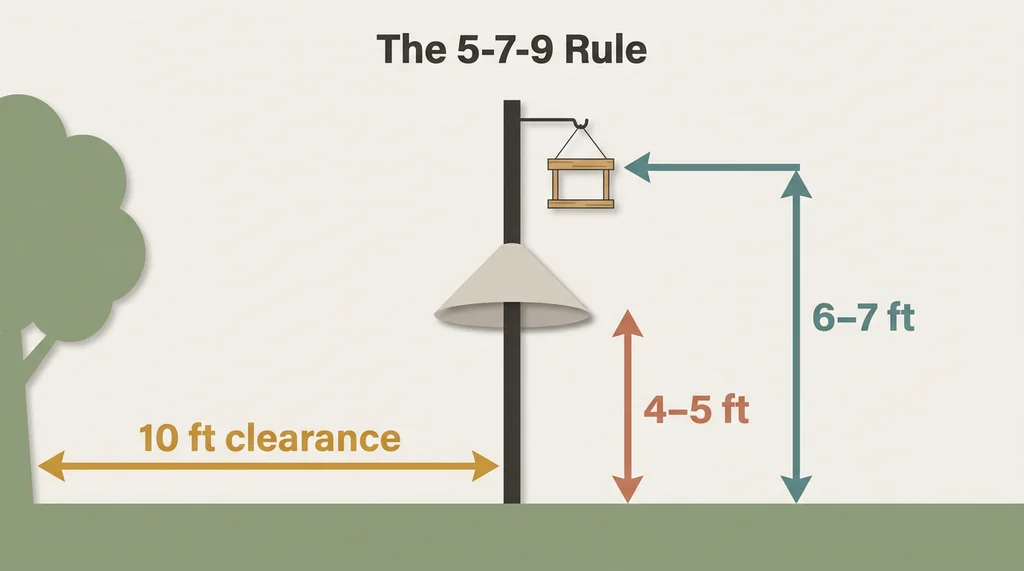
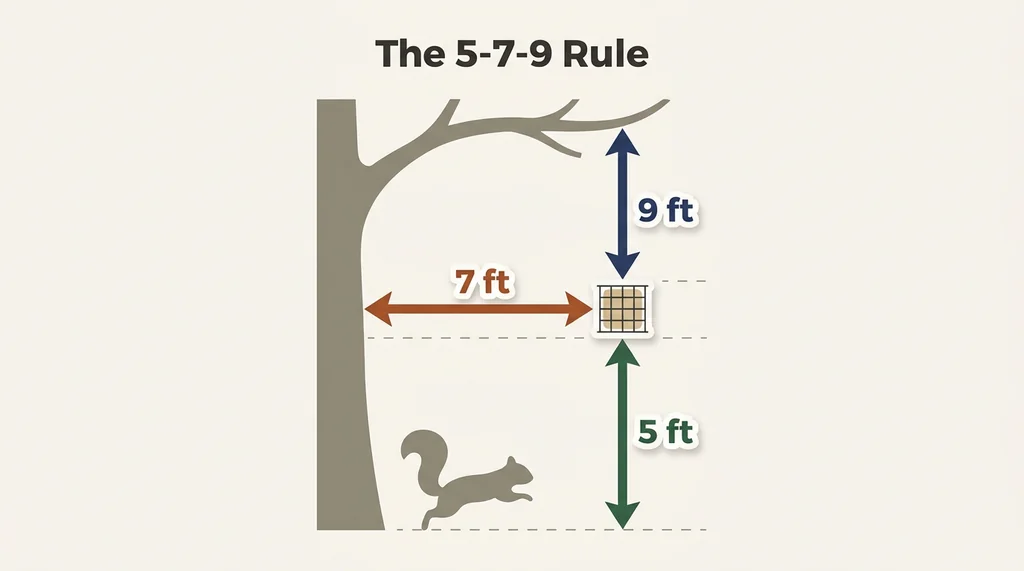
- The 5-7-9 rule requires feeders placed 5 feet high, 7 feet from horizontal surfaces, and 9 feet below any overhead drop point. See our squirrel-proof pole setup guide for full placement details.
- A distraction station with corn and peanuts placed 30 feet away reduces squirrel pressure on bird feeders for $5–$8 per month.
Why Standard Suet Cages Fail Against Squirrels
A basic suet cage costs between $4 and $8. The wire openings are large enough for squirrels to reach through and grip the suet directly, and the simple hook closure takes about four seconds to defeat. Even cages with latch closures often fail because squirrels are patient enough to work the mechanism repeatedly until something gives.
Beyond direct access, squirrels are remarkably strong for their size. A typical backyard squirrel weighs eight to sixteen ounces, but that weight is almost entirely muscle. They can hang from a cage, swing it until the hook disengages, and drop the whole unit to the ground where eating becomes considerably easier. They've also been observed spinning tube feeders to unscrew lids — patience and dexterity are not in short supply.
The physics problem compounds with placement. Squirrels can leap horizontally up to ten feet, jump vertically nearly five feet from a standing position, and drop nine feet from above without injury. A suet cage hung from a branch that seems "high enough" is often within easy reach from multiple angles. This is why feeder design alone rarely solves the problem — placement has to work alongside the feeder's physical deterrents.
The Three Designs That Actually Work
Weight-Activated Feeders
Weight-activated suet feeders use a spring-loaded shroud that closes access to the suet when something heavier than a small songbird lands on the feeding area. The Squirrel Buster Suet by Brome is the industry standard for this category, operating on the same principle as the Squirrel Buster Plus (priced at $79 to $95) but designed specifically for suet cakes.
The mechanism closes ports when weight exceeds approximately one to 1.5 pounds, which comfortably excludes squirrels while accommodating woodpeckers, nuthatches, and chickadees. Brome builds adjustability into the design, so users can fine-tune the sensitivity threshold to exclude specific heavier birds like starlings if that's a problem at a particular feeding station.
The critical installation detail: weight-activated mechanisms only work when the animal actually places its weight on the feeder. If a squirrel can reach the suet from a nearby branch or fence without fully committing its weight to the unit, the mechanism won't trigger. Brome recommends 18 inches of clearance from any potential foothold for the Squirrel Buster line specifically. This isn't a design flaw — it's a physics requirement that placement has to address.
Brome's "Lifetime Care" support and direct phone assistance for replacement parts set this category apart from cheaper alternatives. Customer testimonials consistently report lifespans exceeding ten years for the Squirrel Buster Plus, and the suet version is built to the same standard.
Cost range: $45 to $117 depending on model and features
Squirrel exclusion rate: 95 to 99 percent when properly installed
Maintenance: Higher than other designs due to moving parts and springs
Cage-Style Suet Feeders
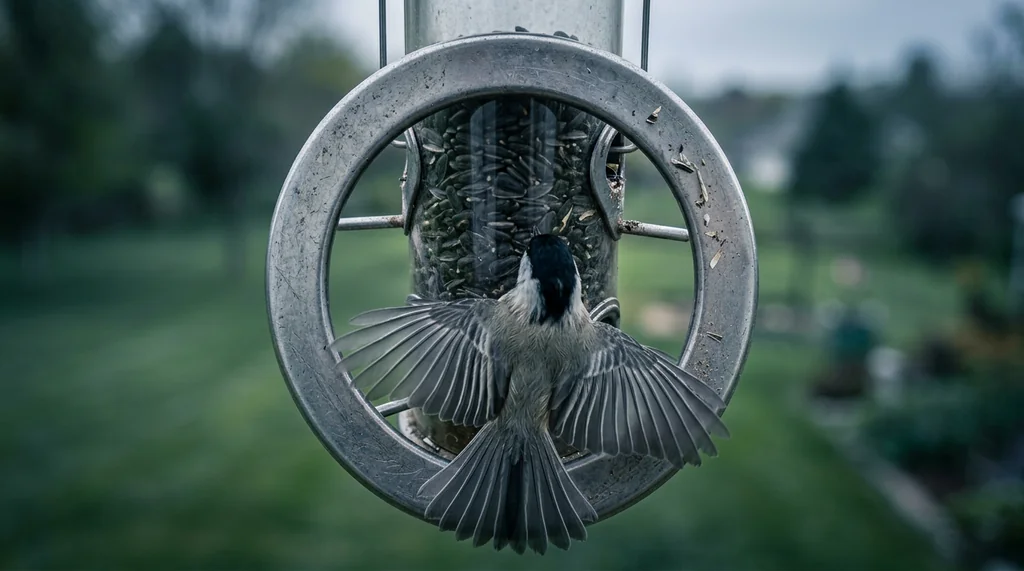
Cage-style feeders place a metal grid around the suet cage with openings typically between 1.25 and 1.5 inches. Small birds pass through freely; squirrels cannot. The Squirrel-X and MEKKAPRO are popular examples in this category.
The appeal is straightforward: no moving parts, no batteries, no calibration. A well-built metal cage is either intact or it isn't, and quality versions resist chewing and bending for years. The 1.5-inch square opening is the critical measurement — large enough for woodpeckers, nuthatches, and chickadees, too small for squirrels and most starlings.
The deterrence rate lands at 85 to 90 percent, which is meaningfully lower than weight-activated options. The gap exists because determined squirrels sometimes find ways to spin the entire unit, work at wire connections over time, or find that the outer cage's attachment point is weaker than the cage itself. The "100 percent squirrel-proof" claims some manufacturers make for metal cage designs don't fully account for squirrel creativity.
There's also a legitimate safety consideration worth knowing: some cage-style designs create a gap between the inner suet holder and outer protective cage that can trap small birds. This has been reported specifically with certain models where the inner and outer wire spacing allows a bird to enter but creates difficulty exiting. When evaluating cage-style feeders, look for designs where the outer cage sits flush or very close to the inner holder, eliminating any gap large enough for a bird to enter sideways.
The manufacturer support issue is a real practical concern. Multiple users of the Squirrel-X have reported that replacement parts — particularly small components like the hanging hardware — are not available directly from the manufacturer. When a $3 part breaks on a $25 feeder, the answer apparently is buying a new feeder. This is worth knowing before committing to a cage-style design.
Cost range: $15 to $40
Squirrel deterrence rate: 85 to 90 percent
Maintenance: Low — no moving parts, simple monthly cleaning
Upside-Down Suet Feeders
Upside-down feeders are the most elegant solution in the category, because they use squirrel anatomy against them rather than trying to physically block or mechanically exclude them.
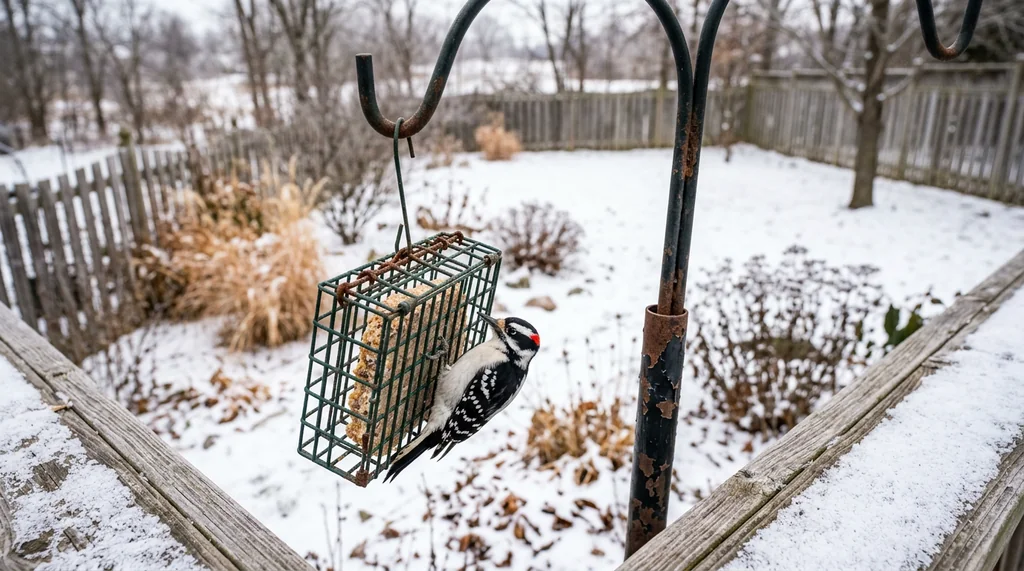
Woodpeckers, nuthatches, and brown creepers are built to cling to vertical and inverted surfaces — it's how they forage naturally. Their feet grip differently than most birds, and hanging upside down is genuinely comfortable for them. Squirrels, by contrast, struggle significantly to maintain an inverted position while also trying to eat. They can briefly hang upside down, but sustaining that position long enough to consume meaningful amounts of suet is difficult and uncomfortable.
The deterrence isn't absolute. A particularly motivated squirrel, especially one that's been well-fed on corn and peanuts from a distraction station thirty feet away and is now just curious, may persist through the discomfort. But most squirrels find the effort-to-reward ratio unfavorable and move on.
Upside-down feeders also provide a secondary benefit: they naturally exclude many bully birds. Starlings, grackles, and European starlings are not comfortable feeding upside down either, so the design selects for exactly the birds most people want at suet — woodpeckers, nuthatches, and the occasional chickadee.
The typical price range of $22 to $28 makes this the most cost-effective option for situations where squirrel pressure is moderate rather than relentless.
Cost range: $22 to $28
Primary defense: Behavioral deterrent rather than physical barrier
Best for: Yards with moderate squirrel pressure; maximizing woodpecker access
Placement: The 5-7-9 Rule Applied to Suet
No feeder design fully compensates for poor placement. The 5-7-9 rule applies to suet feeders exactly as it does to seed feeders: position feeders five feet high, seven feet from any horizontal jumping surface, and nine feet below any overhead point a squirrel could drop from.
The nine-foot overhead clearance is particularly relevant for suet feeders, which are often hung from branches precisely because branches make convenient hanging points. A suet feeder hanging two feet below a branch is reachable by a squirrel dropping from above — and the nine-foot drop tolerance means squirrels can launch from surprisingly high overhead positions without hesitation.
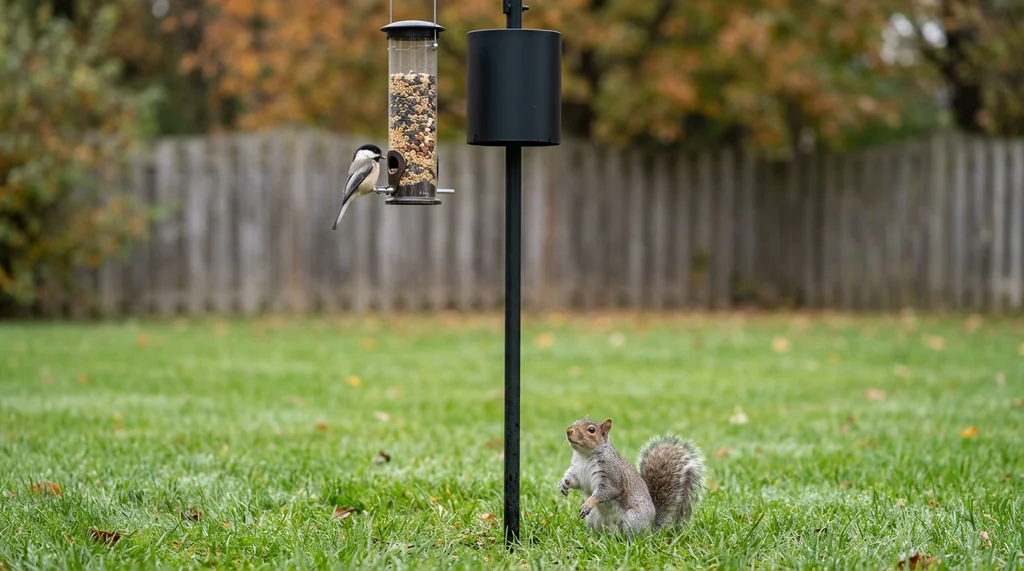
For weight-activated feeders specifically, the 18-inch clearance requirement from any potential foothold means placement on a dedicated pole is often more effective than hanging from a branch. A smooth metal pole with a baffle placed at least four feet above ground level removes the foothold problem entirely, leaving the weight-activated mechanism to handle any squirrel that somehow reaches the feeder from below.
Baffles as a Secondary Defense Layer
Even the best squirrel proof suet feeders benefit from a baffle. A dome or cylinder baffle installed on the mounting pole at the five-foot mark creates a physical barrier that stops squirrels before they reach the feeder at all, reducing wear on the feeder's own deterrent mechanisms and improving overall effectiveness.
The baffle height requirement is specific: minimum four feet above ground, with five feet preferred. Below four feet, squirrels can jump over the baffle from a standing position. The feeder itself needs eight to ten feet of clearance from any nearby jumping surface — not just the pole, but fences, garden furniture, and tree trunks within the squirrel's horizontal leap range of ten feet.
Quality baffle systems achieve 95 to 99 percent squirrel exclusion when properly installed. Combined with a weight-activated or cage-style feeder, the layered approach is significantly more reliable than either defense alone.
Cleaning and Maintenance Requirements
Suet feeders have specific maintenance needs that seed feeders don't. Suet is rendered fat, which means it can go rancid in warm weather and create bacterial growth on feeder surfaces faster than dry seed does. The minimum cleaning frequency is monthly using a 9:1 water-to-bleach solution, followed by thorough rinsing and complete drying before refilling.
During summer months or extended warm spells, bi-weekly cleaning is more appropriate. Rancid suet not only fails to attract birds but can actively harm them — particularly nestlings being fed by parents who forage at feeders.
One important maintenance warning: avoid dishwashers for any suet feeder component. High heat permanently damages the plastic components in weight-activated feeders and can warp cage wire in ways that compromise the 1.5-inch opening size critical to excluding squirrels. Hand washing only.
For weight-activated feeders, the spring mechanism benefits from an annual inspection. Check that the shroud moves freely and returns to the open position without sticking. Debris accumulation around the pivot points is the most common cause of mechanism failure in otherwise well-maintained feeders.
Which Design Fits Which Situation
Highest squirrel pressure, maximum budget: Weight-activated feeder (Squirrel Buster Suet) combined with a pole system and baffle. The 95 to 99 percent exclusion rate holds up against persistent squirrels in ways that cage designs don't. The Brome lifetime support policy means replacement parts are available when needed — which matters for a feeder you're planning to use for ten-plus years.
Moderate squirrel pressure, limited budget: Upside-down feeder at $22 to $28 combined with a DIY stovepipe baffle. This combination costs under $40 total and handles most squirrel situations adequately. The behavioral deterrent of the inverted design works well enough in most yards that the lack of mechanical backup isn't a significant problem.
Primary goal of attracting woodpeckers: Upside-down feeder regardless of squirrel pressure. The design preference for clinging birds means you're selecting for woodpeckers, nuthatches, and brown creepers specifically, which is often the goal with suet feeding in the first place.
Cage-style feeder considerations: The 85 to 90 percent deterrence rate is acceptable if you're also using a baffle and have verified the specific model doesn't have the bird-entrapment gap issue. Check that replacement parts are available before purchasing, and inspect the inner/outer cage spacing carefully. For $15 to $25, a quality cage-style feeder on a properly baffled pole performs reasonably well against all but the most determined squirrels.
The Distraction Station Strategy
Any squirrel-proofing approach works better when combined with a dedicated squirrel feeding station positioned at least thirty feet from primary bird feeders. Stocked with corn and peanuts at approximately $5 to $8 per month, a distraction station redirects squirrel attention and reduces pressure on bird feeders significantly.
This isn't surrender. It's resource management. A squirrel that has reliable access to preferred food thirty feet away has less motivation to spend energy defeating a feeder mechanism or working at cage wire. After enough failed attempts against a properly installed weight-activated feeder, most squirrels recalibrate their foraging routes toward easier calories.
The combination of a quality squirrel proof suet feeder, proper placement following the 5-7-9 rule, a baffle at the five-foot mark, and a distraction station thirty feet away represents the most consistently effective approach across different yard configurations and squirrel populations. No single element works as well in isolation as all four do together.
Suet feeding is genuinely one of the most rewarding parts of backyard birding — the woodpeckers it attracts are spectacular, and the activity level at a well-placed suet feeder during winter months is hard to match. Getting the squirrel-proofing right means that activity actually stays where it belongs.
Cross-References