Bird Buddy Hummingbird Feeder: Setup Guide
Bird Buddy Hummingbird Feeder: Complete Setup Guide
The Bird Buddy Smart Hummingbird Feeder sits at an interesting intersection of technology and backyard biology. It promises to do something genuinely useful: capture high-definition portraits of some of the fastest, most difficult-to-photograph birds in North America, then tell you exactly who visited and when. For anyone who has spent three years watching hummingbirds blur past a window at 50 wing beats per second, the appeal is obvious.
This guide covers everything you need to know to get the Bird Buddy Hummingbird Feeder set up correctly from day one — hardware assembly, nectar preparation, placement strategy, app configuration, and the maintenance schedule that keeps the system running. The goal is to help you avoid the setup mistakes that send people back to Amazon for refunds.
Key Takeaways
- Mix nectar at a 1:4 ratio of white sugar to water and change it every 2 days when temperatures exceed 90°F.
- Connect the Bird Buddy exclusively to a 2.4GHz WiFi network with at least 2 Mbps upload speed at the feeder's location.
- Seat the silicone rim on the camera module before installation to prevent water damage to the electronics.
- Hang the feeder 4 to 5 feet high, 10 to 15 feet from cover, and either within 3 feet or more than 15 feet from windows.
- Clean the feeder every two weeks with a 1:9 bleach-to-water solution and rinse at least three times before refilling.
What Comes in the Box: Hardware Overview
Before anything else, inventory the kit. The Bird Buddy Hummingbird Feeder package includes the feeder housing (base and stem), the universal camera module, three open flower ports, two closed flower ports, a cleaning brush, and a metal hanging wire. If you ordered the solar roof separately or as part of a bundle, that arrives as an additional component.
The camera module is the same unit used in the original Bird Buddy seed feeder. This is worth noting because it means existing Bird Buddy users can swap the camera between housings — the module isn't locked to one feeder type. If you already own a standard Bird Buddy, you can move the camera to the hummingbird housing and update your feeder type in the app settings without purchasing a second camera.
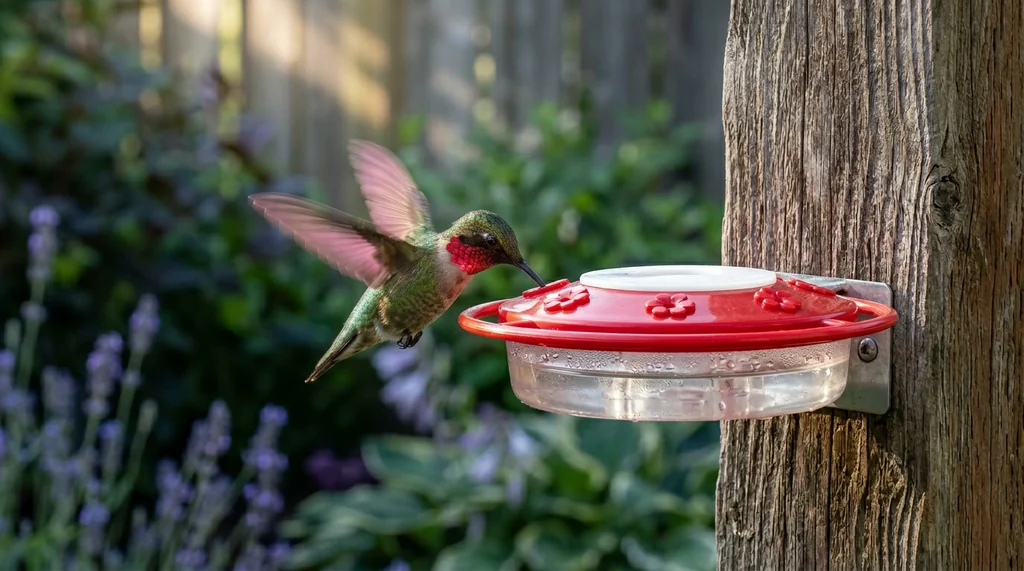
The feeder body itself is BPA-free ABS plastic with a frosted finish and a distinctly red circular base. The red coloring matters. Hummingbirds have excellent color vision and are strongly attracted to red, which is why every legitimate hummingbird feeder recommendation starts with color. The Bird Buddy's red base handles this without requiring red-dyed nectar — which is exactly the right approach, given that Red Dye No. 40 has been linked to kidney damage in hummingbirds. The Smithsonian's National Zoo explicitly states: do not add red dye to hummingbird nectar. The feeder's design makes that temptation unnecessary.
The nectar basin holds 14 fluid ounces — roughly 1.75 cups. Some sources list 12 ounces for this feeder, which may reflect a version difference between the standard and Pro configurations. If capacity is a critical factor for your setup, verify the specific model before purchasing.
The 5-megapixel camera captures 720p photo and video postcards by default, with a 2K video upgrade available through the app subscription. Wide Dynamic Range (WDR) helps the sensor handle the high-contrast lighting conditions typical of outdoor feeders — bright sky behind a small, fast-moving bird is a notoriously difficult photographic scenario.
Assembly: Getting the Hardware Right
Assembly is straightforward, but two steps are easy to rush and worth slowing down for.
Step one: the stem-to-base connection. The stem connects to the base via a quarter-turn locking mechanism. The base has embossed symbols indicating the correct alignment position. Line up the symbols, insert the stem, and rotate until it locks. If you skip checking the alignment marks and force the connection, the lock won't seat properly and the feeder will feel wobbly. Take an extra fifteen seconds here.
Step two: the silicone rim on the camera module. The protective silicone rim must be fitted to the camera module before installation. This rim creates a moisture seal that prevents water ingress around the camera housing. Outdoor electronics and water don't coexist well, and this small piece of rubber is doing real protective work. Don't skip it, and don't assume it's decorative.
If you have the solar roof: Align it so the cable faces the front of the feeder before locking it into position. The cable tucks under the exterior to stay protected from rain. Getting the cable orientation wrong means either an awkward visible cable run or having to disassemble and start over.
Flower port configuration: The kit includes three open ports and two closed ports. Standard setup uses all three open ports. However, the Bird Buddy's camera is trying to capture clear, well-framed images of individual birds — and three simultaneously active ports can mean three hummingbirds blocking each other from the camera's perspective. Swapping in one or two closed ports reduces simultaneous access and pushes birds toward the camera-facing position, meaningfully improving image quality. This isn't required, but it's worth experimenting with once the feeder is established and attracting regular visitors.
Smart Hummingbird Feeder App Setup
New users need to create a Bird Buddy account and pair the camera module via the Bird Buddy app before the smart features work. The app is available for iOS and Android. Pairing uses Bluetooth for the initial handshake, then hands off to WiFi for ongoing operation.
Two technical requirements trip people up consistently:
WiFi band: The Bird Buddy operates exclusively on 2.4GHz WiFi networks. It does not connect to 5GHz bands. If your router broadcasts both bands under the same network name, you may need to separate them in your router settings (accessible at 192.168.1.1 or 192.168.0.1 in most browsers) to ensure your phone connects to 2.4GHz during pairing. Trying to pair while your phone is on the 5GHz band is a reliable way to spend an hour troubleshooting a problem that has a simple fix.
Upload speed: The system requires a minimum of 2 Mbps upload speed at the feeder's physical location — not just at your router. Exterior walls reduce signal strength. Brick siding alone can strip nearly 40% of WiFi signal. If your feeder will hang at the far end of a garden, run a speed test on your phone at that location before finalizing placement. A WiFi extender ($30 to $60) solves most coverage problems.
For existing Bird Buddy users moving the camera from a seed feeder housing: go to your feeder settings in the app and update the feeder type to "Hummingbird Feeder." The app adjusts its AI model and display accordingly. You don't need to re-pair the camera from scratch.
The Bird Buddy feeder can be shared with up to ten people via the app — useful for households where multiple family members want notifications, or for anyone who wants to share the feed with a remote grandparent or bird-obsessed friend.
Nectar Preparation: The Only Recipe You Need
The correct nectar ratio is one part white granulated sugar to four parts water. That's it. This 1:4 ratio produces approximately 20% sucrose concentration, which mirrors the natural flower nectar that hummingbirds evolved alongside. Flowers in the hummingbird's native range produce nectar in the 20 to 25 percent sugar range — the standard recipe lands squarely in that window.
Dissolve the sugar in hot water (boiling removes chlorine from tap water and kills potential mold spores), let it cool completely, and fill the feeder. A double batch — half a cup of sugar dissolved in two cups of water — fills the Bird Buddy's 14-ounce basin with a small amount left for the refrigerator. The full preparation process takes about four minutes from kettle to refrigerator.
What not to use:
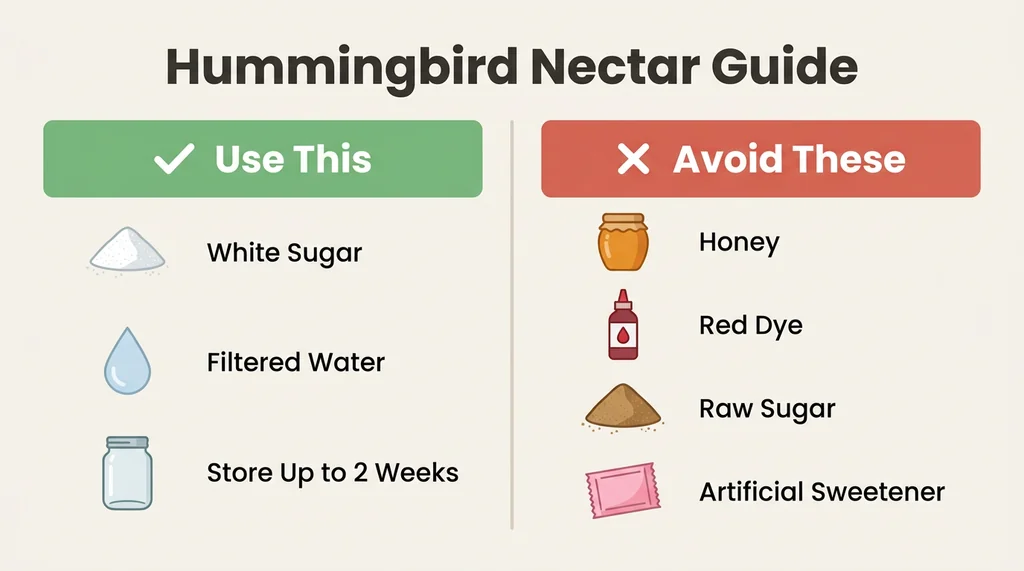
- Honey ferments rapidly and can cause a fatal fungal infection in hummingbirds
- Artificial sweeteners provide no calories and can cause hummingbirds to starve despite appearing to feed
- Raw or unprocessed sugars contain iron and other minerals that hummingbird kidneys cannot process safely
- Powdered (confectioners') sugar often contains cornstarch as an anti-caking agent
- Red food dye — the feeder's red base handles attraction; dye in the nectar is unnecessary and potentially harmful
Solutions stronger than 1:4 (such as 1:3 or 1:2) are harder for hummingbirds to digest, may contribute to liver problems with long-term use, and ferment more rapidly in warm weather.
Extra nectar stores in a clean glass jar in the refrigerator for up to two weeks. Making larger batches on a weekly schedule and storing the surplus reduces the daily preparation burden during peak season, when refilling frequency increases significantly.
Nectar change schedule by temperature:
- Below 70°F: change weekly
- 70–80°F: change twice weekly
- 80–90°F: change three times weekly
- Above 90°F: change every other day
- Near 100°F: change daily
In July and August, nectar in a hanging feeder can begin fermenting within 48 hours during heat waves. Cloudy or milky nectar means bacterial or fungal growth has already started — empty and clean the feeder immediately rather than topping it off.
Hummingbird Feeder Setup: Placement Strategy
Placement decisions affect both bird activity and camera performance. The Bird Buddy Hummingbird Feeder needs to satisfy three competing requirements: attracting hummingbirds, capturing usable images, and maintaining a stable WiFi connection.
Height: Hang the feeder at 4 to 5 feet high. This puts it in hummingbirds' natural visual range and makes refilling and cleaning manageable without a stepladder.
Cover proximity: Position the feeder 10 to 15 feet from a mature tree or dense shrub. Hummingbirds, like most birds, prefer feeding locations with nearby escape routes. A feeder hung in the middle of an open lawn with no cover within 30 feet will attract fewer birds than the same feeder positioned near garden plantings or a tree line.
Window distance: Place the feeder within 3 feet of windows or more than 15 to 20 feet away. The 3-to-10-foot zone from glass creates dangerous window strike conditions — birds build up enough velocity in that range to cause fatal collisions. Very close placement (within 3 feet) actually reduces strike risk because birds don't reach dangerous speeds from that distance.
Sun and shade: Partial shade is ideal. Morning sun helps hummingbirds find the feeder; afternoon shade slows nectar fermentation. A feeder in full afternoon sun in August will need nectar changes more frequently than one with natural afternoon shading from a tree or eave.
Solar roof considerations: If using the solar roof, the panel needs at least four hours of direct sunlight daily for consistent charging. This creates a genuine tension with the shade recommendation for nectar preservation. In practice, morning sun exposure satisfies both requirements in most orientations — the feeder catches direct sun during cooler morning hours and moves into partial shade by afternoon. Dust and pollen accumulation on the solar cells can reduce charging efficiency by roughly 20%, so wipe the panel with a soft damp cloth every two to three weeks.
Multiple feeders: If you're running the Bird Buddy alongside other hummingbird feeders, space them at least 20 feet apart. Ruby-throated Hummingbirds are aggressively territorial — a dominant male will attempt to control every feeder within his visual range. Spacing feeders far enough apart that they're not simultaneously visible from a single perch allows subordinate birds to feed without constant displacement.
Maintenance: Keeping the System Running
The Bird Buddy Hummingbird Feeder is described as dripless, and the wide basin opening combined with the included cleaning brush makes routine maintenance less tedious than narrow-necked bottle-style feeders. That said, regular cleaning is non-negotiable for bird health.
Routine cleaning: Every two weeks, clean the feeder with a dilute bleach solution of one part bleach to nine parts water. Soak for ten minutes, then rinse completely — a minimum of three full rinses with clean water. Let the feeder dry fully before refilling. The Cornell Lab of Ornithology recommends white vinegar as the standard cleaning agent for routine maintenance: a 2:1 ratio of vinegar to water for routine cleaning, or a 4:1 water-to-vinegar ratio with a one-hour soak for mold-affected feeders.
Camera module care: The camera module itself should be wiped down with a soft damp cloth. Avoid submerging it. The silicone rim does protective work, but the camera housing isn't designed for full immersion.
Solar panel maintenance: Wipe the solar panel with a soft damp cloth every two to three weeks. Spring pollen season is the highest-risk period for efficiency loss — a visibly pollen-coated panel can lose up to 20% of its charging capacity.
Battery management: Under normal conditions, the Bird Buddy battery lasts approximately one month per charge. In high-traffic yards with frequent detection events, that can drop to five or six days. Cold weather reduces lithium battery capacity by 30% to 50% during cold snaps. If you're running the feeder without the solar roof through a cold spring or fall, plan for more frequent charging than the manufacturer's baseline suggests.
Seasonal Timing for the Bird Buddy Hummingbird Feeder
The best smart hummingbird feeder setup in the world won't produce results if it goes out after the birds have already passed through. Hummingbirds have remarkable spatial memory and will remember a yard as a reliable food source if it's stocked when they first pass through on migration.
For most of the continental United States, the active hummingbird season runs May through September. Regional timing varies:
- Southern states: put feeders out late March or early April
- Mid-Atlantic and Midwest: mid-April
- New England and the northern tier: late April to early May
Keep feeders up for at least two weeks after the last hummingbird sighting in fall — typically mid-September through early October for most regions. Migration is triggered by day length, not food availability, so leaving feeders up won't delay departure. It will, however, support late migrants passing through after the local population has left.
In parts of California, Arizona, and the Gulf Coast, Anna's Hummingbirds are year-round residents, meaning the Bird Buddy Hummingbird Feeder can run continuously in those regions.
The Bird Buddy Hummingbird Feeder rewards careful setup. Get the silicone rim seated properly, verify your WiFi band before pairing, hang the feeder in partial shade with cover nearby, and maintain a strict nectar change schedule based on temperature. Do those four things consistently, and the camera will do what it promises — document the extraordinary biology happening in your backyard in more detail than any binoculars can capture at that range.
Hummingbirds consume roughly half their body weight in sugar every single day, beat their wings 50 to 80 times per second, and enter a state of suspended animation each night just to survive until morning. A well-maintained Bird Buddy Hummingbird Feeder makes that visible. That's worth the setup effort.