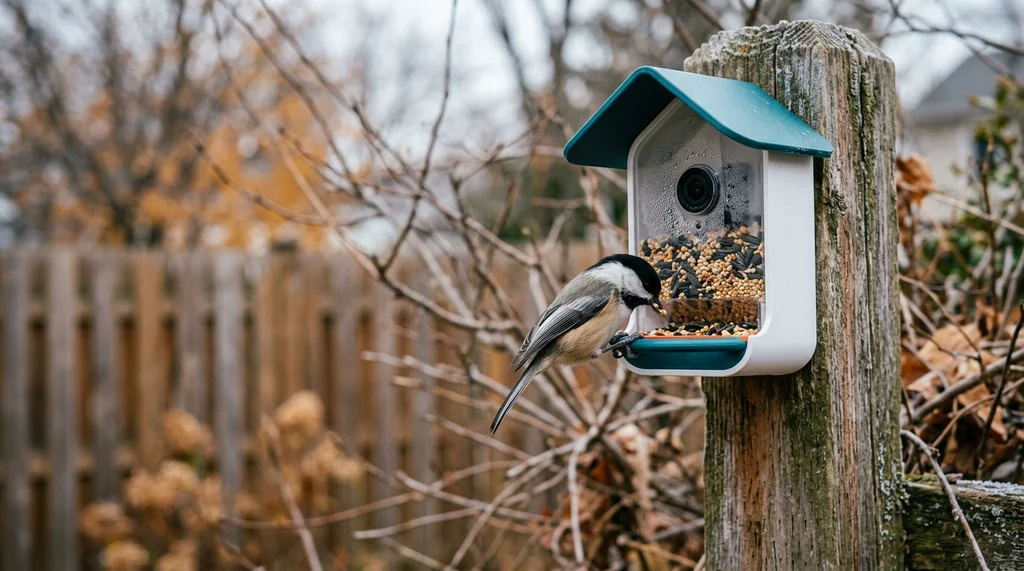
Best Bird Feeder Cameras Without a Subscription
Best Bird Feeder Cameras Without a Subscription Fee
You've spent real money on a smart bird feeder. You've positioned it perfectly, filled it with quality seed, and waited. The birds arrive. The camera captures them. And then the app tells you that to actually see those captures in any useful way — to get the species identification, the full video quality, the archive access — you'll need a monthly plan.
It's a frustrating pattern, and it's one that's pushed a lot of backyard birders toward a genuinely better question: do the best bird feeder cameras even require a subscription anymore? The answer, increasingly, is no. Subscription-free options have matured considerably, and some of them are genuinely excellent. This guide covers what's available, what the trade-offs actually look like, and how to choose the right camera feeder for your yard without committing to recurring fees.
Key Takeaways
- A typical $80/year smart feeder subscription costs $400 over five years, often exceeding the price of the feeder itself.
- BROAIMX and CINMOORE store footage locally on a TF card and include lifetime AI identification for 10,000–11,000 species at no recurring cost.
- Lithium batteries lose 30–50% of effective capacity in cold weather, so advertised battery life figures should be adjusted downward for winter use.
- All major smart feeder brands require 2.4GHz WiFi with at least 2 Mbps upload speed at the feeder location, not at the router.
- Bird Buddy Pro caps video at 720p without a paid subscription, making the $299 price meaningful only if you accept that trade-off or pay for the plan.
Why Subscription-Free Matters More Than You Think
The subscription model made a certain kind of sense in the early days of smart bird feeders. AI species identification requires computational infrastructure. Cloud storage costs money. Ongoing software development isn't free. Early adopters accepted these costs as the price of entry into a genuinely novel product category.
The problem is that $80 per year — a typical subscription rate for premium smart feeder features — adds up to $400 over five years. That's often more than the feeder itself costs. For a product that's fundamentally a camera attached to a seed reservoir, that recurring cost structure started to feel difficult to justify, especially as the underlying AI technology became cheaper and more capable.
The shift toward lifetime AI identification and local storage has been real. Several manufacturers now offer one-time purchase models where the identification database is included permanently, video is stored locally on a memory card, and the core experience doesn't degrade if you cancel a plan. That's a meaningful improvement for anyone who wants to set up a camera feeder and simply use it.
What to Look for in a Camera Bird Feeder
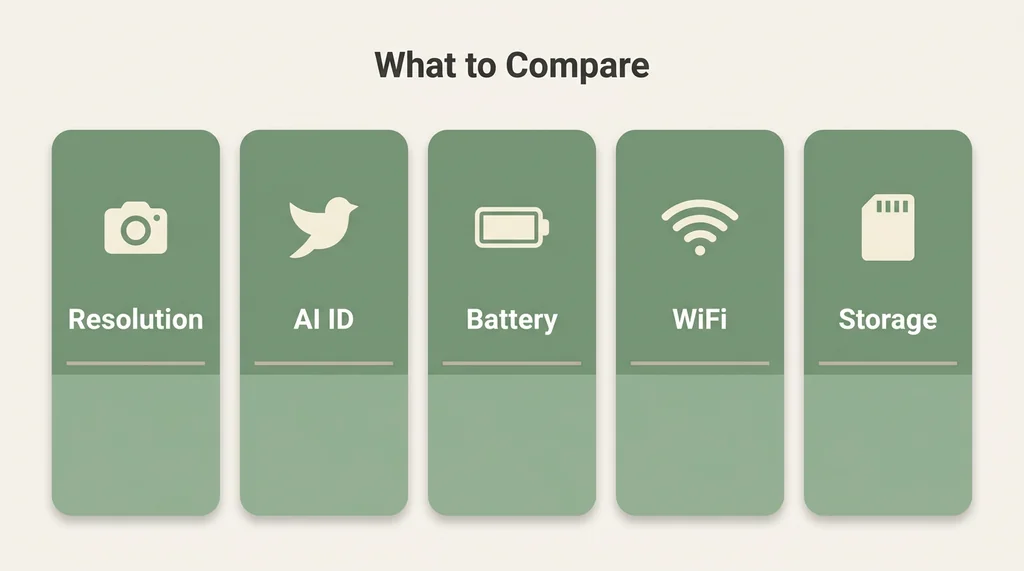
Before getting into specific products, it helps to understand what the specifications actually mean for daily use.
Resolution matters, but context matters more. A 2K or 2.5K camera produces noticeably sharper images than 1080p, especially for capturing fine detail — the exact pattern on a warbler's wing, the subtle differences between a juvenile and adult plumage. For casual enjoyment and species identification of common backyard birds, 1080p is genuinely sufficient. For documentation purposes or if you're hoping to capture images worth sharing, higher resolution earns its keep.
AI species identification varies significantly between products. Consumer-grade systems in current smart feeders typically recognize around 6,000 species. More advanced commercial systems reach past 11,000 — which represents meaningful coverage given that there are roughly 10,000 bird species on Earth. For North American backyard birding, where you're dealing with a subset of the continent's 900 to 1,000 regularly occurring species, even a 6,000-species database covers your realistic needs with room to spare.
Battery life is where marketing claims and real-world performance diverge most dramatically. In a high-traffic yard, battery life can drop from an advertised one month to five or six days. Cold weather compounds this — lithium batteries lose 30% to 50% of effective capacity during cold snaps. Any battery life claim should be mentally adjusted downward for winter use and active yards.
WiFi requirements are non-negotiable and frequently overlooked. All major smart feeder brands operate exclusively on 2.4GHz WiFi networks. If your router broadcasts only 5GHz, or if your mesh network doesn't clearly separate bands, setup will fail. Exterior brick siding can reduce WiFi signal strength by nearly 40%, which matters if your feeder location is far from your router. A minimum of 2 Mbps upload speed at the feeder's physical location is required for stable streaming — not at your router, at the feeder.
Local storage versus cloud storage is the fundamental dividing line in the subscription debate. Feeders that store video and photos to a local memory card give you permanent access to your footage without ongoing costs. Cloud-dependent systems offer convenience and remote access but tie your archive to continued payment.
The Best Subscription-Free Options
BROAIMX Bird Feeder Camera
The BROAIMX has emerged as one of the more compelling subscription-free options in the current market. It ships with a 32GB to 64GB high-speed TF card for local storage, which means your footage is yours immediately and permanently. The camera shoots 1080P HD video, and the AI identification system covers 11,000-plus bird species with lifetime free access — no subscription required at any tier.
For context on that species count: 11,000 species represents essentially the entire known avian world. Whether that breadth translates to accuracy on the less common species is a separate question, but for the Northern Cardinals, chickadees, nuthatches, and finches that make up the majority of feeder traffic in most North American yards, the identification performs reliably.
The local storage model does mean you're responsible for managing your own card — pulling footage, backing up captures you want to keep, occasionally clearing space. That's a minor operational consideration compared to the alternative of paying $80 annually for cloud access.
CINMOORE Bird Feeder Camera
The CINMOORE positions itself at the higher end of the subscription-free category with a 4MP sensor shooting at 2.5K resolution. The species identification covers 10,000-plus birds with lifetime free access, placing it in the same tier as the BROAIMX for AI capability while offering a resolution step up.
The 2.5K resolution produces noticeably sharper stills than 1080p systems, which matters if you're hoping to capture images detailed enough to distinguish similar species or document unusual visitors. For someone who has spent time watching a cardinal pair perform their characteristic twelve-second assessment before committing to a feeder — that specific pause, that precise moment of decision — having the resolution to capture it cleanly has genuine value.
Birdfy AI Bird Feeder Camera
Birdfy occupies an interesting middle position. It's not strictly subscription-free in the way the BROAIMX and CINMOORE are — some premium features sit behind a paywall — but the core AI identification functionality is available without a subscription, making it worth including here for buyers who want a more established brand.
The Birdfy offers 1080p or 2K resolution depending on the model, with a 1.5-liter seed capacity (roughly 6 cups) that meaningfully reduces refill frequency compared to smaller-reservoir competitors. The AI system claims recognition across more than 6,000 species, validated against a 25-year bird-watching knowledge base according to the manufacturer.
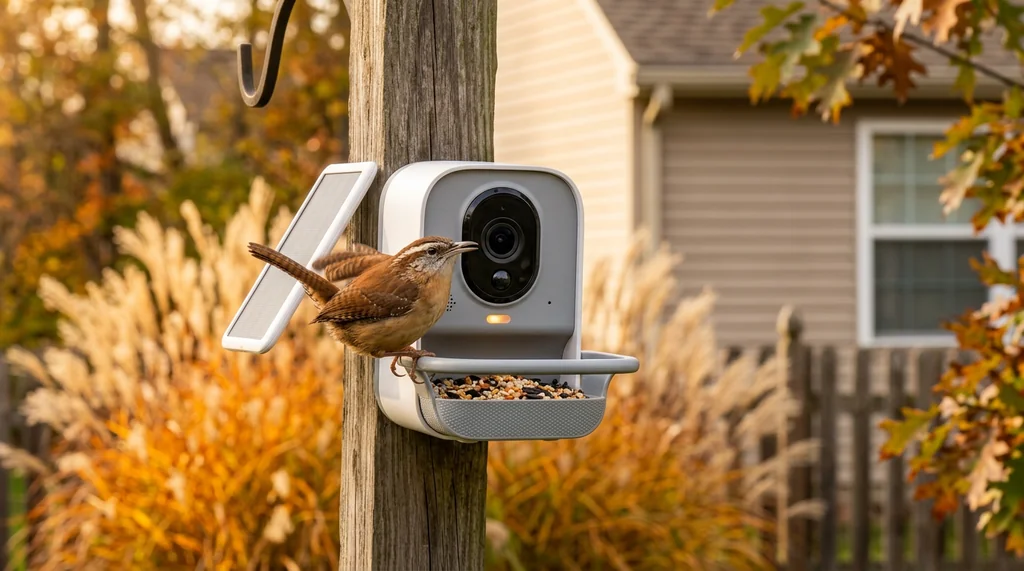
Battery performance is a genuine Birdfy strength. The base model carries a 5,200 mAh battery; premium versions step up to 9,000 mAh. In real-world testing, the Birdfy has documented up to four months of operation under moderate use — a substantial advantage over systems with smaller battery packs. The solar panel is detachable and adjustable, allowing you to aim it directly at the sun independent of feeder orientation, which addresses one of the more frustrating limitations of fixed-panel designs.
The Birdfy also features a removable battery pack, allowing a hot-swap without bringing the feeder indoors. For anyone who's managed a camera feeder through a New England winter, the ability to swap a battery without disturbing an established feeding station is worth more than it sounds.
Bird Buddy Smart Feeder Pro
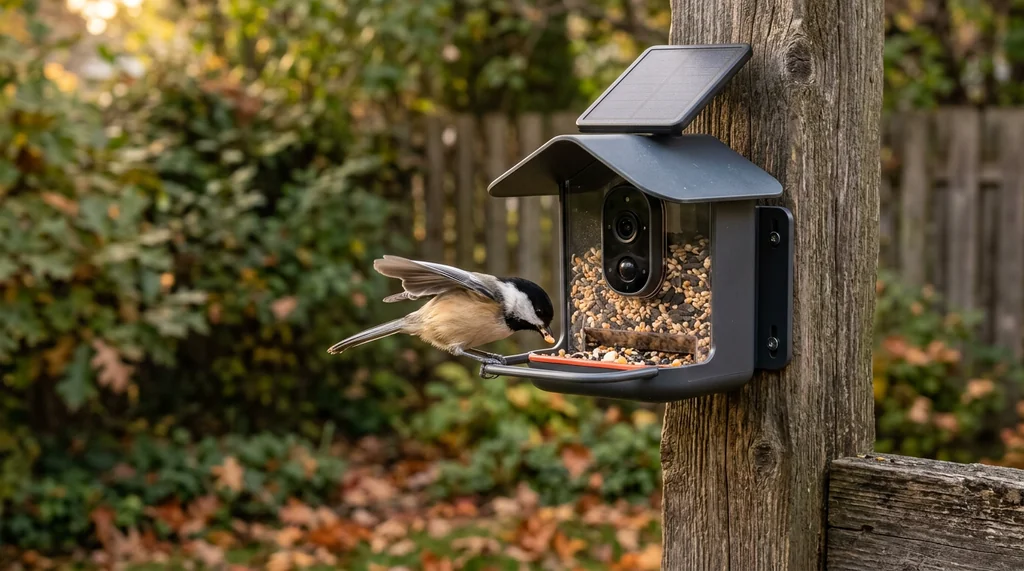
The Bird Buddy Pro is the premium-build option in this space and is PCMag's top-rated smart bird feeder. It shoots 2K vertical video and 5-megapixel stills, with an app that supports sharing access with up to ten people — useful for households where multiple people want to follow feeder activity.
The subscription caveat is real: without a paid plan, video quality is capped at 720p. Full 1080p HD requires a premium subscription. If you're comfortable with 720p video and primarily want the species identification and photo capture features, the Bird Buddy Pro functions as a subscription-free product. If video quality matters to you, factor the subscription cost into your budget calculation.
Battery capacity is 3,800 mAh, which is the smallest in this comparison. In high-traffic yards, expect five to six days between charges rather than the advertised month. The solar panel is fixed-position with limited adjustability, which can be a meaningful limitation in yards where the optimal feeder location isn't the optimal solar charging location.
The Bird Buddy Pro costs $299, compared to $164 to $190 for Birdfy — a price difference of roughly $110 to $135 that's worth weighing against the build quality and app experience advantages.
Placement Considerations That Affect Camera Performance
A camera feeder is only as good as its placement, and the factors that make a feeder attractive to birds sometimes conflict with the factors that make a camera work well.
Cardinals stay within 10 to 15 feet of dense shrubs and trees in nature, using cover as escape routes. Optimal feeder placement for cardinal traffic means positioning near cover — which may mean a shadier location that reduces solar charging efficiency. Solar panels on current models require at least four hours of direct sunlight daily for consistent operation. Pollen and dust accumulation can reduce charging efficiency by roughly 20%, so regular panel cleaning matters.
The sun sits lower in the sky from October through February, potentially shading locations that receive full sun in summer. If you're evaluating a camera feeder location in spring or summer, mentally account for how the light angle will change by November.
WiFi signal at the feeder location is worth testing before purchase. A dedicated WiFi extender costs $30 to $60 and can be the difference between a functional setup and a frustrating one. If your home has exterior brick siding between your router and the feeder location, a signal test is genuinely important — that nearly 40% reduction in signal strength is enough to cause connection instability even when the router shows full bars indoors.
The Honest Trade-Off Summary
Subscription-free camera feeders have reached a point where they're a legitimate first choice rather than a compromise. The BROAIMX and CINMOORE offer capable AI identification and local storage at prices that don't require ongoing justification. The Birdfy provides a more established ecosystem with superior battery performance and a genuinely useful adjustable solar panel. The Bird Buddy Pro leads on build quality and app experience, with the subscription caveat clearly understood.
The right choice depends on what you're actually optimizing for. If you want the simplest possible setup with no recurring costs and solid identification capability, the BROAIMX or CINMOORE deliver that cleanly. If battery life and reduced maintenance are the priority, the Birdfy's larger battery and removable pack make it the practical choice. If you want the best image quality and app experience and are comfortable with the subscription decision, the Bird Buddy Pro earns its premium price.
What none of these products will do is replace the patience required to establish a productive feeding station. New feeders often sit empty for days or weeks as birds are cautious about new food sources — that's normal, not a product failure. Cardinals will still perform their twelve-second assessment before committing. The camera captures what the birds decide to give you, and the birds set their own schedule.
The good news is that once a feeding station is established, camera feeders genuinely add something. Watching footage of a chickadee selecting a specific seed from a platform, or catching the moment a new species investigates for the first time, adds a layer to backyard birding that binoculars alone can't provide. Getting that experience without a subscription attached makes it considerably easier to recommend without reservation.