Bird Buddy Accessories That Solve Real Problems
Bird Buddy Accessories Worth Adding to Your Setup
The Bird Buddy smart feeder is genuinely clever on its own. But if you've had one for more than a few weeks, you've probably noticed the gaps — moments where the right add-on would have made the difference between a missed shot and a perfect capture, or between a feeder that runs smoothly and one that needs constant attention. Over 206 Bird Buddy accessories are currently available on Amazon, which tells you two things: there's real demand for expanding this system, and sorting the useful from the unnecessary requires some guidance.
This isn't about buying everything. It's about identifying which bird buddy accessories solve real problems and which ones collect dust. The answers depend partly on your yard setup, your specific bird visitors, and how much friction you're willing to tolerate in your maintenance routine.
Key Takeaways
- Wider silicone perch extenders increase visitation rates for larger birds like cardinals by roughly 25%, with options ranging from $13 to $27.
- The Bird Buddy Solar Roof delivers approximately 17% net daily charge gain in south-facing locations but underperforms north of 40° latitude in winter.
- A WiFi extender ($30–$60) is effectively required if your router is on the opposite side of the house, since brick siding alone can cut signal strength by 40%.
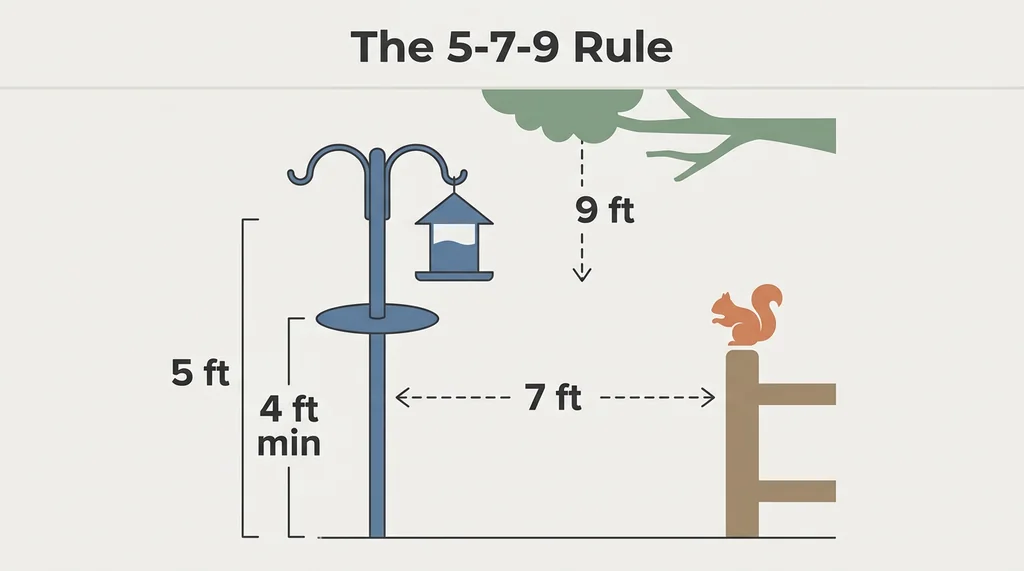
- Follow the 5-7-9 rule for pole placement — five feet high, seven feet from jumping surfaces, nine feet below overhangs — to stop squirrel-triggered false captures.
- Jelly in the 3-in-1 Nutrition Set must be replaced every two to three days above 75°F to prevent aspergillosis, a fatal fungal infection in birds.
The Bird Buddy Add-Ons That Actually Change the Experience
Perch Extenders: Small Change, Measurable Results
The standard Bird Buddy perch pegs work adequately for chickadees, nuthatches, and house finches. They were not designed with larger birds in mind. Northern Cardinals — which weigh between 1.5 and 1.7 ounces and evolved as ground feeders with thick conical beaks — find the standard pegs awkward. They're built for stability on a wide surface, not balancing on a narrow peg while a camera stares at them.
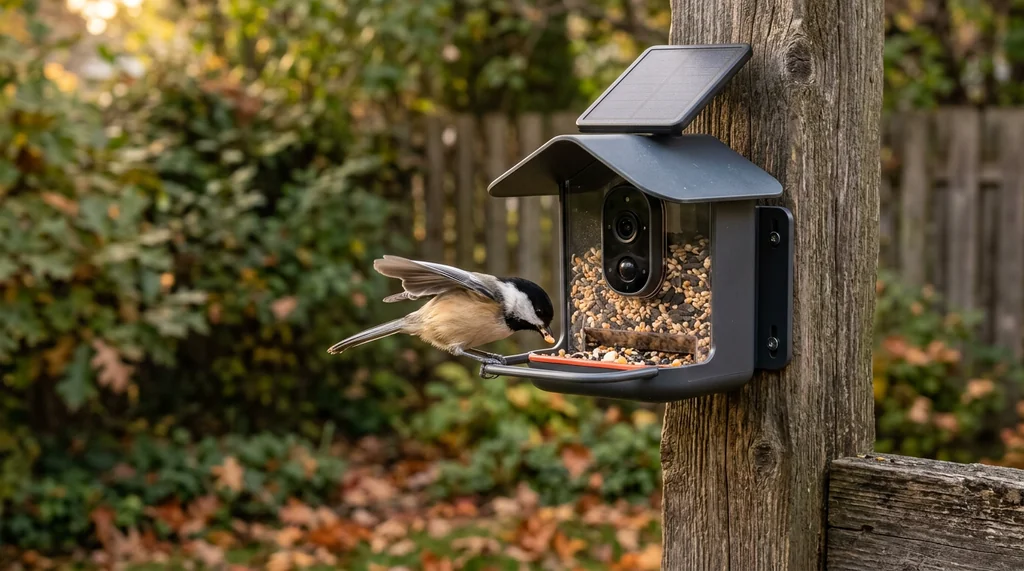
The aftermarket perch extender market has responded to this. The blue silicone perch extender, currently the bestseller in this category with over 496 customer reviews averaging 4.6 out of 5 stars and priced around $27, widens the landing surface enough that larger birds settle in rather than hover uncertainly. Users who switched to wider silicone perches reported roughly a 25% increase in visitation rates for larger bird species. That's a meaningful number if cardinals are what you're trying to photograph.
There's also a metal perch extender at around $13 with 4.7 stars across 45 reviews, and a silicone option at approximately $14 with a perfect 5.0 rating across 10 reviews. The metal version handles cold weather better — silicone can stiffen below freezing, though it doesn't crack. For most yards outside of severe northern winters, either works well.
Worth noting: Cardinals perform a characteristic twelve-second safety scan before committing to any feeding station. A perch extender doesn't override that behavior. What it does is ensure that once a cardinal decides to land, the experience is comfortable enough to encourage return visits.
The XXL Seed Extender: For High-Traffic Yards
The base Bird Buddy holds 3.8 cups of seed. In a yard with established bird populations, that disappears faster than you'd expect. The XXL Seed Extender, available on Amazon at roughly $23 with 50+ units sold monthly, increases reservoir capacity and reduces how often you're climbing on a stepstool to refill.
The installation technique matters here: place the short side of the wire hanger toward the back of the feeder and add a small counterweight if the extended reservoir causes balance issues. Some users report the auto-fill mechanism misfires when the feeder is unbalanced, triggering the camera unnecessarily and draining battery life faster.
Speaking of battery: the base Bird Buddy runs approximately one month per charge under normal conditions, but in high-traffic yards that can drop to five or six days. Every unnecessary trigger — a swaying feeder, a passing squirrel, an unbalanced reservoir — shortens that window. Getting the installation right isn't just aesthetic.
Bird Buddy Extras That Solve Specific Problems
The Solar Roof: Worth It, With Conditions
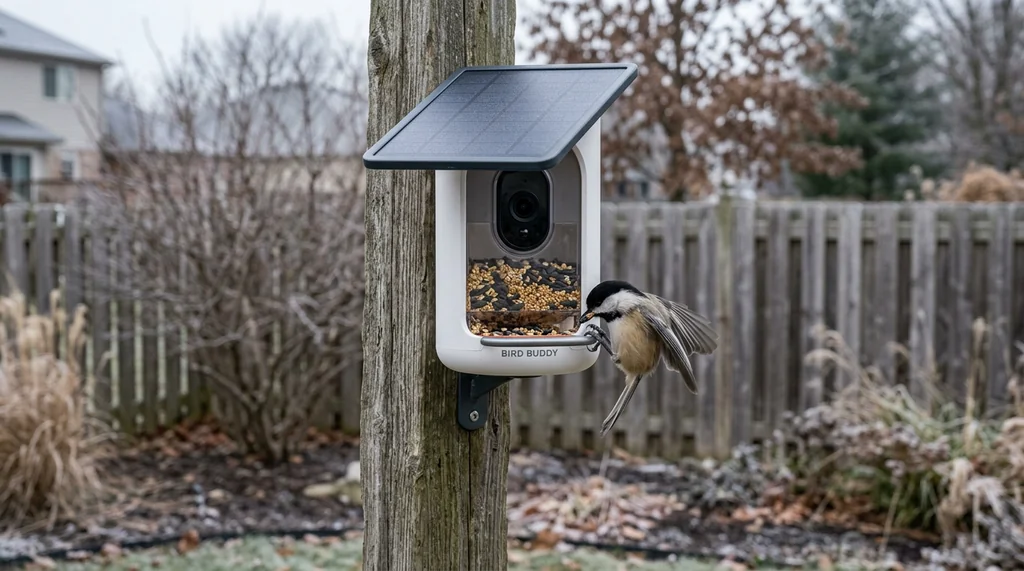
The Bird Buddy Solar Roof is the most discussed accessory in the ecosystem, and the conversation usually goes one of two ways: people who installed it in a south-facing location with good sun exposure love it, and people who installed it in a shaded yard or north-facing position feel misled by the marketing.
The honest numbers: the Solar Roof provides approximately 20% charge gain on a clear sunny day at 42.3° North latitude in winter conditions. After accounting for daily camera usage — which runs between 25% and 33% of battery capacity per day under typical conditions — the net gain is around 17%. The manufacturer claims three days of good sunlight can bring the battery from empty to full, and that with the Solar Roof the feeder will likely never need charging. That claim holds in summer, in a south-facing yard, with strong sun exposure.
In winter, north of roughly 40° North latitude, expect significantly reduced performance. The sun sits lower in the sky from October through February, and spots that get adequate sun in July may be substantially shaded in January. There's also the pollen issue: dust and pollen accumulation on solar cells can reduce charging efficiency by nearly 20%, which means a wipe-down with a soft damp cloth every two to three weeks is part of the maintenance routine, not optional.
The Solar Roof connects to the camera module via a USB-C cable tucked under the exterior to protect it from weather. It's compatible with the standard Bird Buddy smart bird feeder, the Bird Buddy Smart Bird Feeder Pro Solar v2, and the Bird Buddy Smart Hummingbird Feeder. If your yard qualifies — south-facing, minimal shade, at least four hours of direct daily sun — it's a worthwhile purchase. If your optimal bird-attracting location is under a tree canopy (which it often is, since cardinals stay within 10 to 15 feet of dense shrubs and trees), the solar math may not work in your favor.
The Wall Mount: Stability and Placement Flexibility
The Bird Buddy Wall Mount holds 4.5 stars across 304 reviews with 300+ units sold monthly, priced around $27. It's a straightforward solution to a real problem: pole-mounted feeders move in wind, and movement triggers the camera. More triggers means more battery drain, more notifications, and more footage of an empty perch swaying in a breeze.
Wall mounting also solves placement puzzles for yards where pole installation isn't practical — apartment balconies, decks with composite boards that don't accommodate standard stakes, or situations where the optimal viewing angle requires a vertical surface rather than open ground.
One placement consideration worth keeping in mind: feeders should be within three feet of windows or more than ten feet away. The three-to-ten-foot zone creates dangerous window strike conditions. A wall mount positions the feeder close to the house, which typically puts it either safely within three feet of a window or well to the side of one. Measure before you drill.
The Smart Bird Feeder Mount Question: Pole Systems vs. Alternatives
Pole Systems and the 5-7-9 Rule
If you're mounting the Bird Buddy on a pole rather than a wall or tree, squirrel deterrence becomes part of the conversation. Squirrels can leap horizontally up to ten feet, jump vertically nearly five feet from a standing position, and drop nine feet from above without injury. The practical rule: position feeders five feet high, seven feet from any horizontal jumping surface, and nine feet below any overhead overhang.
Premium pole systems run $60 to $120 and stand over 80 inches above ground when properly installed. A baffle on the pole — placed at a minimum of four feet above ground level, with five feet preferred — prevents climbing. The combination of proper height, clearance from jumping surfaces, and a baffle handles the majority of squirrel interference.
This matters specifically for the Bird Buddy because squirrel visits trigger the camera just as bird visits do. Every time Mr. Fitzgerald investigates the feeder, the camera fires, the battery drains, and the app sends a notification. After 47 documented failed access attempts against a properly installed Brome Squirrel Buster Plus, the resident squirrel in many yards eventually redirects to easier food sources — but only if the physical deterrence is solid. A dedicated squirrel feeding station placed thirty feet or more from primary bird feeders helps accelerate that behavioral shift.
WiFi Extenders: The Overlooked Accessory
This one doesn't come in a Bird Buddy box, but it belongs in any honest list of accessories that improve the system. The Bird Buddy operates exclusively on 2.4GHz WiFi and requires a minimum of 2 Mbps upload speed at the feeder's physical location — not at the router, but at the feeder itself. Exterior brick siding can reduce WiFi signal strength by nearly 40%. Thick walls, distance, and competing devices compound the problem.
A dedicated WiFi extender costs $30 to $60 and eliminates the most common source of Bird Buddy frustration: dropped connections, failed captures, and the camera going offline during peak morning activity. If your router is on the opposite side of the house from your feeder location, a WiFi extender is effectively a required accessory, not optional.
The 3-in-1 Nutrition Set: Expanding What the Bird Buddy Attracts
The 3-in-1 Nutrition Set holds 4.5 stars across 136 reviews with 100+ units sold monthly. It adds jelly and fruit attachment points to the Bird Buddy's feeding surface, which expands the species range considerably. Orioles, catbirds, and woodpeckers that wouldn't visit a standard seed feeder will investigate a station offering grape jelly and orange halves.
The maintenance requirements increase with this accessory. Jelly begins fermenting within two to three days when temperatures climb above 75 degrees Fahrenheit, and mold in jelly cups can cause aspergillosis — a fungal respiratory infection that's fatal to birds. Orange halves need replacement every two to three days during warm weather. The 1:9 bleach-to-water cleaning solution used for the seed reservoir applies to jelly trays as well, on the same bi-weekly schedule.
If you're committed to the maintenance, the 3-in-1 set meaningfully expands what the Bird Buddy's AI identification system gets to work on. The system claims recognition capability across more than 6,000 bird species, and attracting a wider range of visitors gives that capability more to do.
Prioritizing Your Bird Buddy Accessories Budget
If you're choosing where to spend first, the hierarchy looks roughly like this: a WiFi extender if your signal is marginal, a perch extender if you want to attract larger birds like cardinals, the Solar Roof if your yard gets strong direct sun from the south, and the wall mount if pole installation isn't practical or wind movement is triggering false captures.
The XXL Seed Extender and 3-in-1 Nutrition Set are genuinely useful additions for established setups where the basics are already working well. They expand capacity and species range respectively, but they add maintenance complexity — worth it once the fundamentals are solid, less so when you're still troubleshooting connectivity or placement.
The Bird Buddy is a capable system. The accessories that matter most are the ones that address its real limitations: battery life, connectivity, and the physical comfort of the birds you're trying to photograph. Start there, and the rest follows naturally.