Best Oriole Jelly Feeders & Grape Jelly Guide
Oriole Jelly Feeders: Best Options & Grape Jelly Guide
Most backyard birders spend years perfecting their cardinal and hummingbird setups before they ever think seriously about orioles. Then one May morning, a flash of deep orange lands on a branch twenty feet away, tilts its head at your yard, and disappears forever — because you had nothing to offer.
Orioles are not difficult birds to attract. They are, however specific birds. Get the food right, get the feeder right, and they'll return to the same yard for years. Miss the window or offer the wrong setup, and they'll simply find someone who did the homework. This guide covers everything you need to know about oriole jelly feeders — which designs actually work, how to use grape jelly correctly, and how to build a feeding station that earns repeat visits season after season.
Key Takeaways
- Use grape jelly (not sugar-free) in removable, cleanable cups 1–2 inches deep; refresh daily in warm weather to prevent fermentation.
- The Aspects 428 is the best overall oriole feeder; pair it with an ant moat ($5–10) to prevent ant invasions.
- Put feeders out two weeks before orioles arrive in your region — timing is critical since birds establish feeding routes quickly.
- Hang feeders at the edge of tree cover, 5–8 feet high, and keep them 20–30 feet from other feeding stations.
- A complete oriole station (feeder + ant moat + birdbath) costs roughly $45–70 and can attract returning birds for years.
Why Orioles Need Dedicated Feeders
Before choosing a feeder, it helps to understand why orioles can't just share the hardware you've already got. Baltimore Orioles and Bullock's Orioles — the two species most backyard birders encounter — are built for a completely different food profile than seed-eating birds. Their beaks are long, slender, and designed for probing: pulling insects from bark, extracting nectar from tubular flowers, and scooping soft fruit. A tube feeder full of black oil sunflower seeds is essentially useless to them.
What orioles want, particularly during spring migration and the early weeks of breeding season, falls into three categories: nectar, soft fruit, and grape jelly. Of those three, grape jelly is often the most effective attractant, especially for drawing birds in quickly during the first weeks after arrival. The sugar content is high, the texture is accessible, and orioles seem to find it irresistible in a way that even orange halves sometimes can't match.
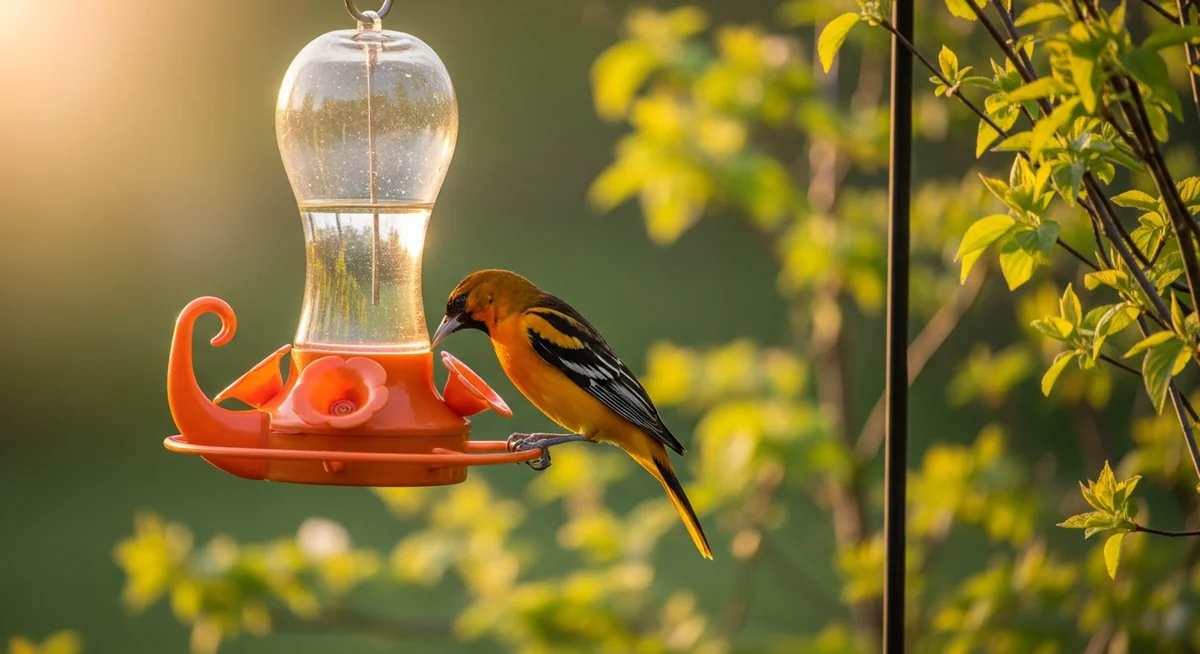
The feeder itself needs to accommodate this. Most oriole feeders are designed around two functions: holding small cups or dishes of jelly, and providing a stable perching surface large enough for a bird that weighs roughly 1.2 ounces and measures about eight inches long. Unlike the twelve-second assessment cardinals perform before committing to a platform feeder, orioles tend to be cautious from a distance — they'll watch a new food source for days before approaching. The feeder needs to be visible, accessible, and clearly designed for a bird their size.
What to Look for in an Oriole Jelly Feeder
Jelly Cup Design and Capacity
The jelly component of an oriole feeder is where most designs diverge. The best options feature small, removable cups — typically two to four ounces — that can be filled, cleaned, and replaced independently. Avoid feeders where jelly sits in a fixed reservoir with no easy way to clean it. Grape jelly ferments quickly in warm weather, and a feeder that can't be thoroughly washed becomes a health hazard within days.
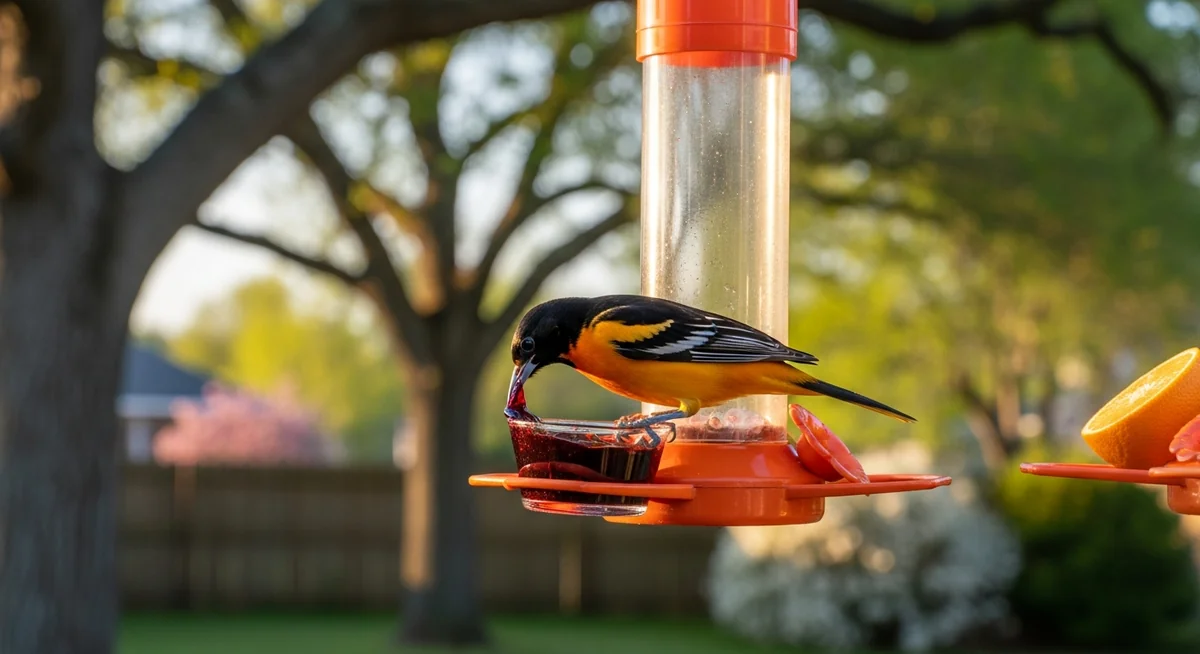
Cup depth matters more than most buyers realize. Orioles feed by dipping their beak into soft food and using their tongue to lap it up. A cup that's too shallow dries out in hours. A cup that's too deep makes the jelly inaccessible once the level drops below about an inch. The sweet spot is a cup roughly one to two inches deep with a diameter wide enough for the bird to angle its beak comfortably — around three inches works well for most designs.
Perch Size and Stability
Orioles are larger than the birds most feeders are designed for. A perch that works fine for a chickadee or even a cardinal will feel precarious to a bird that needs to lean forward and probe into a cup. Look for perches that are at least four inches long and positioned so the bird can grip securely while reaching the food without awkward contortion.
Some of the best oriole feeders incorporate a tray or platform element around the jelly cups, giving birds multiple footing options. This is particularly useful when multiple orioles visit simultaneously — which does happen once you've established your yard as a reliable stop.
Orange Halves and Combination Feeders
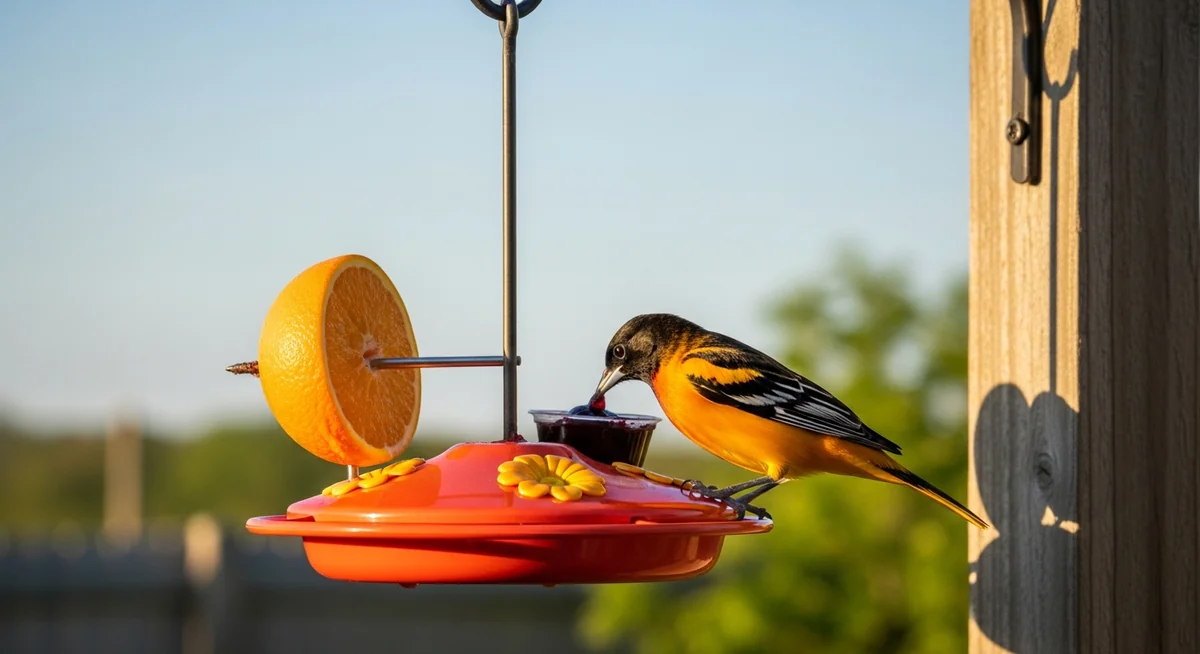
The most versatile oriole feeders combine jelly cups with orange-half holders: small spikes or cradles that hold a halved orange in place. Orioles are strongly attracted to orange color and to the fruit itself, particularly early in the season before insects become abundant. A feeder that handles both offerings in one station simplifies the setup and creates a more compelling display.
If you're choosing between a jelly-only feeder and a combination model, the combination wins for most backyard situations. The orange halves serve as a visual attractor — orioles spot the orange color from considerable distance — while the jelly is what keeps them coming back repeatedly through the day.
Materials: Glass vs. Plastic
The same principle that applies to hummingbird feeders holds here: glass feeders last significantly longer than plastic, typically ten or more years versus two to three for plastic equivalents. For a feeder you'll be cleaning and filling multiple times per week during peak season, that durability matters.
That said, plastic oriole feeders in the $15-25 range are perfectly functional for a first season, and some plastic designs are better thought-out than glass alternatives at higher price points. The critical factor isn't material so much as cleanability — can you get a brush into every surface where jelly contacts the feeder? If not, keep looking.
Top Oriole Jelly Feeder Options
Best Overall: Aspects 428 Oriole Feeder
The Aspects 428 consistently earns its reputation as the standard against which other oriole feeders are measured. It features four jelly cups, four orange-half holders, and a built-in nectar reservoir — all in a feeder that hangs cleanly and can be fully disassembled for washing. The orange color of the feeder itself functions as an additional attractant.
At roughly $30-40 depending on retailer, it sits in the middle of the price range but delivers top-tier functionality. The jelly cups are the right depth, the perches are substantial, and the overall construction is solid enough to handle several seasons of use. For most backyard birders setting up an oriole station for the first time, this is the feeder to start with.
Best Budget Option: Perky-Pet Oriole Feeder
For birders who want to test whether orioles visit their area before committing to a premium setup, the Perky-Pet oriole feeder in the $15-20 range offers a reasonable starting point. It includes jelly cups and orange holders, the perches are adequate for the price, and it's widely available at hardware stores and garden centers.
The limitations are real: the plastic construction shows wear more quickly, the jelly cups can be fiddly to remove for cleaning, and the overall capacity is smaller. But as a proof-of-concept feeder for a first season, it does the job.
Best Premium Option: More Birds Oriole Feeder
More Birds produces several oriole feeder models that prioritize glass construction and thoughtful design. Their oriole-specific feeders typically run $35-50 and feature wider perching surfaces, deeper jelly cups, and glass components that clean more thoroughly than plastic equivalents. If you've confirmed orioles visit your yard and you're ready to invest in a feeder that will last a decade, a More Birds glass model is worth the price difference.
Best for High-Traffic Yards: Songbird Essentials Oriole Feeder
For yards that attract multiple orioles — which can happen quickly once you've established a good setup — a feeder with six or more jelly cups becomes practical. Songbird Essentials makes a well-regarded model with six cups and a large central perching ring that accommodates several birds simultaneously. At $35-45, it handles peak season traffic without requiring constant refilling.
The Grape Jelly Guide: Getting It Right
Why Grape Jelly Specifically
Orioles will eat other flavors of jelly in a pinch, but grape is the clear preference across documented observations. The specific combination of sugar content, color, and flavor profile seems to trigger a strong feeding response that other flavors don't reliably produce. Stick with grape.
The one caveat: use regular grape jelly, not sugar-free or reduced-sugar versions. The artificial sweeteners in diet products are not appropriate for birds, and the reduced sugar content makes the jelly less effective as an energy source. Standard commercial grape jelly — the kind in any grocery store — is exactly right.
How Much to Offer
Start with small amounts: one to two teaspoons per cup, refreshed daily. This prevents waste, reduces the risk of fermentation, and keeps the jelly fresh enough that birds want to return. Once you've confirmed regular visitors, you can scale up slightly, but more is not better here. Fresh jelly in small quantities beats a large cup of fermented jelly that's been sitting in the sun for three days.
The Fermentation Problem
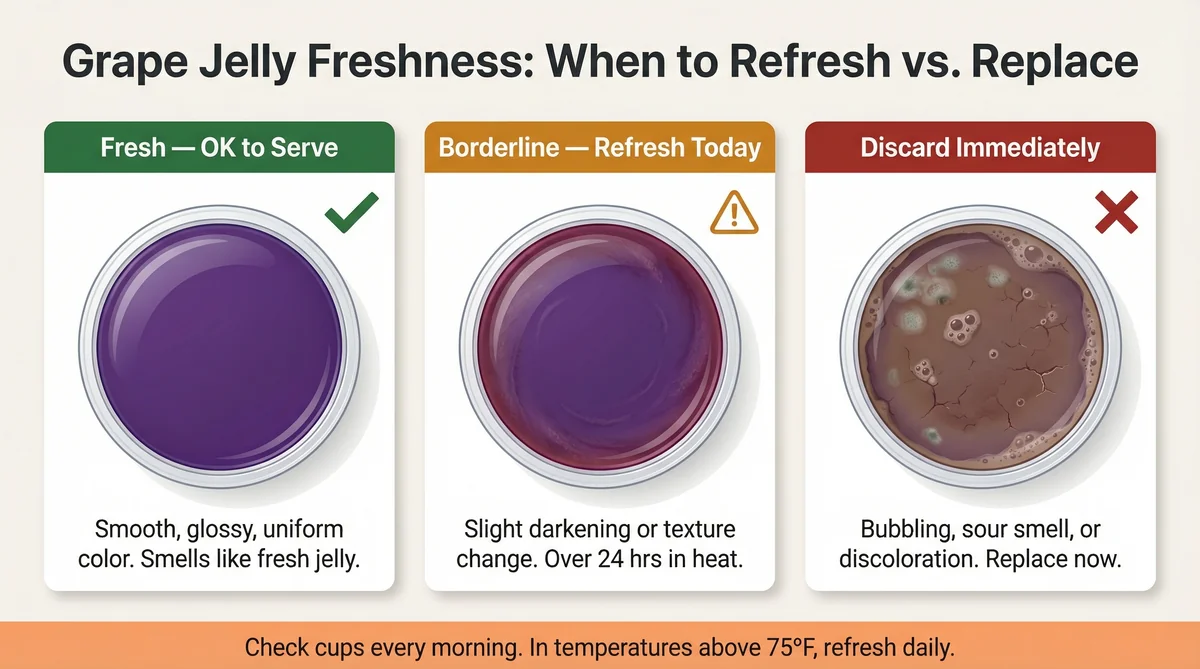
Grape jelly ferments faster than most people expect, especially when temperatures climb above 75 degrees. A cup of jelly that was perfectly fine at 8 AM can be bubbling and off-smelling by early afternoon on a hot day. Fermented jelly can cause digestive problems in birds and will quickly teach orioles to avoid your feeder.
The solution is simple: check and refresh jelly cups every morning, and dump any jelly that looks discolored, smells sour, or has been sitting for more than 24 hours in warm weather. In cooler conditions — the first weeks of May in most northern states — you can stretch to every other day. Once June arrives and temperatures rise, daily refreshing is the minimum standard.
Ants and Jelly Feeders
Grape jelly attracts ants with remarkable efficiency. An ant moat — a small water-filled cup that hangs above the feeder and creates a barrier ants can't cross — is essentially mandatory for jelly feeders. A basic ant moat costs five to ten dollars and eliminates the problem almost entirely. Without one, you'll spend more time managing ant invasions than enjoying oriole visits.
Position the ant moat directly above the feeder on the hanging wire, keep it filled with water, and check it every few days. That's genuinely all it takes.
Placement and Timing
When to Put Feeders Out
Orioles are migratory, and timing matters more for them than for year-round residents. In most of the eastern United States, Baltimore Orioles arrive between late April and mid-May. In western states, Bullock's Orioles follow a similar timeline. The critical rule: have feeders out and stocked before orioles arrive in your area, not after.
Orioles establish territory and feeding routes quickly in the first days after arrival. A yard with food already available gets incorporated into their mental map. A yard that puts feeders out a week after the first orioles pass through may never attract them at all that season — they've already established their routes elsewhere.
Put feeders out approximately two weeks before your expected first arrival date. Check local birding groups or eBird data for your specific region to calibrate this timing accurately.
Where to Hang Them
Orioles are edge-of-canopy birds. They prefer feeding in open areas with tree cover nearby — not deep in dense shrubs like cardinals, but not fully exposed either. A feeder hanging at the edge of a tree line, or suspended from a shepherd's hook in a yard with mature trees within thirty to forty feet, is ideally positioned.
Height matters less for orioles than for some species, but somewhere between five and eight feet tends to work well. More important than precise height is visibility: orioles spot food sources from a distance, and a feeder that's hidden behind foliage won't attract birds the way one that's clearly visible from multiple approach angles will.
Keep oriole feeders separated from your primary seed and hummingbird stations. Not because orioles are aggressive toward other species, but because the different food types and the different birds they attract can create congestion that makes everyone less comfortable. Twenty to thirty feet of separation between feeding stations is a reasonable standard.
How Long to Keep Feeders Up
Orioles begin departing for their wintering grounds in late July and August, with most gone from northern states by early September. Keep feeders stocked through early September to support late migrants passing through. After that, you can clean and store jelly feeders until the following spring.
Building a Complete Oriole Feeding Station
A fully functional oriole station combines three elements: a quality jelly feeder with orange holders, an ant moat, and a water source. That last element is frequently overlooked. Orioles bathe and drink regularly, and a yard that offers both food and clean water is significantly more attractive than one offering food alone.
A simple birdbath placed near the feeding station — within twenty to thirty feet — rounds out the setup. If you already maintain a heated bath for winter birds, the same bath serves orioles in summer. If not, a basic pedestal bath in the $20-40 range is sufficient.
Total investment for a complete oriole station runs roughly $45-70: a mid-range combination feeder ($30-40), an ant moat ($5-10), and either an existing bath or a basic new one. That's a modest entry cost for a bird that will return to a reliable feeding station year after year.
Orioles reward patience and preparation in equal measure. The first season you put out a proper jelly feeder two weeks before migration, you may wait a week or more before the first visitor. The second season, birds that found your yard the year before will return with what appears to be genuine recognition — arriving earlier, staying longer, and bringing the juveniles they raised over the summer. That kind of return visit is what makes the initial investment in the right feeder and the right setup feel entirely worthwhile.
Get the grape jelly fresh, get the ant moat in place, and get the feeder out before the birds arrive. Everything else follows from those three things.
Cross-References