Mourning Dove Feeders: Platform, Ground & Seed Guide
Mourning Dove Feeders and Ground Feeding: A Complete Setup Guide
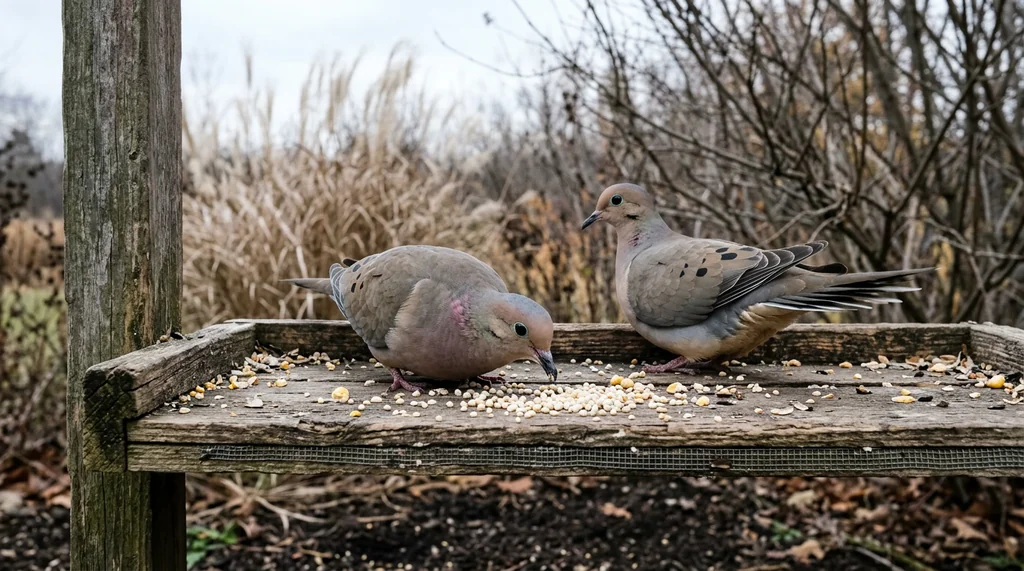
There's a particular kind of backyard visitor that doesn't demand much attention but rewards it generously. Mourning doves arrive without fanfare, settle onto whatever flat surface is available, and proceed to eat with an unhurried contentment that feels almost meditative to watch. No acrobatics, no territorial squabbling, no elaborate display. Just two birds on a platform, methodically working through a pile of millet like they've got nowhere else to be.
If you've been trying to attract mourning doves and coming up empty, or if you've got doves visiting but want to make your setup more intentional, the good news is that these birds have straightforward, predictable needs. The slightly counterintuitive news is that meeting those needs means thinking differently than you would for most feeder birds. Mourning doves are ground foragers by nature, and the typical backyard feeder setup — tube feeders, small perches, elevated stations — was essentially designed to exclude them.
This guide covers everything that actually matters: what to feed them, what feeders work and which ones don't, where to put everything, and a few dove-specific biology quirks that explain why certain setups succeed and others fail completely.
Key Takeaways
- Place platform feeders or ground feeding areas 5 to 10 feet from shrubs so doves can retreat quickly from aerial predators
- White proso millet is the top seed choice; doves will select it over most alternatives when given options
- Use shelled sunflower seeds instead of whole black oil sunflower seeds because doves cannot crack the shells efficiently
- Set birdbaths no deeper than two inches and clean them every few days, since doves drink and bathe at ground level regularly
- Rotate ground feeding locations every few weeks and rake between uses to prevent seed and feces accumulation from creating disease risk
Why Mourning Doves Don't Use Most Feeders
The mismatch between standard feeder design and mourning dove anatomy is worth understanding before buying anything. Mourning doves (Zenaida macroura) are medium-sized birds — larger than most songbirds — and they lack the foot anatomy to grip a perch and balance while eating. They're also "sit-and-eat" feeders rather than grab-and-go birds. Many songbirds snatch a seed and fly off to crack it elsewhere. Doves load up.
This is because of a specialized structure called a crop — an expandable pouch in the esophagus that allows doves to store large quantities of seeds before retreating somewhere safe to digest. A mourning dove can fill its crop rapidly and then spend the rest of the day processing the meal from a sheltered perch. This feeding strategy means they need a stable, spacious surface where they can settle in for several minutes at a time, not a thin perch rod that requires constant balance adjustments.
Tube feeders, nyjer socks, suet cages, and small hopper feeders with narrow perches all fail doves for the same fundamental reason: there's nowhere comfortable to stand. Watching a dove attempt a tube feeder is genuinely awkward — like watching someone try to eat soup while standing on a balance beam.
The Right Feeders for Mourning Doves
Platform and Tray Feeders
Platform feeders are the correct answer, and they work for doves for the same reason they work for cardinals: open surface area, stable footing, and no obstacles between the bird and the seed. A platform feeder doesn't need to be elaborate. A flat tray with drainage holes, positioned correctly, will attract more doves than a $150 specialty feeder placed wrong.
Look for platforms at least 12 inches across — doves appreciate room to move without bumping into other birds. Drainage is non-negotiable. Wet seed molds quickly, and moldy seed is both a health hazard and a fast way to empty your feeder of every bird that's learned to trust it. Platforms with mesh or slatted bottoms handle rain far better than solid-bottomed trays.
Ground Feeding
Here's the option many backyard birders overlook: spreading seed directly on the ground. Mourning doves are genuinely more comfortable foraging at ground level than at any elevated station. If you have a flat, open patch of lawn or garden bed near some cover, scattering seed there is effective, low-cost, and completely natural to how doves actually behave in the wild.
The practical downside is hygiene. Ground-scattered seed can accumulate hulls, feces, and moisture in one spot, which creates disease risk over time. If you're using ground feeding as a regular strategy rather than an occasional supplement, rotate the location every few weeks and rake the area between uses. Some birders use a shallow tray laid directly on the ground — this concentrates the mess in one removable container while still keeping the feeding surface at dove-preferred height.
What to Feed Mourning Doves
Mourning doves are granivores. Seeds make up approximately 99% of their diet, with occasional insect consumption during breeding season when protein demands increase. This is useful information because it means you're not trying to replicate a complex nutritional profile — you're optimizing for seed variety and quality.
White Proso Millet
White proso millet is the top choice, and doves will select it over almost everything else when given options. It's energy-dense, appropriately sized for dove beaks, and inexpensive enough to use generously. If you're only going to offer one seed for doves, this is the one.
Shelled Sunflower Seeds
Black oil sunflower seeds are a cornerstone of most backyard bird feeding setups — they're what cardinals prioritize above everything else — but mourning doves have a specific limitation worth knowing. They lack the beak strength to crack sunflower shells efficiently. Shelled sunflower seeds, sometimes sold as sunflower hearts or chips, solve this completely. Doves can eat them without the cracking step, and they're highly nutritious. The trade-off is cost: shelled sunflower seeds run more expensive per pound than whole seeds, and they absorb moisture faster, so smaller quantities replenished more frequently works better than filling a large tray and walking away.
Safflower Seeds
Safflower is worth including in any dove-focused mix for two reasons. First, doves eat it readily. Second, squirrels generally avoid it — the bitter taste that repels squirrels doesn't register the same way for birds. Cardinals also have a strong preference for safflower, so a platform feeder stocked with safflower and millet will attract both species simultaneously. Incorporating safflower at roughly 10 to 15 percent of a seed mix reduces squirrel pressure without deterring target birds.
Cracked Corn
Cracked corn is an inexpensive calorie source that becomes particularly valuable during winter months when natural food supplies are depleted. It's worth including as a larger proportion of a seed mix from December through February, then reducing as spring approaches and natural foraging options expand. On its own, cracked corn isn't nutritionally complete, but as a winter supplement alongside millet and safflower, it helps doves maintain energy through cold snaps.
What to Skip
Milo is worth avoiding despite appearing in many budget seed mixes. Doves will eat it when nothing better is available, but it functions primarily as filler that attracts House Sparrows and other less desirable species. Bread, crackers, and processed human food are nutritionally deficient and potentially harmful — mourning doves will sometimes eat them opportunistically, but offering them intentionally does more harm than good. Salty foods cause dehydration and should be kept away from any feeding station entirely.
Placement: Where You Put the Feeder Matters More Than What's In It
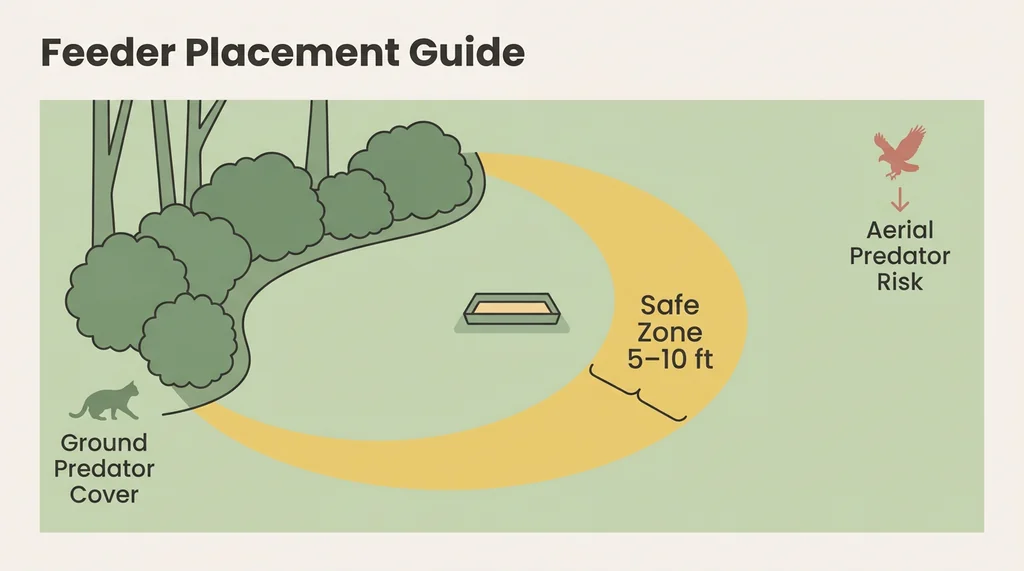
The most common dove feeding failure isn't seed selection — it's placement. Mourning doves are prey animals, and their feeding behavior reflects constant awareness of aerial predators, particularly Cooper's Hawks. Placing a ground-level or platform feeder in the middle of an open lawn gives doves nowhere to go if a hawk appears. They know this. They won't use it.
The correct approach positions feeders near shrubs or trees that provide quick escape cover, without placing them so close to dense vegetation that a ground predator could use the cover as concealment. A platform feeder or ground feeding area 5 to 10 feet from a shrub line hits the balance point: close enough for a fast retreat, open enough to spot incoming threats.
Avoid placing ground feeding stations under dense overhanging branches where cats or other predators can perch undetected above the feeding area. Doves scan constantly, and they're scanning upward as much as outward.
Water and Habitat Additions
Mourning doves have a drinking method that's unusual among birds: they use a suction technique that allows them to consume a full day's water supply in under 20 seconds without lifting their heads repeatedly. Most birds have to tilt their heads back to swallow. Doves don't. This means a ground-level or shallow birdbath positioned near the feeding area will see heavy use — doves will drink and bathe there regularly.
Keep the bath shallow. Mourning doves aren't strong swimmers, and a bath deeper than two inches is less useful than a shallower option. Clean it every few days, more frequently in summer when algae growth accelerates.
For longer-term habitat development, planting native grasses, sunflowers, and coneflowers creates a sustainable supplemental food source that doves will forage through independent of any feeder setup. Sweetgum and pine trees provide both roosting sites and natural seed sources. Mourning doves are social birds that prefer to roost communally, and a yard with established perching trees will hold them through multiple seasons rather than just attracting passing individuals.
A Few Biology Details Worth Knowing
Doves swallow small stones and grit to help grind hard seeds in their gizzards — the muscular stomach that does the mechanical work of digestion. Providing a small dish of coarse sand or commercial grit near a feeding station supplements what they'd naturally find while foraging. This is a minor addition that costs almost nothing and gets used.
Mourning doves also produce something called crop milk — a nutrient-rich secretion generated by both parents to feed nestlings. It's not related to mammalian milk biochemically, but it serves a similar function: providing concentrated protein and fat to young birds before they can process solid food. This is one reason doves are slightly more insectivorous during breeding season, as the protein demands of producing crop milk increase dietary requirements.
Finally, doves are genuinely peaceful feeders. They don't establish the kind of territorial hierarchy that cardinals do during breeding season, and they'll share a platform feeder with juncos, sparrows, and other ground-foraging species without conflict. A well-placed platform stocked with white proso millet is essentially a community table — and mourning doves are reliably the most relaxed guests at it.