Hummingbird Nectar Ratio: 1:4 Sugar to Water Guide
Hummingbird Nectar Ratio: The Complete Sugar to Water Guide
There is exactly one thing standing between you and a yard full of hummingbirds: a bowl of sugar water mixed in the right proportions.
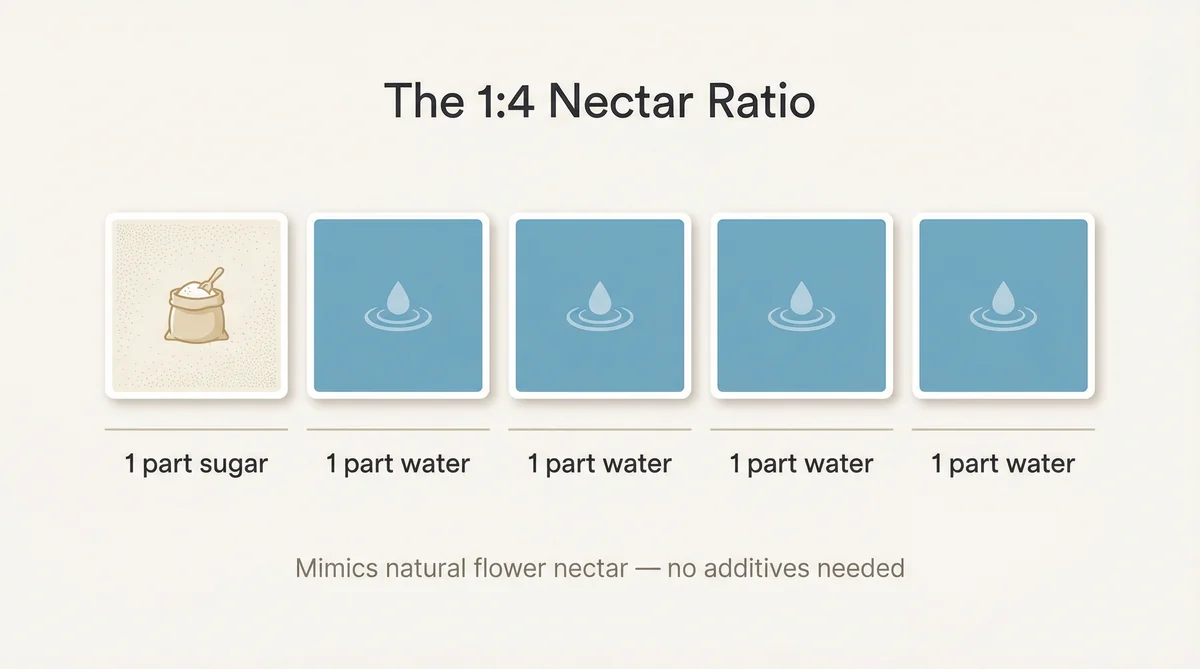
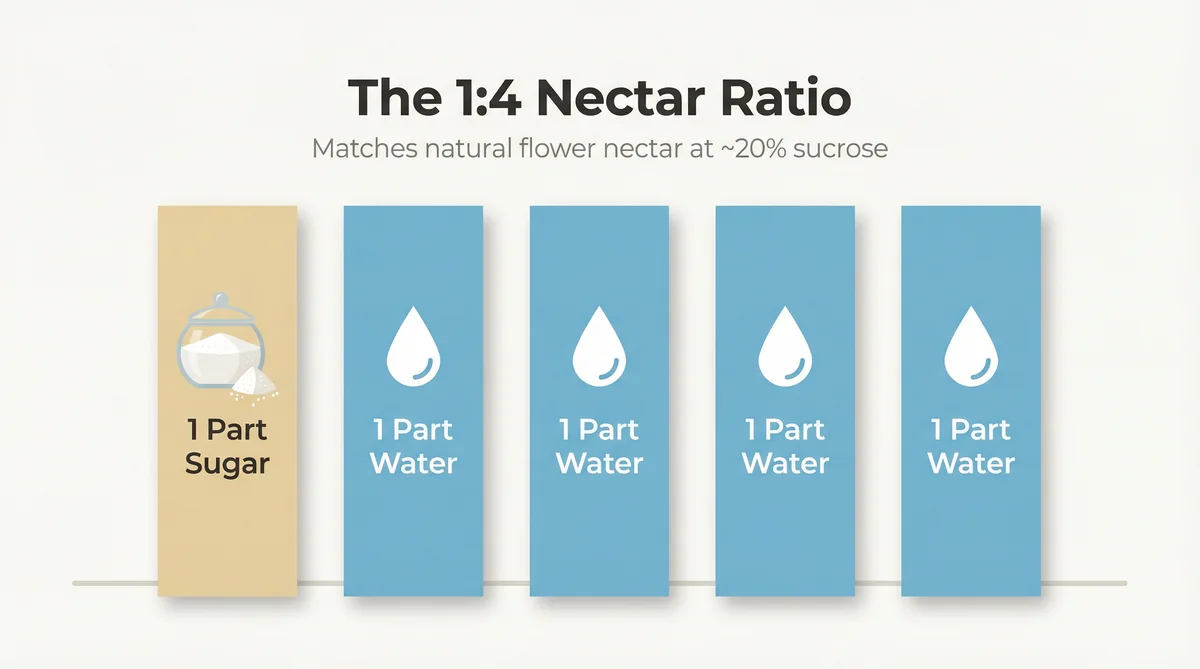
That's it. No special equipment. No expensive supplies. No secret technique handed down through generations of dedicated birders. The hummingbird nectar ratio that works—that has been proven by researchers, validated by field ornithologists, and confirmed by anyone who has ever watched a Ruby-throated Hummingbird drain a feeder in an afternoon—is one part white granulated sugar dissolved in four parts water.
Simple enough to feel almost suspicious. And yet the commercial nectar industry has built an entire business around the premise that you need something more complicated, more colorful, and considerably more expensive. Before getting into the specifics of how to make nectar correctly, it's worth understanding why the 1:4 ratio exists, what happens when you deviate from it, and why the answer to "what should I put in my hummingbird feeder" has been the same for decades.
Key Takeaways
- The correct hummingbird nectar ratio is 1 part white granulated sugar to 4 parts water, producing approximately 20% sucrose that mirrors natural flower nectar.
- Use only white granulated sugar—avoid honey, raw sugar, artificial sweeteners, and red food dye, all of which can harm or kill hummingbirds.
- Change nectar every 3–5 days normally, or every 2–3 days when temperatures exceed 75°F, and clean feeders thoroughly with dilute bleach every two weeks.
- Place feeders 4–5 feet high, in partial shade, either within 3 feet or more than 10 feet from windows, and space multiple feeders at least 20 feet apart.
- Homemade nectar costs about $4/month and is chemically superior to commercial products, which often contain red dye and less efficient sweeteners.
Hummingbird Nectar Ratio Chart (Sugar to Water)
The ratio is always 1 part white granulated sugar to 4 parts water. Use this chart to scale it to any batch size — these are the exact sugar amounts for the water volumes people search for most:
| Water | White sugar (1:4) | Makes |
|---|---|---|
| 1 cup | ¼ cup | ~1 cup |
| 2 cups | ½ cup | ~2 cups |
| 4 cups (1 quart) | 1 cup | ~1 quart |
| 8 cups (½ gallon) | 2 cups | ~½ gallon |
Why the 1:4 Hummingbird Nectar Ratio Works
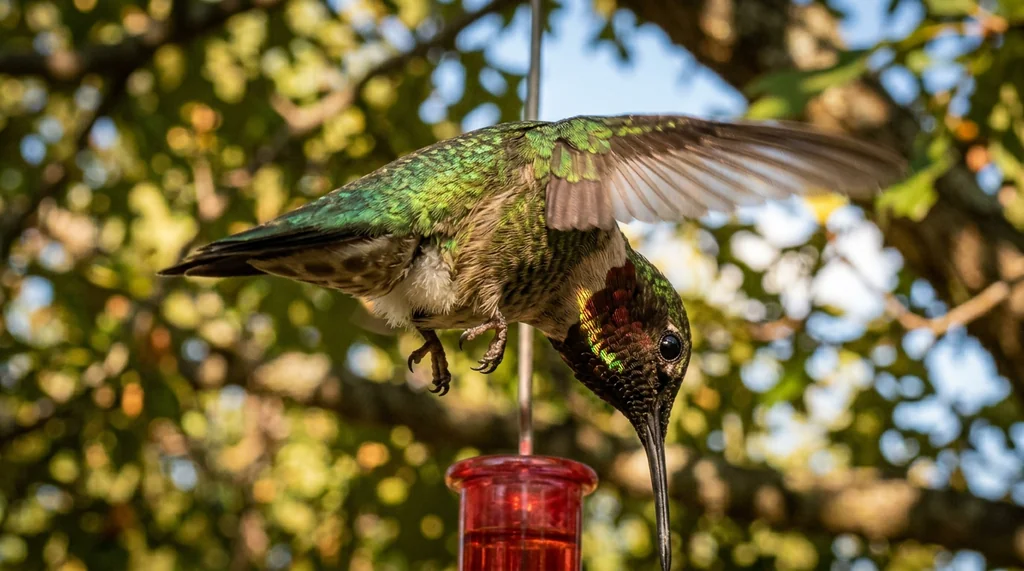
Hummingbirds are extraordinary creatures operating at metabolic extremes most animals cannot approach. Their hearts beat up to 1,260 times per minute. Their wings beat 50 to 80 times per second. They must feed every 10 to 15 minutes throughout the day just to sustain that pace, and by the time they go to roost each evening, they have consumed approximately half their body weight in sugar. When temperatures drop, they enter torpor—dropping heart rate and body temperature dramatically—just to survive the night without starving.
These are not creatures with much margin for error in their diet.
The flowers that hummingbirds evolved alongside—trumpet vine, coral honeysuckle, cardinal flower, and their relatives—produce nectar with a sucrose concentration of approximately 20 to 25 percent. The 1:4 sugar-to-water ratio (one cup of sugar dissolved in four cups of water) produces a solution of roughly 20 percent sucrose. This is not a coincidence. It is the product of millions of years of co-evolution between hummingbirds and the plants that depend on them for pollination.
A solution weaker than 1:4 doesn't provide enough caloric density to justify the energy hummingbirds expend visiting the feeder. A solution stronger than 1:4—say, 1:3 or 1:2—produces nectar that is thicker, harder to digest, and potentially damaging to the kidneys over time. It can also ferment more rapidly in warm weather, creating a hazard rather than a food source.
The 1:4 ratio sits precisely where hummingbird physiology requires it to sit. Everything else in hummingbird feeding is secondary to getting this number right.
What Sugar to Use—and What to Avoid
White granulated sugar is the only appropriate sweetener for hummingbird nectar. This is not a matter of preference or tradition. It is a matter of chemistry.
White granulated sugar is nearly pure sucrose, which hummingbirds digest efficiently. When dissolved in water, it closely replicates the sucrose-based nectar found in the flowers hummingbirds evolved to consume.
Raw sugar, turbinado, and "natural" sugars contain molasses residue and trace minerals that hummingbirds cannot process well. Despite their wholesome reputation in human nutrition, these sugars can cause digestive problems in hummingbirds and should be avoided entirely.
Honey is a common mistake. It ferments rapidly in a feeder, developing bacterial and fungal growth within a day or two, and can cause a fatal fungal infection of the tongue in hummingbirds. Well-intentioned, genuinely dangerous.
Artificial sweeteners provide no calories whatsoever. A hummingbird feeding from a nectar containing artificial sweetener is essentially drinking flavored water while spending real energy to do so. They will abandon the feeder quickly—and they should.
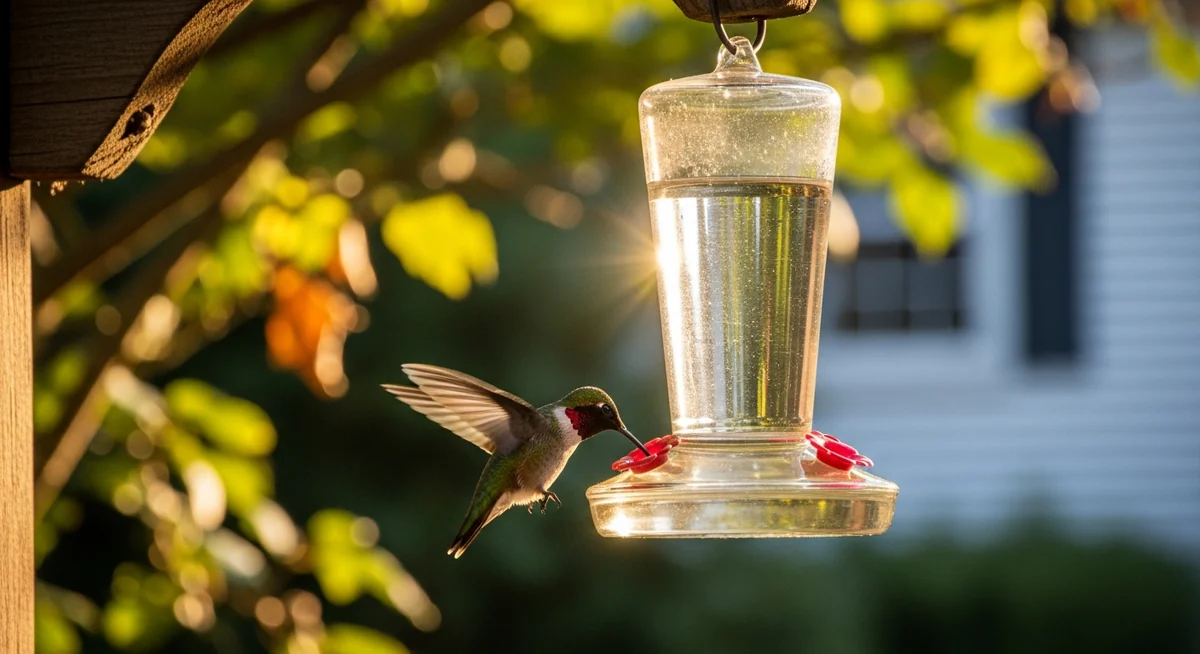
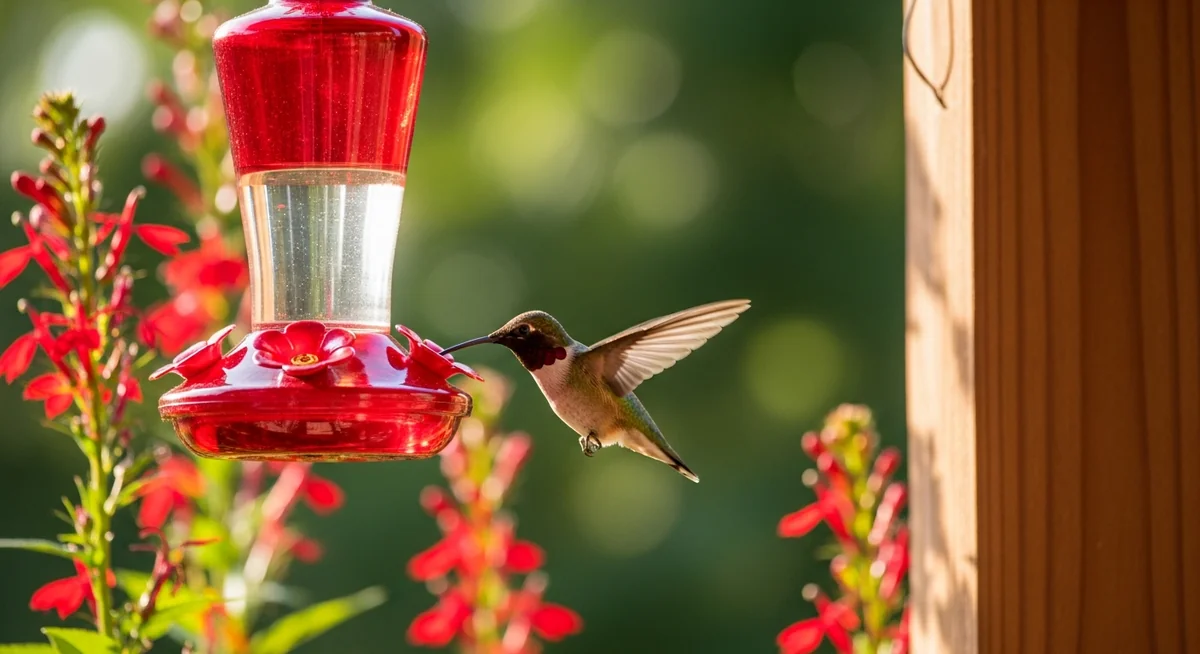
Red food dye deserves special mention. Commercial nectars are frequently dyed red on the theory that hummingbirds are attracted to the color. Hummingbirds do have excellent color vision and are strongly attracted to red—but they are attracted to the red of your feeder, not the red of the liquid inside it. Red dyes in commercial nectar have been linked to kidney damage in hummingbirds, and there is no benefit that justifies the risk. Clear nectar in a red feeder works perfectly.
How to Make Hummingbird Nectar: Step by Step
The preparation is genuinely simple. Here is the process that produces reliable, safe, correctly concentrated nectar:
Ingredients:
- 1 part white granulated sugar
- 4 parts water
For a standard batch: 1 cup sugar dissolved in 4 cups water. This fills most feeders with enough left over to refrigerate.
For a double batch: ½ cup sugar dissolved in 2 cups water fills a 16-ounce saucer feeder with extra to store.
Method:
-
Bring the water to a boil. Boiling serves two purposes: it helps dissolve the sugar completely, and it kills any bacteria or mold spores present in the water before they have a chance to establish themselves in your feeder.
-
Remove from heat and add the sugar. Stir until fully dissolved. Do not boil the sugar in the water—prolonged boiling can change the chemical composition of the sucrose.
-
Allow the nectar to cool completely to room temperature before filling feeders. Hot nectar can warp plastic feeders and may harm birds.
-
Store unused nectar in a clean glass jar in the refrigerator for up to two weeks.
The entire process takes approximately four minutes from kettle to refrigerator. There is no technique to master, no ratio to memorize beyond 1:4, and no ingredient that costs more than a few cents per batch.
Nectar Freshness: When to Change Your Feeder
Making nectar correctly is only half the equation. Keeping it fresh is equally important—and this is where many well-meaning feeder hosts go wrong.
Nectar spoils. It ferments in heat, grows mold in humidity, and becomes contaminated by the saliva hummingbirds introduce each time they feed. Spoiled nectar can sicken or kill hummingbirds, which means a feeder filled with old nectar is worse than no feeder at all.
Under normal conditions: Change nectar every 3 to 5 days, even if the feeder is not empty.
When temperatures exceed 75 degrees Fahrenheit: Change nectar every 2 to 3 days. Heat dramatically accelerates fermentation and bacterial growth. During peak summer, this means checking feeders every other day at minimum.
Signs of spoilage to watch for:
- Cloudy or milky appearance (fresh nectar is clear)
- Black spots inside the feeder (mold)
- Visible floating particles
- Any sour or fermented smell
When in doubt, dump it and start fresh. Sugar costs almost nothing. The hummingbirds visiting your yard are operating on metabolic margins that leave no room for digestive illness.
Feeder Cleaning: The Step Most People Skip
Rinsing a feeder between refills is not sufficient. Hummingbird feeders require thorough cleaning to prevent the buildup of mold, bacteria, and fermented nectar residue that accumulates even when nectar appears fresh.
Clean feeders thoroughly every two weeks using a dilute bleach solution: 1 part bleach to 9 parts water. This ratio is effective against mold and bacteria without leaving harmful residue if the feeder is properly rinsed afterward.
After cleaning with bleach solution, rinse the feeder thoroughly—multiple times—and allow it to dry completely before refilling. Bleach residue can harm hummingbirds, so complete rinsing is not optional.
Pay particular attention to feeding ports, where mold tends to accumulate first, and to any crevices in the feeder's base. A small bottle brush makes this significantly easier, particularly with glass feeders.
Feeder Placement for Maximum Visits
The right nectar ratio brings hummingbirds to your yard. Smart feeder placement keeps them coming back.
Height: Hang feeders 4 to 5 feet above the ground. This places them within hummingbirds' preferred feeding range and makes them accessible for refilling without requiring a ladder.
Window distance: Place feeders either within 3 feet of windows or more than 10 feet away. The danger zone for fatal window strikes is 3 to 10 feet from glass. A feeder placed close to a window—within 3 feet—actually reduces strike risk because birds cannot build up dangerous momentum before impact.
Shade: Partial shade extends nectar freshness. A feeder in full afternoon sun in July may need changing every day or two. Positioning feeders where they receive morning sun but afternoon shade strikes the right balance between visibility and nectar longevity.
Multiple feeders: Hummingbirds are intensely territorial. A dominant male will attempt to defend a single feeder against all competitors, which limits how many birds your yard can support. Multiple feeders spaced at least 20 feet apart—ideally out of sight of each other—allow subordinate birds to feed without constant harassment.
Seasonal Timing: When to Put Feeders Out and Take Them Down
In most regions of the United States, approximately 15 species of hummingbirds visit feeders, with the Ruby-throated Hummingbird dominating eastern states. The migration window typically runs May through September, though exact timing varies by region and year.
Spring: Put feeders out 1 to 2 weeks before hummingbirds are expected to arrive in your area—late March or early April in most temperate regions. Early migrants appreciate finding established food sources immediately upon arrival after their long journey north.
Fall: Keep feeders up for at least 2 weeks after you see the last hummingbird of the season, typically mid-September to early October. Late migrants and stragglers rely on these resources during their southward journey. Leaving feeders up will not prevent hummingbirds from migrating when their instincts tell them to go.
Commercial Nectar: What You're Actually Paying For
Commercial nectar products—concentrates, ready-to-use solutions, powder mixes—are widely available and consistently purchased by new hummingbird feeders who assume the commercial product must be superior to something made at home. It is not.
The primary ingredient in virtually every commercial hummingbird nectar product is sugar. Sometimes it is sucrose. Sometimes it is high-fructose corn syrup, which hummingbirds process less efficiently. Almost always, it includes red dye—which, as noted above, provides no benefit and carries documented risk.
The cost difference is substantial. Homemade nectar made from white granulated sugar costs approximately $4 per month during peak feeding season. Commercial nectar products, used at the same volume, can cost ten times that amount or more. The homemade version, made correctly with the 1:4 ratio, is chemically closer to natural flower nectar than any commercial product currently on the market.
The One Ratio Worth Memorizing
Everything about hummingbird feeding can be simplified to a single number: four. Four parts water for every one part sugar. This ratio has been validated by ornithological research, confirmed by field observation, and tested against the metabolic reality of some of the most energy-intensive creatures on earth.
The rest—feeder selection, placement, seasonal timing, cleaning schedules—matters, but it all builds on this foundation. Get the nectar right, and you give hummingbirds a reason to find your yard. Keep it fresh, and you give them a reason to stay. Those two commitments, more than any feeder design or placement strategy, are what transform a yard from one hummingbirds pass over to one they return to, season after season, with the reliability of a creature that has memorized your address.
Frequently Asked Questions
What is the exact hummingbird nectar ratio?
One part white granulated sugar to four parts water (1:4) — for example, 1 cup of sugar dissolved in 4 cups of water. That yields about 20% sucrose, close to natural flower nectar.
How much sugar do I need for 4 cups of water?
Use 1 cup of white granulated sugar for 4 cups (1 quart) of water. For 2 cups of water use ½ cup of sugar; for 8 cups (½ gallon) use 2 cups of sugar.
Should I use a different ratio in cold weather?
A slightly stronger 1:3 mix can give birds extra calories during cold snaps or late-season migration, but 1:4 is correct for everyday feeding. Never go stronger than 1:3 — concentrated nectar is harder to digest.
Do I need to boil the water for hummingbird nectar?
Boiling helps dissolve the sugar and slows spoilage, but it isn't strictly required if you use clean drinking water. If you do boil, don't boil the sugar itself — stir it in off the heat.
Can I use honey, raw sugar, or brown sugar?
No. Use only plain white granulated sugar. Honey ferments fast and can cause a fatal fungal infection; raw, brown, and turbinado sugars contain molasses and minerals hummingbirds can't process well.