Homemade Hummingbird Nectar Recipe That Actually Works
Homemade Hummingbird Nectar: The Simple Recipe That Actually Works
Here's a number worth sitting with for a moment: $62. That's what I spent on commercial hummingbird nectar products in my first two months of feeding. Bottles of red concentrate, pre-mixed solutions, "enhanced" formulas with added vitamins. The $12 bottle of red concentrate is still in my pantry, three years later, mostly full.
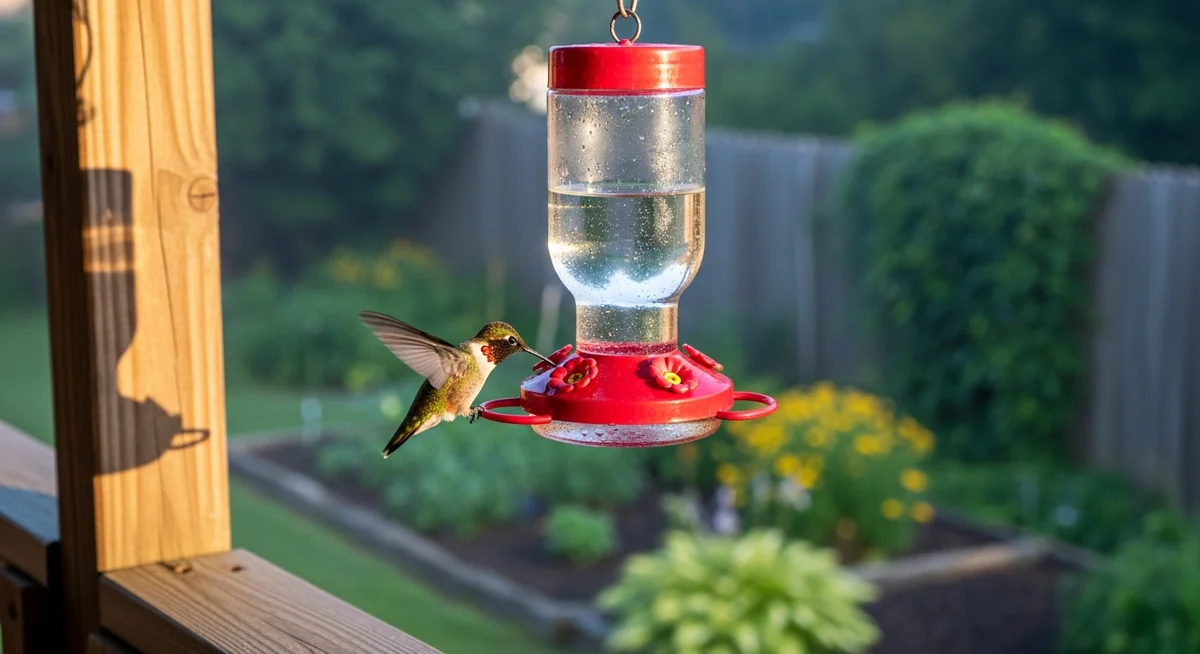
The recipe that replaced all of it costs $4 a month. It takes four minutes to make. And the territorial male who arrives at my primary feeder at exactly 6:47 AM every morning has been returning for three consecutive seasons.
If you're here because you want to attract hummingbirds without spending a fortune or overthinking the process, you're in the right place. Homemade hummingbird nectar is genuinely one of the simplest things in backyard birding — once you know what you're actually making and why.
Key Takeaways
- Use only 1 part white granulated sugar to 4 parts water—no red dye, honey, or additives needed
- Homemade nectar costs about $4/month versus $40+ for commercial products with no added benefit to birds
- Change nectar every 3–5 days (every 2–3 days in heat above 75°F) and clean feeders thoroughly every two weeks
- Place feeders 4–5 feet high, in partial shade, and at least 20 feet apart if running multiple feeders
- Put feeders out 1–2 weeks before expected arrival in spring and keep them up 2 weeks after the last sighting in fall
The Only Hummingbird Nectar Recipe You Need
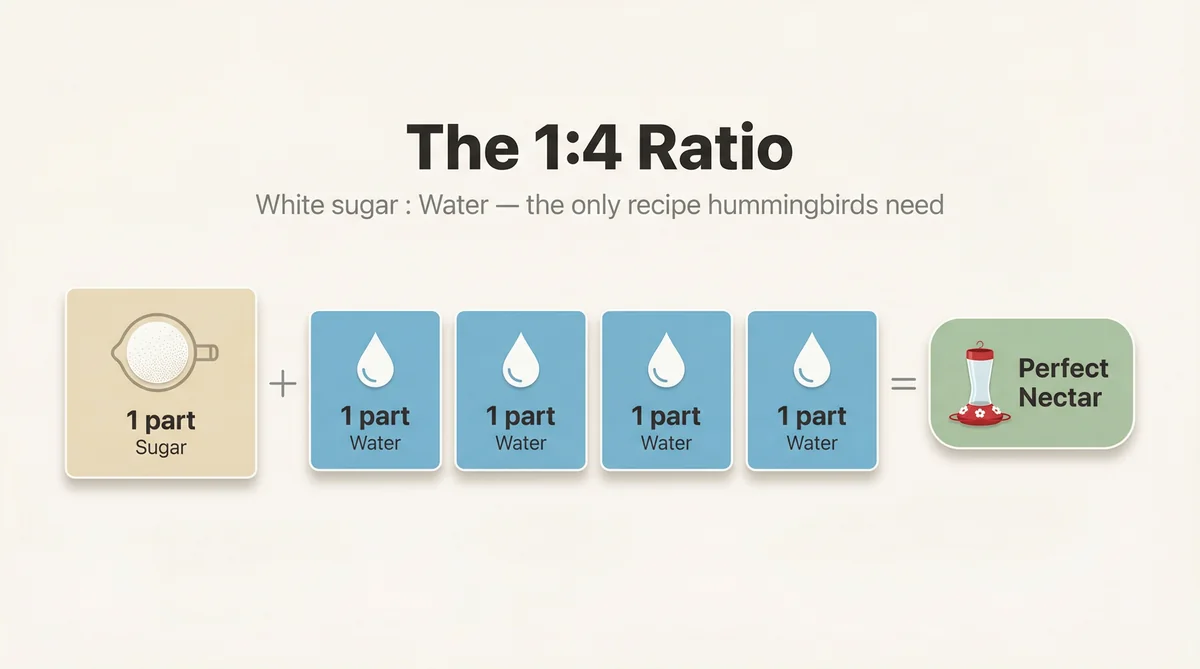
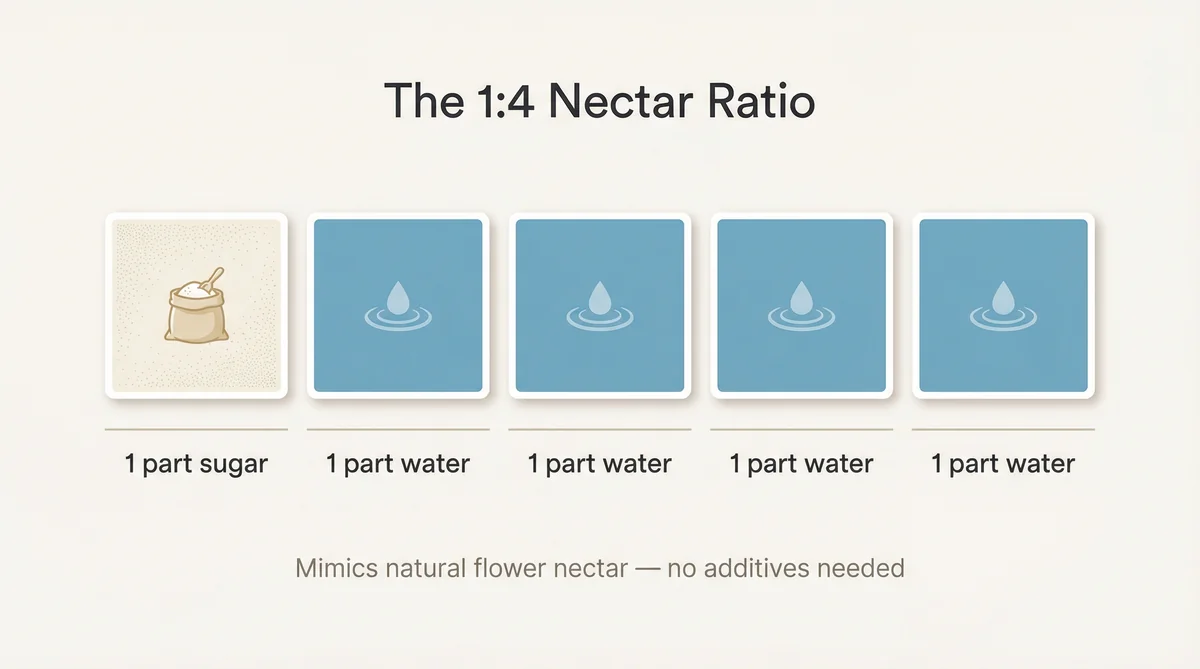
The recipe is this: 1 part white granulated sugar dissolved in 4 parts water.
That's it. No red food coloring. No honey. No artificial sweeteners. No vitamin supplements. No "hummingbird-specific" additives. Just plain white sugar and water, combined in a 1:4 ratio.
To make a double batch — enough to fill three feeders — combine ½ cup of white granulated sugar with 2 cups of water. Heat the water until it's hot enough to fully dissolve the sugar, stir until clear, let it cool completely, and pour it into your feeders. Store any extra in a glass jar in the refrigerator, where it stays fresh for up to two weeks.
From kettle to refrigerator: four minutes.
Why This Ratio Works
Hummingbirds consume approximately half their body weight in sugar every single day. Their hearts beat up to 1,260 times per minute. Their wings beat 50 to 80 times per second. They must feed every 10 to 15 minutes throughout the day just to sustain that metabolic rate.
The 1:4 ratio — roughly 20% sugar concentration — closely mimics the natural sucrose content of the flower nectar hummingbirds evolved to drink. Concentrations higher than this can cause dehydration and kidney stress. Concentrations lower than this don't provide adequate caloric density for birds burning energy at this rate.
The math is elegant: match what flowers provide, and hummingbirds will choose your feeder reliably.
What to Use — and What to Avoid
White granulated sugar only. Sucrose, the compound in plain white sugar, is what hummingbirds digest efficiently. Their digestive systems are specifically adapted to break down sucrose from flower nectar.
Honey seems like a natural alternative, but it ferments rapidly in warm temperatures and can promote dangerous fungal growth. Organic sugar, raw sugar, and turbinado sugar contain molasses residue and trace minerals that can interfere with digestion. Artificial sweeteners provide zero calories — actively harmful to birds that need caloric density to survive.
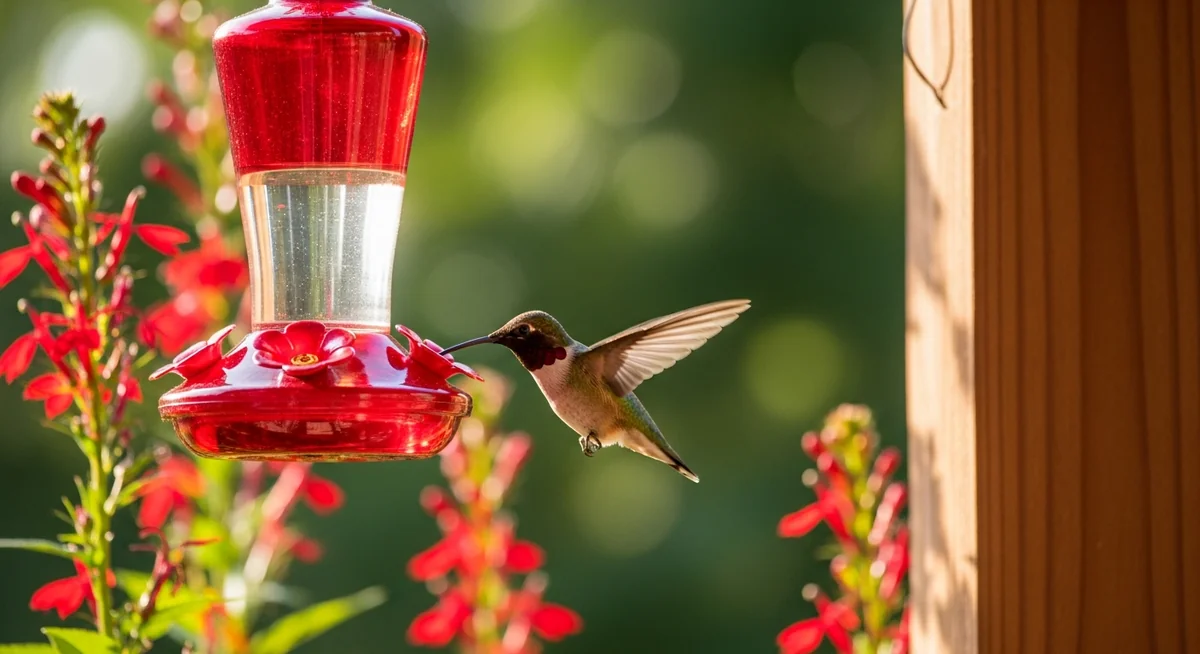
No red dye. This one matters. Red dyes in commercial nectar have been linked to potential kidney damage in hummingbirds. The red color on your feeder is sufficient to attract birds; the nectar itself doesn't need to be colored. If you've been using red nectar concentrate, the birds weren't coming because of the dye — they were coming despite it.
How to Make Homemade Hummingbird Nectar: Step by Step
Making nectar is genuinely simple, but a few details affect how long it stays fresh and how safe it is for the birds visiting your yard.
Step 1: Measure Your Ratio
For a standard single batch, use ¼ cup sugar to 1 cup water. For a double batch, ½ cup sugar to 2 cups water. Scale up proportionally based on how many feeders you're maintaining and how quickly they're being emptied.
During peak season — typically May through September in most regions — hummingbird traffic can be significant. By early June, three feeders may need refilling twice daily. Making larger batches and refrigerating the excess is far more practical than mixing fresh nectar every day.
Step 2: Dissolve the Sugar Completely
Heat the water — either on the stove or in a kettle — until it's hot enough to dissolve the sugar easily. You don't need to boil it vigorously; hot water is sufficient. Add the sugar and stir until the solution is completely clear with no visible granules.
Undissolved sugar settles at the bottom of feeders and can promote bacterial growth. Full dissolution takes about 60 seconds of stirring in hot water.
Step 3: Cool Before Filling
Let the nectar cool to room temperature before pouring it into feeders. Hot nectar can warp plastic feeder components and creates conditions where bacteria multiply faster once the feeder is hung outside.
Step 4: Store the Extra
Pour cooled nectar into a clean glass jar and refrigerate. Properly stored homemade nectar stays fresh for up to two weeks. Having a jar ready in the refrigerator makes refilling feeders a 90-second task instead of a production.
How Often to Change Hummingbird Nectar
This is where many people go wrong — not in the recipe, but in the maintenance.
Under normal conditions, change nectar every 3 to 5 days. In hot weather above 75 degrees, change it every 2 to 3 days. Nectar ferments in heat, and fermented nectar can make hummingbirds sick. Cloudy nectar, visible mold, or black spots inside the feeder are signs that cleaning is overdue.
When you change the nectar, actually clean the feeder — don't just rinse and refill. A thorough cleaning every two weeks with a dilute bleach solution (1 part bleach to 9 parts water), followed by a complete rinse and full drying before refilling, prevents the mold and bacterial buildup that makes feeders unhealthy.
Hummingbirds are remarkably good at detecting spoiled nectar and will avoid a feeder that smells wrong. Consistent maintenance is the single most effective way to keep birds returning reliably.
Feeder Placement: The Details That Make a Difference
The nectar recipe is simple. Feeder placement involves a few more considerations.
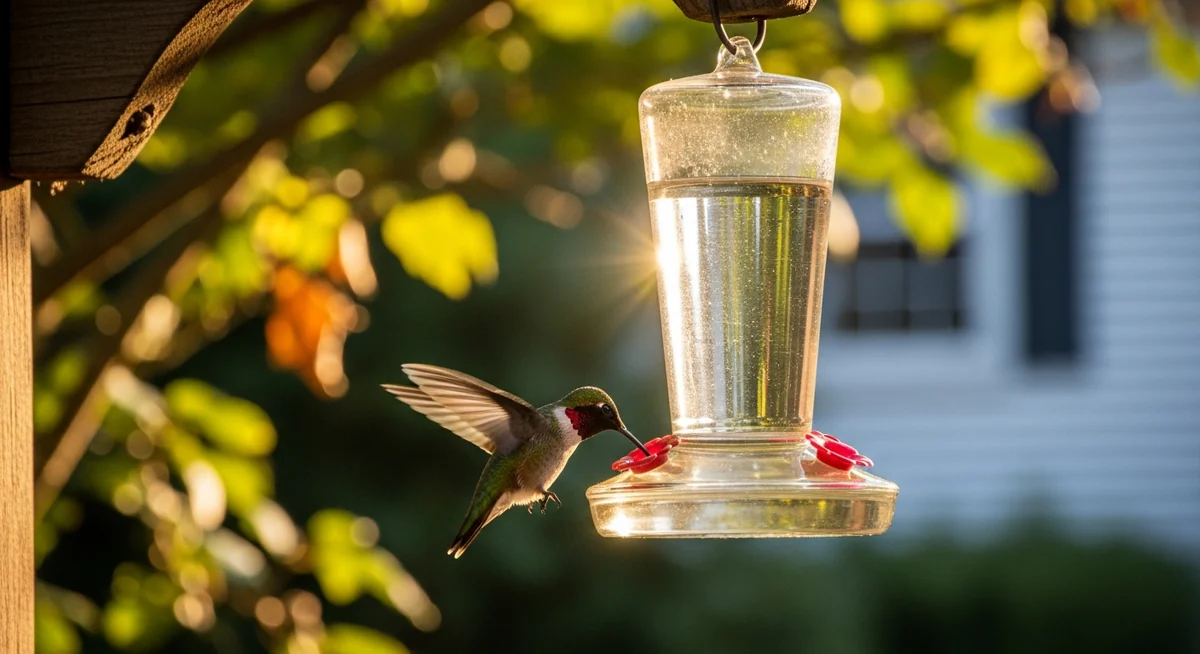
Height: Hang feeders 4 to 5 feet above the ground. This height feels natural to hummingbirds and keeps feeders accessible for refilling without requiring a ladder.
Window distance: Place feeders either within 3 feet of windows or more than 10 feet away. The danger zone for window strikes is the 3-to-10-foot range — birds gain enough speed to cause fatal collisions but not enough distance to course-correct. A feeder close to the glass actually reduces strikes rather than increasing them, because birds approaching from that distance can't build dangerous momentum.
Shade: Partial shade extends how long nectar stays fresh. A feeder in full afternoon sun in July may need changing every two days regardless of temperature. Positioning feeders where they receive morning light but afternoon shade meaningfully reduces fermentation speed.
Spacing: If you're running multiple feeders, space them at least 20 feet apart. Hummingbirds are intensely territorial, and a dominant male will attempt to guard any feeders within his line of sight. Spreading feeders beyond his patrol range allows subordinate birds — females, juveniles, less dominant males — to feed without constant harassment.
When to Put Feeders Out (and When to Take Them Down)
About 15 species of hummingbirds regularly visit feeders in the United States, with the Ruby-throated Hummingbird dominating in eastern states. Timing varies by region, but general guidelines apply broadly.
Spring: Put feeders out 1 to 2 weeks before hummingbirds are expected in your area — typically late March or early April in most of the continental US. Hummingbirds navigate by memory and return to locations where they found food in previous years. Having feeders ready when scouts arrive establishes your yard on their mental map early in the season.
Fall: Keep feeders up for at least 2 weeks after you see your last hummingbird, typically mid-September to early October depending on your region. Late-season migrants passing through your area may not be the same birds you watched all summer. Taking feeders down too early removes a resource from birds that may genuinely need it.
Leaving feeders up in fall does not prevent hummingbirds from migrating. Migration is triggered by day length, not food availability. The birds will leave when their biology tells them to, regardless of whether your feeder is still hanging.
The Cost Comparison Worth Knowing
Commercial nectar products — concentrates, pre-mixed solutions, "enhanced" formulas — cost significantly more than homemade nectar for no measurable benefit to the birds. The peak-season cost for homemade nectar, using plain white granulated sugar, runs approximately $4 per month. Commercial nectar products, used at the volume required to maintain multiple feeders through peak season, can run $40 or more monthly.
Over a full season, that difference is substantial. Over three years, it's the kind of number that makes you wish you'd known the recipe from the start.
The recipe itself has been consistent across ornithological research and wildlife rehabilitation guidance for decades: 1 part white granulated sugar, 4 parts water, fully dissolved, cooled before use, changed frequently, served in clean feeders. Everything beyond that — the red dye, the vitamins, the specialty formulas — is marketing, not science.
Hummingbird feeding has a reputation for being finicky, and there's some truth to that when it comes to feeder maintenance and placement. But the nectar itself? The nectar is easy. Make it clear, make it correctly, keep it fresh, and the birds will find you.
The territorial male who shows up at 6:47 AM every morning didn't choose this yard because of anything complicated. He chose it because the nectar ratio is right, the feeders are clean, and the refills are consistent. That's the whole system. It works exactly as well as it sounds.