Yellow Finch Feeders: Attract More Goldfinches
Yellow Finch Feeders: Attract More Goldfinches to Your Yard
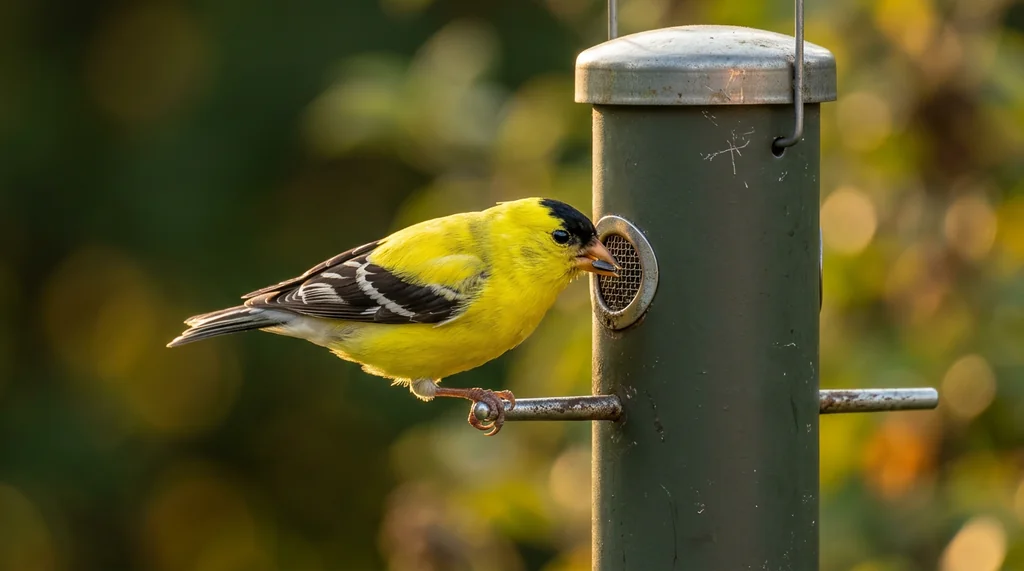
There's a particular shade of yellow that stops you mid-coffee. Not the pale butter of a warbler or the muddy olive of a vireo — the incandescent, almost-impossible yellow of an American Goldfinch in full breeding plumage, clinging sideways to a feeder like gravity is merely a suggestion. If you've been trying to attract these birds and coming up empty, you're probably doing a few things that seem completely logical and are almost entirely wrong.
Goldfinches are not difficult birds. They're just specific. They have opinions about seed, strong feelings about feeder design, and a migration schedule that makes most people think their setup has failed when it's actually working perfectly. Once you understand how they actually behave — rather than how you'd expect them to behave — setting up the right yellow finch feeder becomes straightforward, and the results are genuinely spectacular.
Here's what actually works, based on the biology of the bird rather than the marketing copy on the seed bag.
Key Takeaways
- Replace nyjer seed every four to six weeks to prevent rancidity, which is the leading reason goldfinches stop visiting feeders.
- Place feeders within ten to fifteen feet of a shrub or hedge so goldfinches have a staging area before approaching.
- Use an upside-down tube feeder to direct nyjer almost exclusively to goldfinches and exclude larger competing species.
- Expect little to no feeder activity in May and June — this is normal seasonal behavior, not a setup failure.
- Add a shallow birdbath with one to two inches of water and change it every two to three days to significantly increase yard attractiveness.
Why Most Goldfinch Feeders Fail Before the Birds Arrive
The most common goldfinch feeder mistake has nothing to do with the feeder. It has to do with timing.
American Goldfinches are late nesters — they typically breed in July and August, which is weeks or even months after most other songbirds have chicks in the nest. Their nesting cycle is timed to coincide with the peak availability of thistle and other composite flowers going to seed. This means their movement patterns, flock behavior, and feeder use shift dramatically across the calendar year in ways that confuse new observers.
In winter, goldfinches travel in loose flocks and show up at feeders in numbers. By early spring, those flocks start to disperse as birds pair off. Through late spring and early summer, you may see almost nothing at your feeders — not because you've done something wrong, but because the birds are ranging widely, foraging on natural food sources, and not yet settled into the predictable routines of breeding territory. Then, starting in July, activity picks back up as adults bring fledglings to reliable food sources.
If you set up a feeder in May and see nothing for six weeks, the instinct is to assume the feeder is wrong, the location is wrong, or the seed is stale. Usually, the only thing wrong is the expectation. New feeders in unfamiliar locations can take two to four weeks to be discovered even when the birds are actively present in your area.
The fix: put feeders out early, keep seed fresh, and resist the urge to move or change things during the discovery window.
The Seed Question: Nyjer vs. Finch Mix vs. Everything Else
Goldfinches are seed specialists. Their bills are specifically adapted for extracting seeds from composite flowers — the same family that includes thistles, coneflowers, sunflowers, and zinnias. This matters enormously when choosing what to put in your feeder.
Nyjer seed (sometimes called thistle seed, though it's actually sterilized tropical niger seed) is the gold standard for goldfinch feeders. It's small, oil-rich, and closely matches the natural food sources goldfinches evolved to exploit. The birds extract the seed from its hull with remarkable efficiency, leaving a scatter of empty casings below the feeder that looks like waste but is actually evidence of a working system.
One critical point about nyjer: it goes stale faster than most people realize. The oils that make it attractive to finches also make it susceptible to rancidity, especially in heat and humidity. Stale nyjer is one of the primary reasons goldfinch feeders get ignored. If you've had seed sitting in a feeder for more than four to six weeks without being emptied, the birds may have sampled it once and decided it wasn't worth returning to. Fresh seed makes a measurable difference.
Finch mixes vary enormously in quality. The best ones are primarily nyjer with added hulled sunflower chips — the small, oil-rich pieces that goldfinches can eat without the effort of cracking a full shell. Avoid mixes with significant quantities of millet or milo; goldfinches will sort around these fillers, and the waste attracts ground-feeding species you may not want crowding the feeder.
Black oil sunflower seeds are worth mentioning separately. Goldfinches can and do eat them, particularly hulled sunflower chips. If you're already running a sunflower feeder for cardinals or chickadees, don't be surprised to see goldfinches show up there too — but a dedicated nyjer feeder will attract more birds and hold their attention longer.
Feeder Design: What Goldfinches Actually Need
Goldfinches are acrobatic feeders. In the wild, they cling to seed heads and extract seeds at angles that would challenge most other birds. This gives them a distinct advantage with certain feeder designs — and makes other designs largely irrelevant to them.
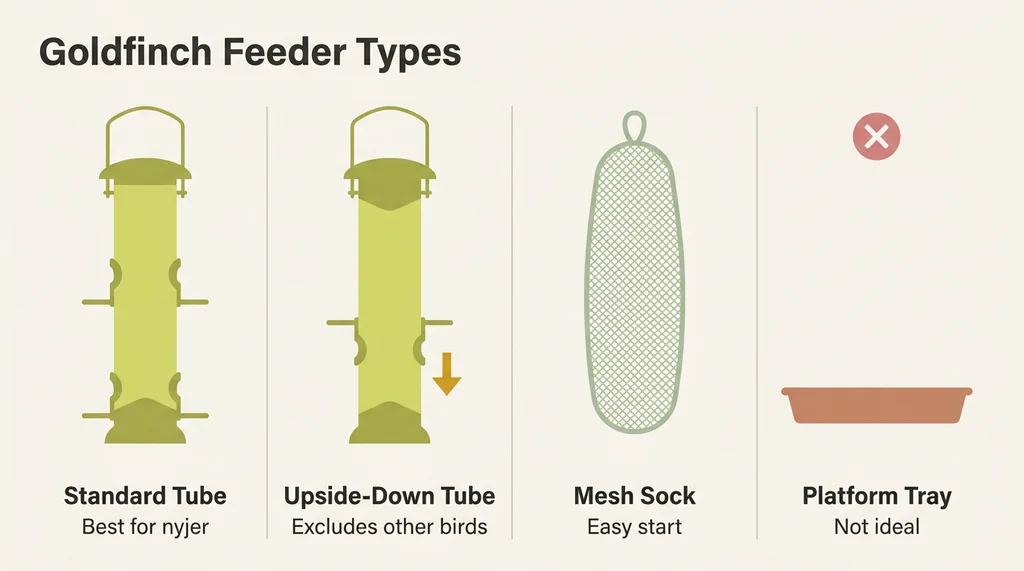
Tube feeders with small ports are the standard recommendation, and for good reason. The small port size is calibrated for nyjer seed and for the relatively small bills of finches. A tube feeder designed for nyjer typically has ports positioned at or above the perches, which works fine for goldfinches but excludes larger birds that can't feed in that orientation.
Upside-down tube feeders take this logic further. These feeders have ports positioned below the perches, requiring birds to hang inverted to access the seed. Goldfinches manage this easily — it mimics how they feed on natural seed heads. Most other species find it uncomfortable or impossible, which means your nyjer supply goes almost exclusively to the finches you're trying to attract.
Mesh sock feeders are inexpensive and effective, particularly for attracting birds to a new location. The entire surface of the mesh is accessible, allowing multiple birds to feed simultaneously at any point on the feeder. The downside is durability — mesh socks need replacement every season or two, and they're difficult to clean thoroughly. They're a reasonable starting point, but a quality tube feeder is a better long-term investment.
Platform feeders are generally not the right choice for nyjer seed, which is small enough to blow away or get wet and clump. If you want to offer hulled sunflower chips on a platform, goldfinches will use it, but a tube feeder dedicated to nyjer will serve them better.
One feeder feature worth paying attention to: port size. Feeders designed for mixed seed often have ports too large for nyjer, which pours out wastefully and attracts less desirable visitors. Confirm that any tube feeder you buy is specifically designed for nyjer or small seed before filling it.
Location and Placement: Where Goldfinches Actually Feel Safe
Goldfinches are not particularly skittish birds compared to, say, a Brown Thrasher or a Wood Thrush. They'll use feeders in reasonably open locations and don't require the dense cover that some species demand. But placement still matters.
Proximity to cover helps. Goldfinches prefer to have a landing zone — a nearby shrub, small tree, or dense perennial planting where they can stage before committing to the feeder. A feeder hung in the middle of a completely open lawn, far from any vegetation, will get less use than the same feeder placed within ten to fifteen feet of a hedge or ornamental shrub.
Height is flexible with goldfinches. Unlike hummingbirds, which have a fairly specific preferred feeder height of four to five feet, goldfinches will use feeders at a range of heights. A feeder hung at eye level for easy maintenance is perfectly acceptable. What matters more than precise height is stability — feeders that spin or sway dramatically in wind are used less consistently than feeders with a more stable hang.
Sun and shade affect seed freshness more than bird behavior. Full sun accelerates nyjer rancidity and can heat the feeder enough to drive birds away during the hottest part of the day. A location with morning sun and afternoon shade is the practical ideal, but even a fully shaded location is preferable to a feeder with stale seed in full sun.
Multiple feeders are worth considering if you want to attract flocks. Goldfinches are more social than territorial at feeders — they'll tolerate other goldfinches at close range in ways that cardinals absolutely will not. (Cardinal feeders need at least twenty feet of separation to reduce territorial conflict; goldfinch feeders can be clustered much more closely.) A cluster of two or three tube feeders on a single pole or bracket can accommodate a dozen birds simultaneously and becomes a genuine spectacle during peak fall and winter activity.
Water: The Overlooked Goldfinch Attractant
Seed selection and feeder design get most of the attention in goldfinch guides, but water is frequently the deciding factor in whether birds establish a consistent routine at a particular yard.
Goldfinches drink and bathe regularly. A clean, shallow water source within reasonable distance of your feeders dramatically increases the attractiveness of your overall setup. The key word is shallow — goldfinches prefer water that's one to two inches deep at the center, which allows them to stand and drink without risk. Deep birdbaths with steep sides see much less finch use than shallow dishes or baths with gradual slopes.
Moving water is more attractive than still water, both because the sound carries farther (helping birds locate the source) and because it stays cleaner longer. A simple dripper or solar-powered fountain adds significant appeal without major expense. Even a small pump recirculating water through a shallow dish will outperform a static birdbath in attracting finches.
Change the water every two to three days regardless of how clean it looks. Stagnant water grows algae and bacteria quickly, and birds learn to avoid contaminated sources.
Native Plants: The Long Game for Goldfinch Habitat
A feeder is a shortcut. It works, and it works well, but the most reliably goldfinch-rich yards combine feeders with native plantings that provide natural food sources through the growing season.
Goldfinches are drawn to the seed heads of coneflowers (Echinacea species), black-eyed Susans (Rudbeckia), zinnias, cosmos, and virtually any native composite flower. The strategy is simple: resist the impulse to deadhead these plants in late summer and fall. Let the seed heads stand. Goldfinches will find them, and watching a bird work a coneflower head with the same focused intensity it brings to a feeder is a different order of experience.
Native thistles — distinct from invasive species like bull thistle — are exceptional goldfinch plants where they're appropriate to the landscape. The birds use thistle down for nest lining as well as eating the seeds, so a patch of native thistle serves double duty during breeding season.
Birch trees and alder are worth mentioning for gardeners with space. Both produce catkins and small seeds that goldfinches actively seek out in winter. A mature birch in the yard can function as a natural feeder during the months when nyjer consumption at tube feeders drops off.
The combination of reliable feeders and seasonal native plantings creates a yard that goldfinches return to year after year — not just as a convenient food stop, but as a recognized habitat anchor in their home range.
Seasonal Patterns and What to Expect Month by Month
Understanding goldfinch seasonality prevents the most common source of frustration: assuming the setup has failed when the birds are simply behaving normally.
Winter (November through February) is typically peak feeder use. Goldfinches in winter plumage are olive-yellow rather than the brilliant breeding yellow, which surprises some observers who don't recognize them as the same species. Flocks of ten to thirty birds are common at well-established feeders during this period.
Early spring (March and April) brings a gradual decline in flock size as birds begin pairing and dispersing. Feeder use becomes less predictable. The male's plumage starts brightening noticeably by late March.
Late spring and early summer (May and June) is the low point for many feeder operators. Birds are ranging widely, natural food is becoming available, and breeding behavior takes priority over feeder visits. Keep the seed fresh and be patient.
Midsummer (July and August) brings a resurgence as breeding activity peaks and adults begin bringing fledglings to reliable food sources. Young goldfinches in their first-year plumage are streaky and brown with yellowish wing bars — recognizable once you know what to look for, but confusing the first time you see them.
Fall (September and October) is the second peak, as birds from northern breeding areas move through and local populations swell. This is often the most spectacular period for goldfinch activity at feeders.
The goldfinch is a bird that rewards patience and specificity in equal measure. Get the seed right, keep it fresh, give the birds a reasonable approach with nearby cover, and add water if you can. Then step back and let the discovery process run its course. The first time a dozen of them descend on a tube feeder simultaneously — that specific, impossible yellow multiplied across a dozen birds — you'll understand why people build entire gardens around the possibility of that moment.
Fresh nyjer, a quality tube feeder, and a little strategic patience. That's the whole system.