Perky-Pet Hummingbird Feeder Review: Rust & Parts Issues
Hummingbird Feeder Rust, Leaks, and the Parts Problem: An Honest Perky-Pet Review
If you've ever watched a hummingbird hover at your feeder only to dart away without feeding, you know the particular frustration of wondering what went wrong. Sometimes the answer is territorial behavior, or placement, or nectar that's turned. But sometimes — and this is the part nobody warns you about when you're standing in the garden center — the answer is the feeder itself.
Perky-Pet is one of the most recognizable names in hummingbird feeders. The brand is everywhere: big-box stores, Amazon listings, garden centers, hardware stores. The packaging is attractive, the price points feel reasonable, and the product descriptions are confident. Perky-Pet describes its feeders as "among the finest nectar-bearing feeders available on the market." That's a bold claim. After three years of testing feeders, making seventeen failed attempts before getting hummingbird feeding right, and spending what I've come to call my "learning tax" of $1,847 on products that didn't deliver, I've developed strong opinions about what that claim actually means in practice.
This is an honest look at the Perky-Pet lineup — what works, what doesn't, where hummingbird feeder rust becomes a genuine problem, and why the parts replacement situation matters more than most buyers realize before they commit.
Key Takeaways
- Avoid Perky-Pet metal base models entirely — rust introduces iron oxide into nectar and overheating accelerates fermentation, posing real health risks to hummingbirds.
- The Perky-Pet Lantern Feeder is the strongest option in the lineup due to its unscrewable base enabling thorough cleaning; the 209B plastic base model is the best budget pick.
- Perky-Pet stops making replacement parts available after one year, so budget for annual feeder replacement rather than expecting multi-year use.
- Change nectar every 3–5 days normally, every 2–3 days above 75°F, and clean feeders at least twice weekly to prevent mold and fermentation.
- Competitors like the Aspects HummZinger offer better long-term value despite similar or slightly higher upfront costs due to superior durability and cleaning access.
The Perky-Pet Lineup: What You're Actually Choosing Between
Perky-Pet offers several distinct models, and the differences between them matter more than the brand name suggests. These aren't minor variations on a theme — they have meaningfully different construction, cleaning access, and long-term durability profiles.
The Hummer's Favorite Plastic Feeder is the entry-level option, and it behaves like one. Plastic construction, modest capacity, modest price. For a first-season feeder when you're still figuring out placement and nectar ratios, it's not an unreasonable starting point.
The Lantern Hummingbird Feeder is the glass model with the most practical design in the lineup. The base unscrews for cleaning and filling, which sounds like a basic feature but is actually rarer than it should be in this category. More on this feeder shortly.
The Adjustable Perch Glass Hummingbird Feeder sounds appealing — adjustable perches suggest thoughtful design. In practice, there's a significant problem with this model that surfaces quickly for anyone who takes feeder hygiene seriously.
The Elegant Copper Glass Hummingbird Feeder is the decorative option, and it's where aesthetics and function come into direct conflict with predictable results.
The 209B Model offers 30-ounce capacity with a plastic base and perches, which turns out to be a meaningful advantage over the metal-base alternatives.
Why Hummingbird Feeder Rust Is More Than an Aesthetic Problem
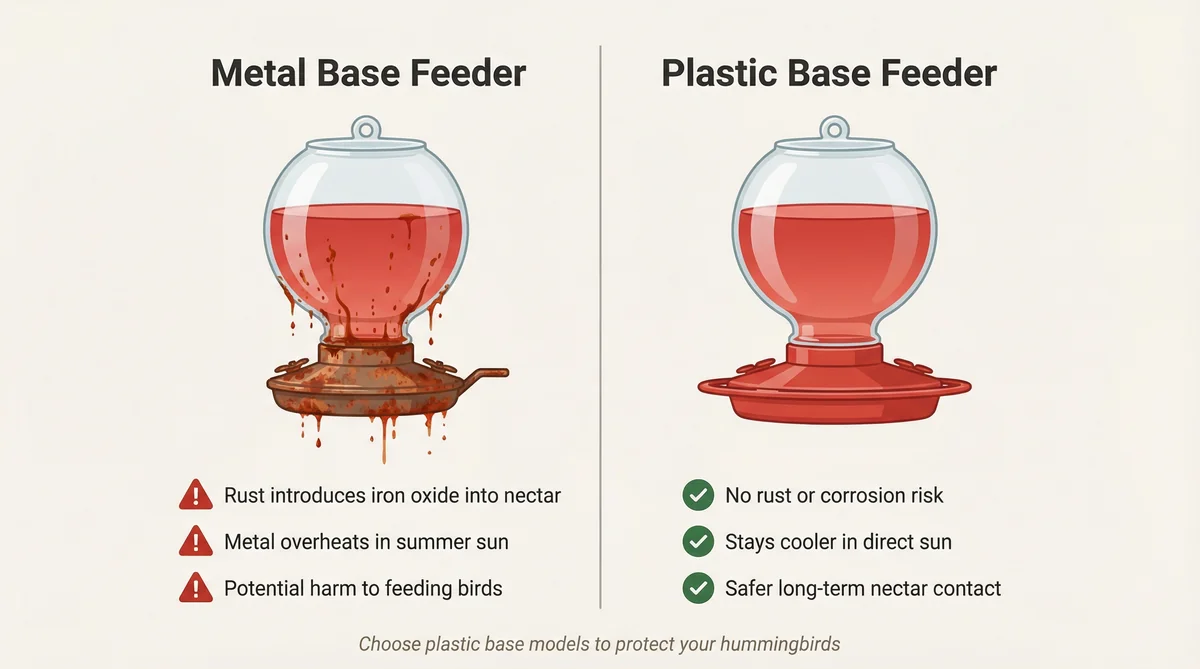
Here's what the packaging doesn't tell you: metal base feeders can rust quickly, and they get dangerously hot in summer sun. This isn't a minor inconvenience. There are documented cases of rusting feeders potentially poisoning hummingbirds in backyard feeding setups.
Think about what a feeder actually does. It holds sugar water — a solution that sits in contact with every surface inside the feeder for days at a time. When those surfaces include corroding metal, the chemistry of what your hummingbirds are consuming changes. Rust introduces iron oxide into the nectar. The same heat that accelerates rusting also accelerates nectar fermentation, turning your 1:4 sugar-to-water solution into something that can harm the birds you're trying to help.
Hummingbirds feed every 10 to 15 minutes throughout the day and consume approximately half their body weight in sugar daily. Their metabolic rate is extraordinary — heart rates reaching 1,260 beats per minute, wings beating 50 to 80 times per second. That metabolic intensity means anything wrong with their nectar source has consequences faster than it would for most animals.
The Perky-Pet Elegant Copper Glass Hummingbird Feeder illustrates a related problem from a different angle. Users report significant leaking from the bottom of this model, with visible brass rivet holes that hummingbirds can apparently detect and avoid. Hummingbirds have excellent color vision and are strongly attracted to red — but they're also cautious creatures. A feeder that's visibly compromised, dripping nectar, or showing signs of structural failure is one that hummingbirds will test briefly and abandon. That's assuming they approach it at all.
The practical recommendation that emerges from the hummingbird feeder rust problem is straightforward: choose plastic base models over metal. Within the Perky-Pet lineup, the 209B with its plastic base and perches avoids the rusting and overheating issues that plague the metal-base alternatives. It's not glamorous advice, but it's the advice that keeps your birds safe.
The Perky-Pet Lantern Feeder: The Strongest Option in the Lineup
The Perky-Pet Lantern Hummingbird Feeder deserves its own section because it's genuinely the most thoughtfully designed product in the brand's hummingbird lineup.
Glass construction matters for longevity. Glass feeders can last 10 or more years with proper care, compared to the 2-3 year lifespan typical of plastic. Glass also doesn't absorb odors or stain the way plastic does over time, which matters when you're cleaning a feeder that's held sugar water through multiple seasons.
What distinguishes the Perky-Pet Lantern Feeder is the unscrewable base. This is the feature that determines whether a feeder is actually cleanable or merely technically washable. The Adjustable Perch Glass model — despite its appealing name — does not come apart for cleaning. Users are left improvising with bent straw cleaners, unable to verify whether the interior is actually clean or just visually cleaner. That's a problem.
Nectar should be changed every 3 to 5 days under normal conditions, and every 2 to 3 days when temperatures exceed 75 degrees. If you can't properly clean a feeder between those changes, you're building up residue, mold, and fermented nectar in the spaces your cleaning tools can't reach. Hummingbirds are discerning about nectar quality. They'll abandon a feeder that tastes off before you've noticed anything wrong.
The Lantern Feeder's accessible design makes it the exception to the cleaning accessibility problem that runs through the rest of the lineup. If you're committed to a Perky-Pet purchase, this is the model to consider.
That said, there's a thermal shock issue worth knowing about before you buy any glass feeder. Pouring hot sugar-water directly into a cold glass container can cause cracking. The solution is simple — let your nectar cool to room temperature, or preheat the glass container before filling — but it's a step that plastic feeders don't require. Make a batch, let it cool, store the extra in the refrigerator where it stays fresh for up to two weeks, and fill your glass feeder with room-temperature nectar.
Hummingbird Feeder Parts Replacement: The Hidden Limitation
This is the issue that catches buyers off guard more than any design flaw, and it's worth understanding before you invest in any Perky-Pet product.
Perky-Pet does not make replacement parts available after one year.
For feeders in the budget-to-mid-range price segment, this policy effectively sets a maximum useful lifespan regardless of how well you maintain the product. When components fail — and they do, with flowers falling off, glass breaking, and structural elements degrading — you can't repair the feeder. You replace it.
There's a compounding problem here. Perky-Pet changes its designs over time, which means new parts don't fit old feeders even within the window when parts might theoretically be available. Long-term users of the brand report this as a consistent frustration: you find a feeder configuration you like, the brand discontinues it or changes the design, and the replacement doesn't accept the parts from your existing setup.
When customers contact Perky-Pet about these issues, the company's response is limited to offering product replacements rather than addressing the underlying design or parts availability problems. That's a customer service approach that treats the symptom rather than the cause.
For hummingbird feeder parts replacement in general, the broader market offers more sustainable options. Brands that maintain parts availability — replacement ports, bases, perches, and gaskets — allow feeders to serve for many seasons with modest maintenance investment. The Lantern Feeder's glass construction theoretically supports longer life, but that longevity only materializes if you can source replacement components when the inevitable wear occurs.
The practical implication: budget for annual replacement if you're using Perky-Pet feeders. Don't expect a three-year or five-year relationship with a single product. If long-term value matters to you, this parts policy is a meaningful factor in the total cost calculation.
What Perky-Pet Gets Right
In the interest of a complete picture, there are genuine strengths worth acknowledging.
The plastic base models — particularly the 209B — earn consistent positive feedback for ease of cleaning and filling. The wide-mouth design makes the filling process straightforward, which matters when you're refilling multiple feeders twice daily during peak season as hummingbird activity peaks in early June.
The size and perch design of several models appeal to users who want feeders that can accommodate multiple birds simultaneously. Hummingbirds are territorial, and the dominant male at any given feeder will spend considerable energy chasing competitors away. Having multiple perch positions on a single feeder doesn't eliminate that behavior, but it can reduce the frequency of dramatic mid-air conflicts.
The price point is genuinely accessible. Not every hummingbird feeding setup needs to begin with premium equipment. For a first-season feeder when you're still figuring out placement — optimal height is 4 to 5 feet, positioned in partial shade, within 3 feet or more than 10 feet from windows to prevent strikes — a modestly priced Perky-Pet plastic model is a reasonable entry point.
How Perky-Pet Compares to the Alternatives
The hummingbird feeder market has strong alternatives at comparable and slightly higher price points. The Aspects HummZinger series comes up repeatedly in user comparisons as offering better reliability, more durable construction, and superior cleaning access. The HummZinger's saucer design — which I've used as my primary feeder for three years now, the $16 red plastic saucer still hanging and still attracting 80% of my yard's hummingbird traffic — proves that simple designs can outperform elaborate ones.
For glass feeders specifically, the More Birds Vintage Glass Hummingbird Feeder ($35-45) and the Grateful Gnome option ($35) offer comparable aesthetics to Perky-Pet's decorative models with better construction reputations — we compare them all in our best glass hummingbird feeders guide. The glass longevity advantage — 10+ years versus 2-3 for plastic — only materializes if the construction quality supports it.
The honest competitive assessment is this: Perky-Pet occupies a budget-to-mid-range position in the market, but the quality concerns documented across multiple models mean the value proposition is weaker than the price suggests. A feeder that requires annual replacement because parts become unavailable isn't necessarily cheaper over three years than a feeder that costs more upfront but lasts.
The Practical Buying Guide
If you're evaluating Perky-Pet feeders, here's what the evidence supports:
Choose the Lantern Feeder or the 209B over the Elegant Copper or Adjustable Perch models. The cleaning accessibility of the Lantern Feeder and the plastic base advantages of the 209B address the two most significant failure modes in the lineup.
Avoid metal base models entirely. The hummingbird feeder rust risk is real, the overheating problem is real, and the potential health consequences for your birds make this a non-negotiable point.
Verify disassembly before purchase. If you're buying in a store, confirm that the feeder comes apart completely for cleaning. If you're buying online, check reviews specifically for cleaning access — not just overall ratings.
Plan for replacement within one year. The parts availability policy makes this the realistic expectation. Factor that into your cost calculation.
Preheat glass containers before adding nectar to prevent thermal shock cracking. Let your nectar cool to room temperature before filling. These are small habits that prevent expensive breakage.
Clean at minimum twice weekly, more frequently when temperatures are above 75 degrees. Nectar spoils faster than most people expect, and a feeder that smells even slightly fermented will be abandoned by birds that were previously reliable visitors.
The hummingbird feeding season runs May through September in most regions. That's five months of active management, nectar changes, and cleaning cycles. The feeder you choose shapes how much of that time you spend solving problems versus watching birds. Perky-Pet's best models — the Lantern Feeder and the plastic base options — can support a functional feeding setup. The brand's weaker models, combined with the parts replacement limitation, make careful selection essential rather than optional.
Hummingbirds will find your feeder if the nectar is fresh, the feeder is clean, and the placement is right. Getting those fundamentals correct matters more than any brand name on the label.