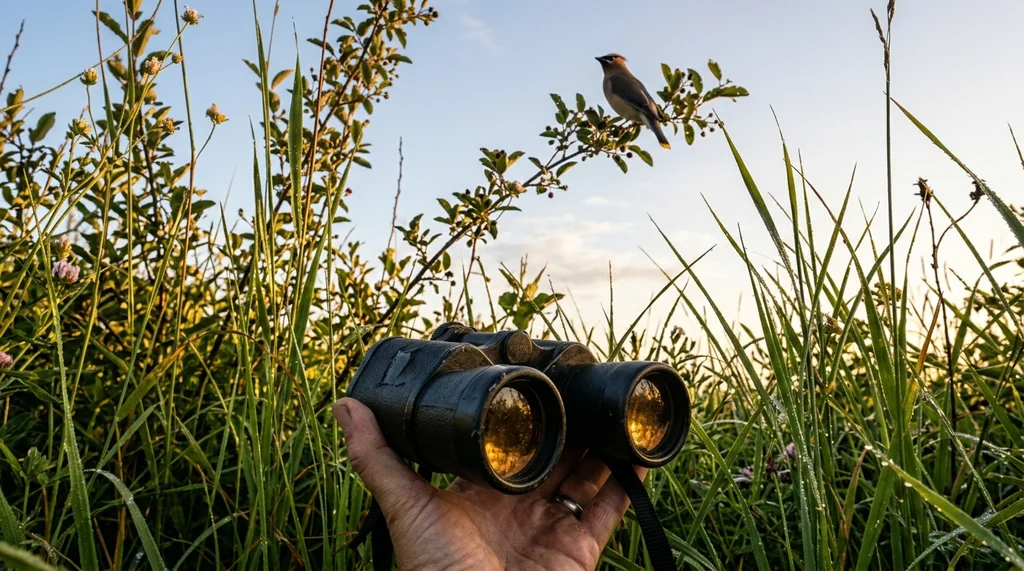
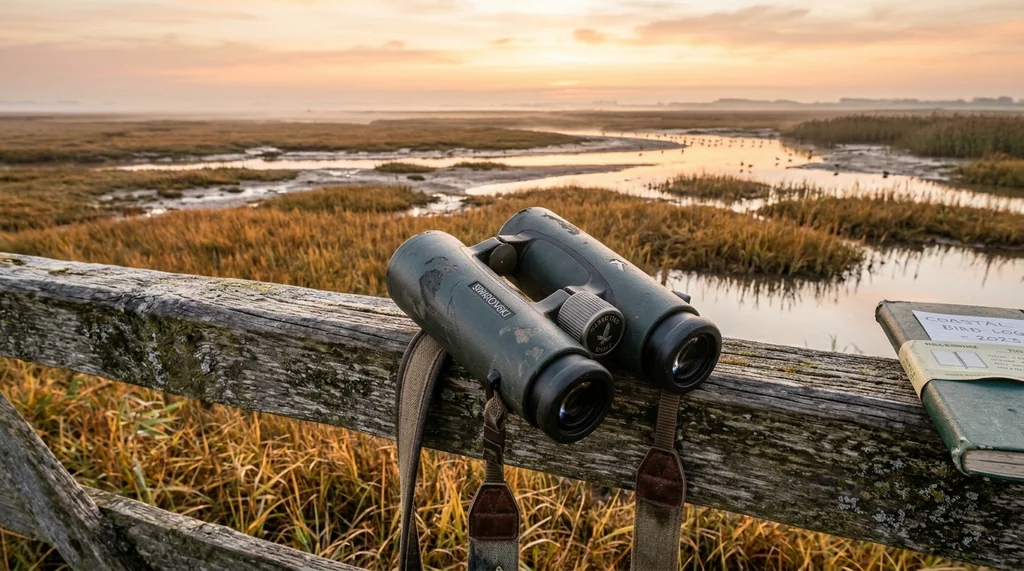
Best Vortex Binoculars for Bird Watching
Best Vortex Binoculars for Bird Watching: A Field-Tested Guide
Three years ago, the first pair of binoculars purchased for bird watching weighed 47 ounces, cost $180, and made the neck ache after twenty minutes of use. They were 10x50s — impressive-sounding specs that turned out to be exactly wrong for the purpose. The close focus distance was 20 feet, which meant any bird closer than that became an expensive blur. The eye relief was 12mm, which meant glasses wearers in the household were essentially excluded. Six months later, those binoculars were retired to a shelf, and the search for something better began.
That search eventually led to Vortex Optics — a company that has built a devoted following among birders for reasons that become obvious the moment you look through a quality pair. Vortex binoculars offer a combination of optical clarity, durable construction, and genuinely useful warranties that few competitors match at comparable price points. For anyone serious about bird watching, they deserve a careful look. This guide covers the best Vortex binoculars for bird watching across different budgets, use cases, and experience levels, with particular attention to the specifications that actually matter in the field.
Understanding what makes binoculars genuinely useful for birding — rather than just impressive on paper — takes some time and some expensive mistakes. The goal here is to save readers both.
Key Takeaways
- 8x42 binoculars outperform 10x42 for most birding because the wider field of view makes tracking moving birds easier and reduces hand-tremor shake.
- Glasses wearers need at least 16mm eye relief; the Viper HD's 20mm is the most comfortable option in the Vortex lineup.
- Close focus distance below 6 feet is required for backyard feeders — the Diamondback HD focuses to 5 feet for around $200.
- The Vortex VIP warranty covers accidental damage with no receipt required, making a $450 Viper HD cheaper long-term than replacing $150 binoculars every few years.
- The Razor HD 8x32 weighs 17.6 oz versus 24.5 oz for the 8x42, a meaningful trade-off for birders covering long distances on foot.
Why Vortex Dominates the Birding Binocular Market
Vortex Optics, headquartered in Barneveld, Wisconsin, has been producing optics since 2004. What distinguishes them in a crowded market is their VIP (Valor, Integrity, Performance) warranty — an unconditional lifetime guarantee that covers damage, defects, and even accidents with no questions asked and no proof of purchase required. For an instrument you're going to carry through rain, drop on rocky trails, and use in every weather condition imaginable, that warranty matters.
Beyond the warranty, Vortex has built a reputation for delivering optical performance that punches above its price class. Their glass coatings — particularly the XR anti-reflective coatings on higher-end models — produce images that compete with European brands costing two or three times as much. The result is a brand that entry-level birders can afford to start with and experienced birders choose to stay with.
The Vortex lineup for birding breaks into three meaningful tiers: the Diamondback HD series for value-focused buyers, the Viper HD series for serious intermediate birders, and the Razor HD series for those who want the best available optics regardless of price.
Understanding the Specs That Actually Matter
Before reviewing specific models, it's worth establishing what the numbers mean in practice — because binocular specifications are frequently misunderstood in ways that lead to poor purchases.
Magnification and Objective Lens
The two numbers in any binocular designation (8x42, 10x42, 8x32) describe magnification and objective lens diameter in millimeters. An 8x42 magnifies eight times and has 42mm objective lenses.
Higher magnification sounds better but creates real problems for birding. At 10x, image shake from hand tremor becomes significantly more noticeable than at 8x. Birds move quickly, and tracking a warbler through branches at 10x magnification requires steadier hands than most people have after a long morning in the field. The consensus among experienced birders — and among ornithologists who use binoculars professionally for decades — consistently favors 8x magnification for general bird watching. The wider field of view at 8x makes finding and following birds dramatically easier.
The objective lens diameter affects how much light enters the binoculars, which directly impacts image brightness in low-light conditions. Dawn and dusk, when birds are most active, are exactly when you need that light-gathering capacity. A 42mm objective provides noticeably better low-light performance than a 32mm, though 32mm binoculars offer meaningful weight savings for birders who prioritize portability.
Eye Relief
Eye relief measures the distance from the eyepiece at which the full image can be seen. For glasses wearers, this number is critical. Anything below 14mm makes wearing glasses while birding uncomfortable or impossible. Sixteen to 18mm of eye relief is the practical minimum for glasses wearers; 18mm or more provides genuine comfort.
This specification eliminated the first pair of binoculars from usefulness for one member of the household almost immediately. Twelve millimeters of eye relief with glasses means seeing only a portion of the image — a crescent of brightness in a sea of black. Anyone who wears glasses should treat eye relief as a non-negotiable minimum, not a secondary consideration.
Close Focus Distance
This specification rarely appears in marketing materials but matters enormously for backyard birding. Close focus distance is how near a bird can be and still appear sharp. The first pair purchased — those heavy 10x50s — couldn't focus on anything closer than 20 feet. Standing at a kitchen window watching cardinals at a feeder eight feet away meant seeing nothing but blur.
Quality birding binoculars focus to six or seven feet. Some focus even closer. For anyone doing significant backyard or woodland birding where birds are often within arm's reach of a feeder or perch, close focus distance deserves serious attention.
Field of View
Measured in feet at 1,000 yards, field of view determines how wide a swath of the world you see through the binoculars. A wider field of view makes finding birds faster and tracking moving birds easier. For reference, 300 feet at 1,000 yards is narrow; 400 feet is good; 420 feet or more is excellent for birding purposes.
Vortex Diamondback HD: The Starting Point That Doesn't Disappoint
The Diamondback HD series represents Vortex's entry-level offering, and it's genuinely impressive for the price. Available in 8x28, 8x42, and 10x42 configurations, the 8x42 version retails around $200 and delivers optical quality that would have been considered mid-range performance a decade ago.
The Diamondback HD uses HD (extra-low dispersion) glass that reduces chromatic aberration — that annoying color fringing around high-contrast edges that cheaper binoculars produce. The result is sharper, more color-accurate images than the price suggests. The field of view on the 8x42 Diamondback HD is 393 feet at 1,000 yards, which is respectable. Eye relief is 15.5mm — adequate for glasses wearers, though not as generous as higher-end models. Close focus distance is 5 feet, which handles backyard feeder situations easily.
The body is rubber-armored and waterproof, with argon purging to prevent internal fogging. The weight is 23.8 ounces — manageable for extended use without neck strain.
Where the Diamondback HD shows its price point is in edge sharpness and low-light performance. The image is excellent in the center of the field but softens toward the edges more than pricier models. At dawn or dusk, the limitations of the optical coatings become apparent compared to the Viper HD or Razor HD. For daytime backyard birding and casual trail use, these limitations rarely matter. For serious low-light observation or extended field work, they do.
Best for: Beginning birders, budget-conscious buyers, backyard and daytime use. At approximately $200, the Diamondback HD 8x42 represents genuine value.
Vortex Viper HD: The Sweet Spot for Serious Birders
The Viper HD series is where Vortex's optical performance takes a meaningful step forward. The 8x42 Viper HD retails around $450 and delivers noticeably better image quality than the Diamondback HD — brighter, sharper across the full field, with better color fidelity and significantly improved low-light performance.
The Viper HD uses XR anti-reflective coatings on all air-to-glass surfaces, which increases light transmission and produces that characteristic "look through clean air" quality that distinguishes quality optics from adequate ones. The field of view is 409 feet at 1,000 yards. Eye relief is 20mm — genuinely comfortable for glasses wearers, with twist-up eyecups that adjust smoothly. Close focus is 5 feet.
The weight is 21.2 ounces, slightly lighter than the Diamondback HD despite the larger optical system. The body is magnesium alloy rather than polycarbonate, which contributes to both the lighter weight and the more substantial feel in hand.
The focus wheel on the Viper HD is particularly well-designed — smooth, precise, and positioned for easy one-finger adjustment while holding the binoculars steady. For tracking birds that move quickly between perches, a good focus wheel is underappreciated until you use one.
The Viper HD 10x42 version is worth mentioning for birders who prioritize distant observation over close work — hawk watching, shorebirding, and open-country species where birds are rarely within 50 feet. The 10x magnification reveals detail at distance that 8x can't match, though the trade-offs in field of view and image stability apply.
Best for: Intermediate to advanced birders, regular field use, anyone who birds in varied lighting conditions. The Viper HD 8x42 is the model that many experienced birders consider the practical ceiling before diminishing returns set in.

Vortex Razor HD: When Compromise Isn't an Option
The Razor HD series occupies the top tier of Vortex's lineup, and the price reflects it — the 8x42 Razor HD retails around $1,100 to $1,200. At this price, Vortex is competing directly with Zeiss, Swarovski, and Leica, and the competition is legitimate.
The Razor HD uses APO (apochromatic) glass elements that virtually eliminate chromatic aberration and produce extraordinary color accuracy and edge-to-edge sharpness. The field of view is 426 feet at 1,000 yards — excellent. Eye relief is 17.5mm. The image quality in low light is remarkable; at dawn, the Razor HD reveals detail and color that other binoculars simply cannot.
The weight is 24.5 ounces — slightly heavier than the Viper HD, which is surprising given the price. The optical system requires larger, heavier glass to achieve its performance, and there's no way around the physics. The body is magnesium alloy with a rubber armor that provides a secure, comfortable grip.
For professional ornithologists, serious listers, and anyone who spends significant time in the field and wants their optics to be the last thing they ever need to think about, the Razor HD justifies its price. For casual backyard birding, it's significantly more than necessary.
The Razor HD also comes in an 8x32 configuration that weighs only 17.6 ounces — a meaningful consideration for birders who walk long distances or travel frequently. The 32mm objective sacrifices some low-light performance relative to the 42mm version, but the weight savings are substantial.
Best for: Advanced birders, professional use, anyone who wants the best available optics and will use them extensively enough to justify the investment.
Vortex Crossfire HD: The Accessible Entry Point
Below the Diamondback HD, Vortex offers the Crossfire HD series, which retails around $120 to $150. The 8x42 Crossfire HD is worth mentioning because it represents the minimum viable binocular for birding — the threshold below which optical quality compromises the experience enough to discourage continued use.
The Crossfire HD has a field of view of 393 feet at 1,000 yards, eye relief of 15mm, and close focus of 6.5 feet. The optical coatings are multi-coated rather than fully multi-coated, which produces slightly lower light transmission and less color accuracy than the Diamondback HD. The image is good in bright light and acceptable in moderate light; in low light, the limitations become apparent.
For a complete beginner who wants to try birding before committing significant money, the Crossfire HD is a reasonable starting point. For anyone who discovers they're genuinely interested in bird watching, upgrading to at least the Diamondback HD within a year or two is likely.
Best for: True beginners, gift purchases for uncertain recipients, a starting point before committing to the hobby.
Comparing Vortex Models: What the Numbers Mean Together
| Model | Configuration | Price | Eye Relief | Close Focus | Field of View | Weight |
|---|---|---|---|---|---|---|
| Crossfire HD | 8x42 | ~$140 | 15mm | 6.5 ft | 393 ft | 22.9 oz |
| Diamondback HD | 8x42 | ~$200 | 15.5mm | 5 ft | 393 ft | 23.8 oz |
| Viper HD | 8x42 | ~$450 | 20mm | 5 ft | 409 ft | 21.2 oz |
| Razor HD | 8x42 | ~$1,100 | 17.5mm | 5 ft | 426 ft | 24.5 oz |
The jump from Crossfire HD to Diamondback HD is meaningful for the modest price difference. The jump from Diamondback HD to Viper HD is significant in optical quality and substantial in price. The jump from Viper HD to Razor HD is real but requires significant use to justify.
Choosing the Right Vortex for Your Situation
For backyard birding primarily: The Diamondback HD 8x42 handles everything a kitchen-window or backyard setup requires. The 5-foot close focus distance handles near feeders; the field of view is wide enough to track birds between perches; the optical quality is genuinely good in daylight.
For glasses wearers: The Viper HD's 20mm eye relief is the most comfortable option in the lineup. The Diamondback HD's 15.5mm is workable but noticeably less comfortable for extended sessions.
For hiking and trail birding: The weight difference between models matters more over long distances. The Viper HD's 21.2 ounces represents a reasonable balance of performance and portability. The Razor HD 8x32 at 17.6 ounces is worth considering for anyone who regularly covers significant ground.
For hawk watching or open-country birding: The 10x42 configuration in either the Viper HD or Diamondback HD provides the distance-resolving power that open-country species require. The trade-off in image stability and field of view is worth accepting when birds are consistently far away.
For serious field work: The Razor HD is the honest answer, with the Viper HD as a strong alternative that most birders will find difficult to distinguish in practical use.
The Warranty That Changes the Calculus
The VIP warranty deserves separate emphasis because it genuinely changes how to think about the price of Vortex binoculars. Dropping a $450 pair of Viper HDs on rocks, getting them submerged in a creek, or having them fail for any reason — Vortex repairs or replaces them, no questions, no receipt required, no shipping charge. For a tool used outdoors in all conditions, this is not a trivial benefit.
The warranty transforms binoculars from a purchase into an investment. A $450 pair of Viper HDs that last twenty years — as quality binoculars demonstrably can — costs less annually than a $150 pair replaced every three or four years. The math favors buying quality once.
Making the Decision
The best Vortex binoculars for bird watching are the ones that actually get used. An expensive pair that stays home because they're too heavy, or a cheap pair that produces headaches after twenty minutes, both fail the fundamental test. The Viper HD 8x42 represents the point in the Vortex lineup where most birders find the balance of optical quality, weight, and price that makes the binoculars disappear into the experience — where the focus is on the birds, not the equipment.
For those starting out, the Diamondback HD 8x42 is an honest, capable starting point that won't need replacing when the hobby takes hold. For those ready to invest in optics they'll use for decades, the Viper HD earns its price every time it comes out of the case. The birds are there regardless of which model you choose — quality binoculars simply ensure you see them clearly.