Bird Feeder Types: Match Feeder to Bird and Seed
The Complete Guide to Choosing the Best Bird Feeders for Your Yard
You've decided to start feeding birds. Or maybe you've been feeding them for a while and something isn't working — the wrong birds keep showing up, or no birds at all, or you're spending more than you'd like to admit on seed that disappears without explanation. Either way, you're here because you want to do this right.
After three years of testing feeders, spending $47 a month on black oil sunflower seeds, watching cardinals perform their characteristic twelve-second assessment before committing to a perch, and documenting everything from hummingbird arrival times to squirrel athletic feats, I can tell you this with confidence: the feeder is not just a container. The design of the feeder determines which species visit, how frequently they return, how much seed gets wasted, and whether you spend the next decade enjoying your yard or troubleshooting it.
This guide covers every major feeder type, how to match feeders to the birds you actually want to attract, what the research says about seed selection, and the specific products worth your money. No single feeder is best for everyone. But by the end of this, you'll know exactly which feeder is best for you.
Key Takeaways
- Platform feeders placed 5–6 feet high within 15 feet of dense shrubs increase cardinal visits because cardinals require open escape routes during their 12-second predator assessment.
- Switching from generic mixed seed to black oil sunflower seeds can increase yard bird visitation by 300%.
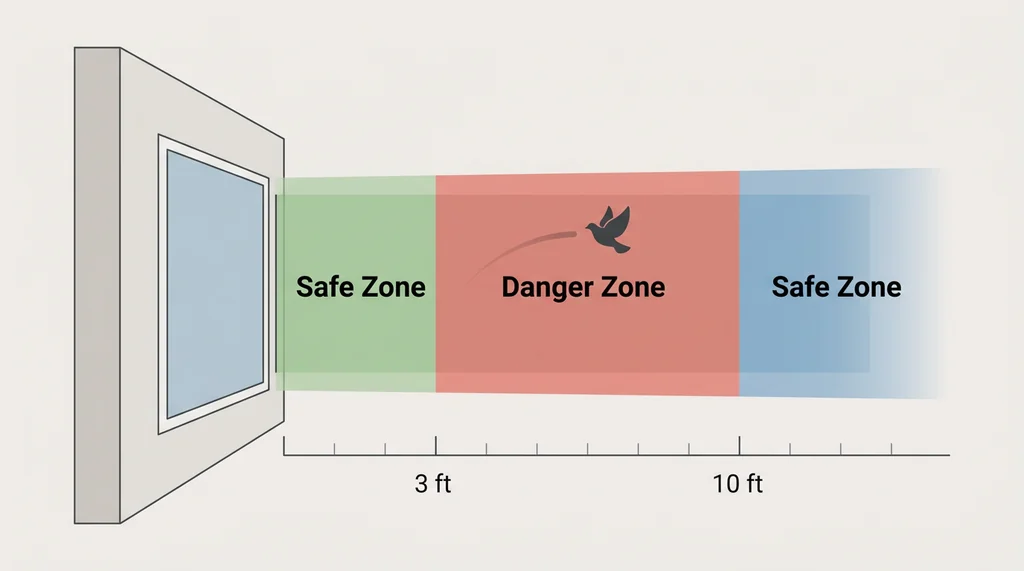
- Place feeders within 3 feet of windows or more than 10 feet away — the 4-to-9-foot zone causes 600 million fatal window strikes annually in North America.
- Clean seed feeders with a 1:9 bleach-to-water solution every two weeks and change hummingbird nectar 1–3 times per week depending on temperature to prevent mold and bacterial growth.
- A complete feeding station combining a platform feeder, tube feeder, suet cage, and nectar feeder costs $163–$232 upfront and can document 30+ species within three years.
Understanding Types of Bird Feeders
The feeder market is enormous and occasionally bewildering. Walk into any hardware store and you'll find dozens of options ranging from a $6 wire cage to a $300 camera-equipped smart feeder with AI species identification. The variety exists because birds are genuinely diverse in their feeding behaviors, physical capabilities, and food preferences. A feeder designed for goldfinches is nearly useless for cardinals. A feeder perfect for cardinals will frustrate chickadees. Understanding the categories first makes every subsequent decision easier.
Tube Feeders
Tube feeders are the most recognizable feeder style — a cylindrical container, usually clear plastic or glass, with multiple feeding ports positioned along the sides and a perch beneath each port. They're popular because they're visually tidy, hold a reasonable seed volume, and accommodate a wide range of small to medium birds.
The limitation of tube feeders becomes clear when you understand bird anatomy. Cardinals, for example, evolved as ground feeders. Their thick conical beaks are designed to crack open seeds with considerable force, not to navigate small circular openings while balancing on a narrow perch. Cardinals will attempt tube feeders, particularly when food is scarce, but they're working against their own physiology. The same birds that visit a platform feeder confidently will hover awkwardly at a tube port, grab a seed, and leave without returning.
For tube feeders to work well, match the port size to the intended seed. Ports designed for black oil sunflower seeds are wider than those designed for nyjer. A tube feeder with the wrong port size for the seed inside is one of the most common reasons feeders sit ignored. Chickadees are among the most enthusiastic tube feeder visitors — see our guide on chickadee feeders for seed and placement tips specific to these birds.
The Droll Yankees 18-Inch Onyx Mixed Seed Tube Bird Feeder with Removable Base earned its reputation as a top all-around recommendation for good reason. After 20 hours of comparative research, it consistently outperforms competitors in its category on durability, seed access, and ease of cleaning. The removable base is not a minor feature — cleaning a tube feeder without a removable base is the kind of task that makes people stop cleaning their feeders, which leads to mold, which leads to sick birds. The Droll Yankees design eliminates that excuse.
Platform and Tray Feeders
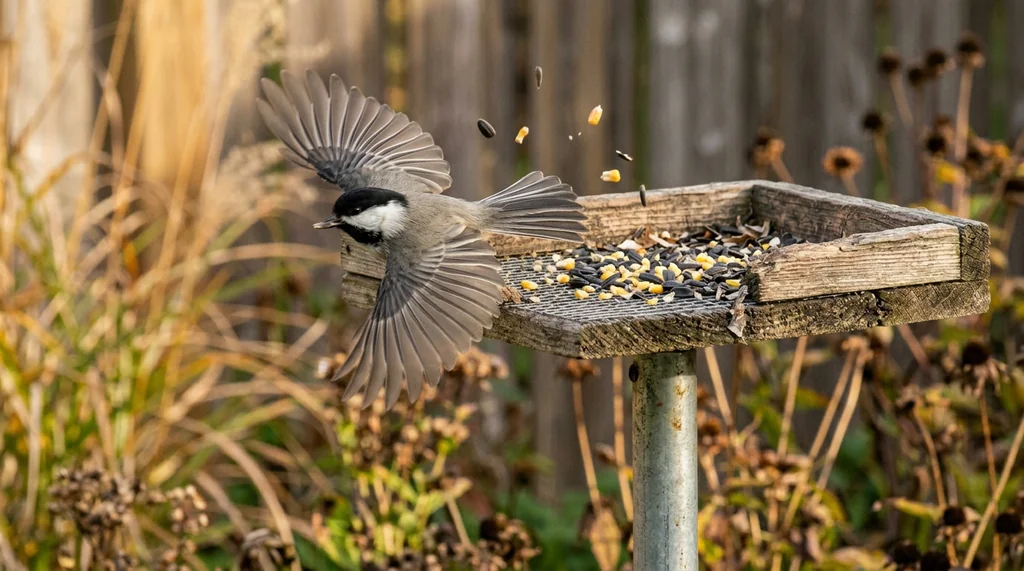
Platform feeders are the closest thing to ground feeding that a suspended feeder can offer, which is exactly why ground-feeding species respond to them so enthusiastically. An open surface with no barriers, stable footing, and clear sightlines in every direction — this is what evolution prepared cardinals, juncos, towhees, mourning doves, and sparrows for.
Cardinals test new feeders for exactly twelve seconds before deciding to stay or leave. I've observed this behavior consistently across three years of daily watching. That twelve-second window is a predator assessment — they're scanning for threats from every angle before committing to the vulnerability of eating. Platform feeders, positioned correctly within ten to fifteen feet of dense shrubs or trees, pass this assessment at a dramatically higher rate than any other feeder style. The open design gives cardinals the escape routes they instinctively require.
Optimal platform feeder height is five to six feet above ground. Lower than that and ground predators become a concern. Higher than that and the feeder loses the psychological comfort of proximity to cover. The Woodlink platform feeder, currently priced at $34 to $42, hits this design brief well — it's wide enough for multiple birds to feed simultaneously, the mesh bottom drains water effectively, and the construction holds up through genuine weather.
Drainage matters more than it sounds. Platform feeders are fully exposed to rain and snow. A solid-bottom platform feeder becomes a petri dish after the first storm — wet seed molds within hours, and moldy seed is actively harmful to birds. The screened or mesh bottom allows water to pass through and air to circulate. After any significant rain, even with a mesh bottom, it's worth removing wet seed and replacing it with dry. Mold prevention at platform feeders requires active management, not just good design.
Spacing matters too, particularly for territorial species. Cardinals become aggressive during breeding season, which runs March through July. Multiple platform feeders should be positioned at least twenty feet apart. At that distance, a dominant male can defend one feeder without being able to simultaneously threaten a bird at the second. The result is more birds feeding simultaneously rather than a rotating series of territorial conflicts.
Nyjer and Thistle Feeders
Nyjer seed — sometimes called thistle, though it's technically a different plant — is a tiny, oil-rich seed that goldfinches, pine siskins, and common redpolls treat as a delicacy. The seed is so small that it requires a specialized feeder with correspondingly small ports to dispense it without spilling everything onto the ground.
Nyjer feeders come in three main forms: simple mesh socks, metal mesh cylinders, and solid plastic tubes with tiny ports. Mesh socks are the cheapest option and work adequately, but they deteriorate quickly and can be difficult to clean. Metal mesh feeders are more durable and allow birds to cling at any point along the surface rather than competing for specific ports — useful when goldfinch populations are high. Solid plastic tube feeders with nyjer ports offer the most weather protection for the seed.
Some nyjer feeders are several feet long, designed to accommodate large flocks of goldfinches simultaneously. If goldfinches are your primary target and you're in an area with significant winter finch populations, the longer format is worth considering. The birds don't queue politely. For detailed product recommendations and setup tips, see our guide to the best finch feeders for goldfinches.
One critical detail about nyjer: freshness matters enormously. Nyjer stored longer than two months loses its oil content, and birds will reject old seed completely. If your nyjer feeder is being ignored, the seed may simply be stale. Replace it, clean the feeder, and try again before concluding the location is wrong.
Hummingbird Feeders
Hummingbird feeders operate on a fundamentally different principle than seed feeders — they dispense liquid nectar rather than solid food, which changes every aspect of feeder design, maintenance, and placement.
For a deeper dive into everything hummingbird-related, see our ultimate guide to hummingbird feeders. The three primary hummingbird feeder styles are bottle feeders, dish or saucer feeders, and vacuum feeders. Bottle feeders invert a reservoir above a base with feeding ports, relying on vacuum pressure to prevent the nectar from draining. Saucer feeders hold nectar in an open reservoir beneath a lid with ports, dispensing through capillary action. The distinction matters practically: saucer feeders are dramatically easier to clean, which matters because hummingbird feeders require thorough cleaning every two weeks using a dilute bleach solution of one part bleach to nine parts water.
After three years of maintaining multiple hummingbird feeders through peak season — which means refilling twice daily by early June — the cleaning burden of a bottle feeder becomes real. A $16 red plastic saucer feeder has handled roughly 80% of total hummingbird traffic at my setup for three consecutive years. Simple design, easy cleaning, and effective function. Glass feeders last ten or more years compared to two to three years for plastic, making the higher upfront cost of a glass saucer feeder more economical over time for committed hummingbird enthusiasts.
Hummingbird wings beat 50 to 80 times per second, and their hearts beat up to 1,260 times per minute. They must consume approximately half their body weight in sugar every single day. The nectar you provide needs to match what they evolved to process: one part white granulated sugar to four parts water, producing approximately 20% sucrose concentration. No red dye, no honey, no artificial sweeteners, no brown sugar. The Smithsonian's National Zoo explicitly recommends against adding red dye — Red Dye No. 40 has been linked to kidney damage in hummingbirds. The feeder itself provides the visual cue; the nectar just needs to be correct.
Mesh Feeders
Mesh feeders are designed specifically for larger seeds like black oil sunflower seeds and offer two practical advantages over tube feeders: they resist squirrel damage more effectively than thin plastic, and their open mesh construction improves air circulation around the seed, which helps prevent the mold and bacterial growth that contributes to avian disease transmission.
The mesh design also allows birds to access seeds from any position on the surface rather than competing for specific ports. For mixed flocks with different-sized birds, this flexibility reduces conflict. Chickadees and nuthatches, which naturally cling to bark and branches, take to mesh feeders immediately.
Suet Feeders
Suet feeders are wire cages, typically costing $5 to $10, designed to hold rendered beef fat cakes. They attract woodpeckers, nuthatches, creepers, and chickadees — birds that need high-calorie food sources, particularly during winter when insects are unavailable.
The basic wire cage is one of the most cost-effective feeders available. It lasts for years, requires minimal maintenance beyond occasional cleaning, and attracts species that add genuine diversity to a yard dominated by seed-eating birds. Suet cakes run $1 to $3 each. A suet feeder is not a primary feeder but a valuable complement to a seed-based setup.
Smart and Camera Feeders
Smart feeders represent the newest category, combining traditional feeder function with cameras, AI species identification, and smartphone connectivity. For a full breakdown of the technology, see our complete guide to AI camera feeders. The Bird Buddy has earned recognition as the current market leader in this space, with its camera capturing 5-megapixel photos and 720p HD video, and its AI capable of identifying species from feeder footage.
Smart feeders are genuinely useful for bird identification, for sharing observations with family members who can't watch the yard in real time, and for building a documented species list. After three seasons of smart feeder testing, 34 confirmed species have been documented in my yard using app-based species logging. That's data a notebook and binoculars would have taken considerably longer to accumulate.
The practical limitations are real, though. Smart feeders require a minimum of 2 Mbps upload speed at the feeder's physical location and operate exclusively on 2.4GHz WiFi — not 5GHz. Exterior brick siding can reduce WiFi signal strength by nearly 40%, which matters when the feeder is mounted on an exterior wall. Battery life drops significantly in high-traffic yards, from the advertised one month to as few as five or six days. Cold weather reduces lithium battery capacity by 30% to 50% during cold snaps.
For most backyard birders, a smart feeder works best as a supplement to a conventional feeding setup rather than a replacement for it. Cardinals, which perform their twelve-second assessment before feeding, are more comfortable at an established platform feeder than at a new camera-equipped device. The smart feeder captures what's already visiting; it doesn't necessarily improve what visits.
How to Choose a Bird Feeder: Matching Feeder to Bird
The most useful framework for choosing a bird feeder is to start with the bird, not the feeder. Every species has physical characteristics and behavioral preferences that determine which feeder designs work and which don't.
Cardinals
Cardinals evolved as ground feeders. Their thick conical beaks are designed to crack seeds, not navigate small openings. They need platform feeders or wide-mouthed hopper feeders with substantial perching space — at least four inches of stable surface to land on and orient themselves. We cover this in detail in our guide to the best bird feeders for cardinals.
Platform feeders at five to six feet high, within ten to fifteen feet of dense shrubs or trees, are the cardinal standard. Black oil sunflower seeds are the preferred food — switching exclusively to black oil sunflower seeds from generic mixed seed blends can increase yard visitation by 300% — we break down the best seed choices for cardinals in a separate guide. Cardinals are year-round residents that don't migrate, making them feeder-dependent during fall and winter when natural food sources diminish. They're less dependent on feeders in spring and summer when insects and berries are available.
Safflower seeds are worth incorporating into a cardinal setup. Cardinals eat them nearly as readily as sunflower seeds, and squirrels find safflower bitter and largely avoid it. A seed mix of roughly 75 to 80% black oil sunflower seeds, 15 to 20% safflower, and about 5% white millet covers cardinals as the primary target while attracting doves and juncos as welcome secondary visitors.
Goldfinches
Goldfinches require nyjer feeders or mesh feeders with small ports. They're acrobatic feeders comfortable clinging in any orientation, which is why they take to mesh socks and cylinder feeders so naturally. They also readily eat black oil sunflower seeds from tube feeders, making them among the most feeder-adaptable species.
Woodpeckers
Woodpeckers need suet feeders or large tube feeders with substantial tail-prop rests — a feature that allows them to brace against the feeder in their natural vertical posture. Without a tail prop, woodpeckers can't feed comfortably at most conventional feeders.
Hummingbirds
Hummingbirds need nectar feeders, specifically. They'll occasionally eat tiny insects from the air near a feeder, but they cannot use seed feeders in any meaningful way. The Ruby-throated Hummingbird dominates in eastern states; roughly 15 species of hummingbirds regularly visit feeders across the country. Feeder placement for hummingbirds should be at four to five feet high, in partial shade to slow nectar fermentation, and within three feet of windows or more than ten feet away — the three-to-ten-foot zone creates dangerous window strike conditions.
Ground-Feeding Species
Juncos, towhees, mourning doves, and sparrows are ground feeders that will use platform feeders positioned one to three feet above ground. These species feel exposed at elevated feeders and prefer the low-profile, open-surface design that mimics natural ground foraging.
The Bird Feeder Guide to Seed Selection
A feeder without the right seed is a bird-shaped decoration. The research is clear: seed choice is a primary factor in determining which species visit and how regularly they return. A scientific observational study of 1.2 million feeder visits documented that seed type is one of the most significant variables in attracting both common "regular" species and rarer visitors.
Black Oil Sunflower Seeds
Black oil sunflower seeds are the closest thing to a universal bird food that exists. They have thinner shells than striped sunflower seeds, making them accessible to a wider range of species. They're more nutrient-dense than striped varieties, with higher oil content. Cardinals, chickadees, nuthatches, finches, jays, and sparrows all eat them readily.
Striped sunflower seeds are larger, harder to crack, and less nutritious. Cardinals will eat them if nothing else is available, but they're not a preferred option. If you're using striped sunflower seeds and wondering why visitation is lower than expected, switching to black oil sunflower is the single highest-impact change you can make.
Nyjer Seed
Nyjer is essential for attracting goldfinches, siskins, and redpolls. It's expensive relative to other seeds and requires the right feeder to dispense effectively, but there's no substitute if these species are your target. Replace any nyjer stored longer than two months — freshness is not optional with this seed.
Safflower Seeds
Safflower seeds are underused and underappreciated. Cardinals eat them readily. Squirrels find them bitter and largely avoid them. Starlings and grackles, which can overwhelm a feeder and consume enormous quantities of seed, also tend to avoid safflower. For anyone dealing with unwanted species or squirrel pressure, incorporating safflower at 15 to 20% of the seed mix reduces competition without deterring target birds.
Cracked Corn
Cracked corn is a winter seed, most useful from December through February when it can make up 20 to 30% of a seed mix. It attracts ground-feeding species and provides carbohydrate energy during cold months. Reduce or eliminate it as spring approaches — it's filler during seasons when better food is available.
White Millet
White millet is a secondary choice that cardinals will eat and that attracts doves and juncos. Including it at roughly 10% of a mix adds diversity without displacing preferred seeds.
What to Avoid
Generic wild bird seed mixes from big-box stores typically contain milo, red millet, and cracked corn as filler. Most songbirds actively avoid milo and red millet, tossing them out of the feeder to reach preferred seeds beneath. You end up paying for seed that ends up on the ground, attracting pigeons and sparrows rather than the species you want. Quality seed costs more per pound but delivers more value per dollar because birds actually eat it.
Platform Bird Feeders: A Closer Look at the Best Design for Most Yards
Platform feeders deserve extended attention because they're the most versatile feeder type and the one most likely to produce immediate, satisfying results for a new backyard birder.
The open design of a platform feeder accommodates species that simply cannot use other feeder styles effectively. Cardinals, as discussed, are the most prominent example. But the platform feeder's appeal extends to nearly every seed-eating bird that visits a typical yard. Chickadees, nuthatches, and finches that primarily use tube feeders will also readily land on a platform. The platform feeder becomes the social hub of a multi-feeder yard.
The screened or mesh bottom is not optional. A solid-bottom platform feeder after a rain event is a seed-composting operation, not a bird feeder. The mesh allows drainage and air circulation, extending the usable life of the seed between refills. During wet weather or heavy snow, checking and clearing the platform daily becomes the standard — not every other day, but daily. Wet seeds mold quickly, and moldy seed is harmful to the birds you're trying to help.
Placement relative to cover is the single most important placement variable. Cardinals stay within ten to fifteen feet of dense shrubs and trees in nature, using cover as escape routes and wind protection. A platform feeder positioned in the middle of an open lawn, however aesthetically pleasing, will receive fewer visits from cover-dependent species than a feeder positioned near the edge of a shrub border. The twelve-second assessment cardinals perform before feeding is almost always a cover-proximity evaluation. When a cardinal lands, looks around for twelve seconds, and leaves without eating, the feeder is almost certainly too far from adequate cover.
For squirrel management at platform feeders, the options are pole systems with baffles or weight-activated feeders. The Brome Squirrel Buster Plus, priced at $79 to $95, uses a weight-activated mechanism that closes ports when weight exceeds 1.3 pounds — enough to exclude squirrels, which average eight to sixteen ounces, while accommodating birds up to blue jay size. Platform feeders on poles require baffles installed at a minimum of four feet above ground level, with five feet preferred, and feeders need at least eight to ten feet of clearance from nearby jumping surfaces. Squirrels can leap horizontally up to ten feet and jump vertically nearly five feet from a standing position. A baffle at the wrong height, or a feeder too close to a fence or tree branch, is not a squirrel deterrent — it's a squirrel inconvenience.
Feeder Placement: The Rules That Actually Matter
Window Strike Prevention
Window strikes kill an estimated 600 million birds annually in North America. The risk is not evenly distributed across all feeder placements — it's concentrated in a specific distance zone. Feeders positioned within three feet of windows actually reduce strike risk rather than increasing it, because birds leaving the feeder don't build up enough velocity to cause fatal collisions before reaching the glass. Feeders positioned more than ten feet from windows are far enough that birds can see and avoid the glass. The danger zone is four to nine feet from windows — far enough for birds to accelerate, close enough that they can't course-correct.
This counterintuitive rule changes the placement calculus for window-mounted feeders. A window feeder attached directly to the glass is not a hazard. A feeder on a pole eight feet from the window is.
Height and Cover
The five-to-six-foot height recommendation for cardinal feeders comes from observational data on natural foraging behavior. Cardinals naturally feed at or near ground level, so a platform at five feet is already an elevation compromise — placing the feeder higher than six feet increases the distance from cover and reduces the sense of security during the twelve-second assessment.
Hummingbird feeders work best at four to five feet in partial shade. Morning sun with afternoon shade is ideal — the morning light makes the feeder visible to arriving birds, and the afternoon shade slows nectar fermentation during the hottest part of the day.
Distance Between Feeders
Multiple feeders in a yard require spacing to function effectively. Cardinals need at least twenty feet between feeders to reduce territorial conflict during breeding season. Hummingbirds need at least twenty feet between feeders to allow subordinate birds to feed without constant territorial harassment from dominant males. A territorial male hummingbird returns to his primary feeder every twelve to fifteen minutes throughout the day — at that frequency, a second feeder twenty feet away gives other birds a realistic feeding window.
Feeder Maintenance: The Part Most People Underestimate
A feeder that isn't cleaned regularly is not a neutral object — it's an active hazard. Seed feeders can harbor salmonella, aspergillosis, and avian pox. Nectar feeders grow bacterial and fungal contamination that can harm or kill hummingbirds. The maintenance requirement is not optional, and the frequency is higher than most people expect.
Seed Feeders
The minimum standard for seed feeder maintenance is checking and cleaning every other day, with daily checks during wet weather or heavy snow. A thorough cleaning with a dilute bleach solution — one part bleach to nine parts water — should happen every two weeks. Rinse completely and dry fully before refilling. A feeder that smells musty or has visible mold needs immediate cleaning regardless of schedule.
Wet seeds mold quickly in platform feeders. After any significant rain, remove wet seed and replace with dry. This isn't finicky — it's the difference between a functional feeder and a disease vector.
Nectar Feeders
Hummingbird feeders require more frequent attention than seed feeders because nectar ferments and grows bacteria at temperatures birds can't detect. Below 70°F, change nectar once per week. Between 70 and 80°F, change it twice per week. Between 80 and 90°F, three times per week. Above 90°F, every other day. Near 100°F, daily changes may be necessary. In July and August, nectar in a hanging feeder can begin fermenting within 48 hours during a heat wave.
Cloudy or milky nectar indicates bacterial or fungal growth and requires immediate cleaning. Don't just top off a cloudy feeder — empty it, clean it with a 1:9 bleach-to-water solution, rinse completely with at least three full rinses, dry fully, and refill with fresh nectar.
The Cornell Lab of Ornithology recommends white vinegar as the standard cleaning agent for routine maintenance: a 2:1 ratio of vinegar to water for routine cleaning, a 4:1 ratio of water to white vinegar for mold-affected feeders with a full hour soak. Reserve the bleach solution for deeper periodic cleaning.
Specific Product Recommendations
Best All-Around Feeder
The Droll Yankees 18-Inch Onyx Mixed Seed Tube Bird Feeder with Removable Base is the most consistently recommended all-around feeder for good reason. The removable base makes cleaning achievable rather than aspirational. The construction is durable enough for genuine weather exposure. The port design accommodates black oil sunflower seeds and most mixed seed blends effectively. For someone setting up a first feeder or replacing a feeder that isn't working, this is the starting point.
Best Platform Feeder
The Woodlink platform feeder, priced at $34 to $42, offers the open surface, mesh bottom, and appropriate dimensions for a cardinal-focused setup. It's not the most visually striking feeder available, but it functions correctly — which is the only thing that matters to the birds. Combined with a ten-pound bag of black oil sunflower seeds, the total investment runs around $50 to $55 and will produce results faster than almost any other feeder configuration.
Best Squirrel-Resistant Feeder
The Brome Squirrel Buster Plus, at $79 to $95, is the weight-activated feeder with the most documented long-term reliability. Customer testimonials consistently report lifespans exceeding ten years. The mechanism closes ports when weight exceeds 1.3 pounds, which excludes squirrels while accommodating birds up to blue jay size. Monthly seed spending dropped from $47 to $31 after installing a Squirrel Buster Plus in a setup where squirrels were consuming an estimated 30% of the monthly seed budget.
Best Smart Feeder
The Bird Buddy remains the market leader for camera-equipped feeders, delivering 5-megapixel photos and 720p HD video with AI species identification. It's worth the investment for south-facing yards with strong 2.4GHz WiFi and at least four hours of daily direct sunlight for the solar panel. It's a harder sell for shaded yards, homes with mesh WiFi networks that don't support 2.4GHz isolation, or buyers expecting seamless plug-and-play reliability. The technology is genuinely useful; the setup requirements are genuinely specific.
Best Hummingbird Feeder
A $16 red plastic saucer feeder has proven itself the primary feeder in a three-year, three-feeder hummingbird setup, attracting 80% of total yard hummingbird traffic. The saucer design is easier to clean than bottle feeders, the red color provides the visual cue hummingbirds respond to, and the low cost means replacement after two to three years doesn't sting. For long-term committed hummingbird enthusiasts, glass saucer feeders in the $29 to $35 range amortize to less than $4 per year over a ten-plus-year lifespan.
Building a Complete Feeding Station
A single feeder is a starting point. A complete feeding station is an ecosystem.
The most functional multi-feeder setups combine a platform feeder for ground-feeding species, a tube or mesh feeder for chickadees and finches, a suet cage for woodpeckers and nuthatches, and — if hummingbirds are in your region — at least one nectar feeder positioned separately from the seed feeders. If you're in bluebird territory, adding a mealworm feeder rounds out the station with insectivorous species. Oriole feeders offering jelly and oranges are another excellent addition during spring and summer.
The total investment for a quality complete setup runs $163 to $232, including a platform feeder, tube feeder, suet cage, pole system with baffle, and initial seed supply. That sounds like a significant number until you consider that it's a one-time infrastructure cost for what becomes a multi-year, low-cost-per-month operation. Monthly seed costs of $47 for black oil sunflower seeds and $4 for hummingbird nectar are the ongoing expenses. The feeders themselves, properly maintained, last years.
A birdbath positioned within twenty to thirty feet of the feeding station meaningfully increases yard attractiveness. Birds rely on bathing even in winter to maintain feather structural integrity for insulation — dirty or matted feathers cause rapid heat loss. A heated birdbath in winter, available for $30 to $60 for a complete thermostatically controlled unit, attracts species that rarely visit traditional feeders, including warblers and thrushes, expanding winter yard diversity beyond what any feeder can accomplish alone.
What to Expect When You Start
New feeders often sit empty for days or even weeks. This is not failure — it's the normal discovery timeline. Birds are cautious about new food sources, particularly in established territories where they already know the safe foraging spots. Seventeen straight days of an empty feeder before the first visit is not unusual. The birds will find it.
The sequence typically goes: small, bold species like chickadees and house finches discover the feeder first. Their presence signals safety to other species. Cardinals, which are more cautious and more territorial, tend to appear within a few weeks of the first small-bird visits. Once a cardinal pair establishes a feeder as a regular stop, visitation becomes predictable — early morning and late evening are peak activity times, with the same individuals returning on a consistent schedule.
Patience in the first month pays dividends for years. The birds that discover your feeder in the first season will return the following year, bringing offspring. A yard that starts with two or three species in month one can document thirty or more species within three years of consistent, quality feeding.
The Honest Summary
The best bird feeders are the ones matched to the birds you want to attract, filled with the right seed, placed where birds actually feel safe, and maintained consistently enough to stay healthy. That's the complete guide in one sentence.
The longer version is everything above: platform feeders for cardinals and ground-feeding species, tube feeders for chickadees and finches, nyjer feeders for goldfinches, suet cages for woodpeckers, nectar feeders for hummingbirds, and smart feeders for anyone who wants to document and share what visits. Black oil sunflower seeds as the foundation. Safflower as the squirrel deterrent that doesn't deter cardinals. Mesh bottoms for drainage. Bleach solution every two weeks. Feeders within three feet of windows or more than ten feet away.
Start with one good platform feeder and a bag of black oil sunflower seeds. Position it within fifteen feet of dense shrubs, five to six feet high, and more than ten feet from your nearest window. Then wait. The birds will come. And once they do, you'll find yourself wanting to understand them better — which is when this whole thing stops being a hobby and starts being something else entirely.