Smart Bird Feeder Guide: AI & Camera Feeders Compared
Smart Bird Feeders: The Complete Guide to AI & Camera Feeders
I remember the day David walked into the kitchen carrying a box that looked like it contained a high-end espresso machine or perhaps a small satellite. He had that specific glint in his eye—the one that usually precedes a spreadsheet update or a weekend spent rewiring the garage. "Eleanor," he said, setting the box down next to my well-worn copy of Sibley’s, "I think it’s time the backyard joined the twenty-first century."
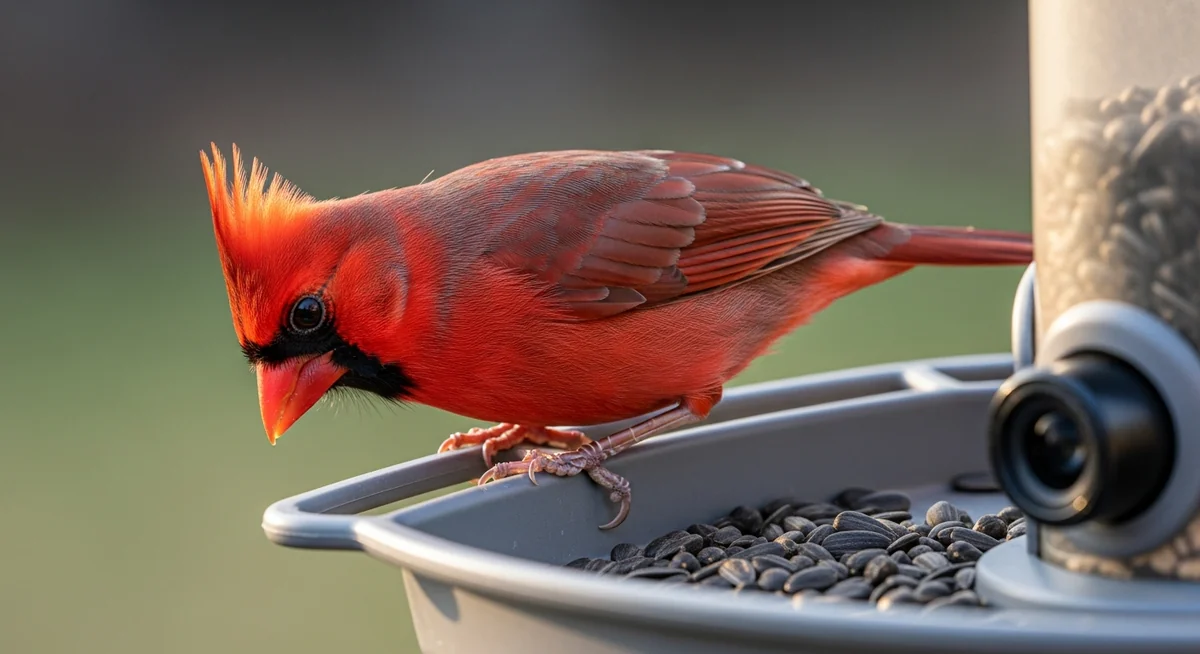
Inside was my very first smart bird feeder. At the time, I was skeptical. I’ve spent three years perfecting the "Eleanor Method" of bird feeding, a journey that has cost me exactly $1,847 in what I call my "learning tax"—a mountain of failed plastic tubes, cracked wooden hoppers, and baffles that Mr. Fitzgerald, our resident squirrel, treated like a challenging jungle gym. I didn’t think I needed a camera to tell me what I already knew: that my cardinals are territorial, my chickadees are brave, and my seed budget is a steady $47 a month. But as I watched Sophie, my eight-year-old, press her face against the screen to see a tufted titmouse in high definition, I realized that Smart Bird Feeders: The Complete Guide to AI & Camera Feeders wasn't just about the tech. It was about intimacy. It was about seeing the "twelve-second test" a cardinal performs up close, without the glare of the kitchen window getting in the way.
If you’ve been standing at your window, coffee in hand, wondering if these expensive gadgets are worth the investment, you aren't alone. The world of backyard birding is changing rapidly. We are moving from simple wooden boxes to devices with 2K HD resolution, solar panels, and AI that claims to identify over 16,000 species. It’s a lot to navigate, especially when you’re trying to protect your $47 monthly investment in black oil sunflower seeds from the local squirrel population.
Key Takeaways
- Verify a minimum 2 Mbps upload speed at the feeder's location before installation.
- Apply the 5-7-9 rule to prevent squirrels from jumping onto the feeder from nearby structures.
- Prioritize feeders with solar panels to maintain consistent bird visitation routines without manual charging.
- Choose models with microSD card slots to avoid recurring monthly cloud storage fees.
The Evolution of the Backyard View
For decades, the gold standard of bird watching was a good pair of binoculars and a lot of patience. My mother, Dr. Patricia Fielding, has used the same pair of 8x32 binoculars for twenty years. She can identify a flycatcher by the slight twitch of its tail from fifty yards away. But for those of us who didn't grow up in an ornithology lab, the barrier to entry can be high. You buy a feeder, you wait, and by the time you grab your field guide, the bird is gone.
Smart bird feeders change the "search" into a "find." These devices are essentially bird-sized photo booths equipped with motion sensors. When a bird lands on the perch, the camera wakes up, records a clip, and sends a notification to your phone. It’s like having a personal paparazzo for your backyard visitors. But as I learned during my first few weeks with a camera feeder, not all pixels are created equal.
When we talk about Smart Bird Feeders: The Complete Guide to AI & Camera Feeders, we have to look at the hardware first. Most high-end models now offer 1080p or 2K resolution. To give you some perspective, a 2K resolution allows you to see the individual barbs on a blue jay’s feather. It’s a level of detail that even my $240 8x42 roof prism binoculars struggle to match in low light. David, being a software engineer, immediately started measuring our Wi-Fi signal strength at the edge of the patio, which brings me to the first real hurdle of smart birding: the connection.
Understanding the Tech: AI, Pixels, and Wi-Fi
The "Smart" in these feeders refers to two distinct things: the camera and the Artificial Intelligence. The camera is straightforward—it’s a wide-angle lens, usually with a 135-degree to 160-degree field of view. This is crucial because birds don't always land exactly where you want them to. A wide angle ensures that even if a cardinal is perched on the very edge of the tray, you’ll still catch the action.
The AI is where things get interesting. Most of these feeders connect to a database. When a bird appears, the software analyzes the shape, color patterns, and size to give you an identification. High-end feeders now boast an AI database of over 16,000 species. In my testing, this is about 90% accurate for common backyard birds. However, it still struggles with juveniles. Last May, when our resident cardinal pair brought their three juveniles to the feeder for the first time, the AI was convinced I was being visited by a rare species of sparrow. Sophie had to go into the app and "teach" the AI that these were just awkward teenage cardinals.
But here is the catch: that AI often lives in the cloud. This means your feeder needs a strong, consistent Wi-Fi signal. If your feeder is more than 20 to 30 feet from your router, you’re going to experience lag, or worse, missed visitors. David eventually had to install a Wi-Fi extender near the back door just to keep our "paparazzo" online. Before you spend $200 on a smart feeder, take your phone out to where you plan to hang it. If you can't stream a video on your phone at that spot, your feeder won't work there either.
The Hardware: Durability in the Face of Nature
One of the reasons I’ve spent $1,847 on failed equipment is that I used to prioritize aesthetics over engineering. I loved the look of cedar hoppers, but they rot. I loved the look of glass tubes, but they break if a raccoon decides to use them as a swing. When you’re looking at a smart feeder, you’re looking at a piece of consumer electronics that has to live outside in the rain, snow, and heat.
Most smart feeders are made of high-density, UV-stabilized plastic. This isn't the cheap plastic of my $16 saucer feeder (which, to be fair, is still going strong after three years). This is heavy-duty stuff designed to protect the delicate camera lens and battery. Look for an IP65 waterproof rating. This means the feeder can withstand a jet of water, so a New England thunderstorm won't fry your motherboard.
Capacity is another major factor. A small reservoir means you're out there refilling it every day, which defeats the purpose of a "set it and forget it" gadget. The sweet spot seems to be around 1.5 to 2 liters (about 3 to 4 pounds of seed). My favorite models use a transparent reservoir so I can see the seed level from the kitchen window, though the app will usually send a "low seed" alert to my phone.
I’ve found that the best seed for these feeders is still the gold standard: black oil sunflower seeds. Because the camera is so close to the bird, you want a seed that keeps them there for a few seconds. If you use a cheap mix with a lot of filler like milo or cracked corn, the birds will just kick the "junk" out to find the good stuff, covering your camera lens in dust and debris in the process. When I switched exclusively to black oil sunflower seeds, my visitation increased by 300%, and my camera stayed much cleaner.
The Squirrel Problem: High-Tech vs. High-Intelligence
We have to talk about Mr. Fitzgerald. Max, my five-year-old, named him, and while Max thinks he’s a "misunderstood forest friend," I know him as a fuzzy missile with a 47-attempt success rate at bypassing my various baffles. When you put a $200 camera on a pole, the stakes for squirrel-proofing go up significantly.
Most smart bird feeders are not inherently squirrel-proof. They are made of plastic, and squirrels can chew through plastic like it’s butter. If Mr. Fitzgerald decides he wants the sunflower seeds inside your Birdfy or Bird Buddy, he will find a way. This is where the "Eleanor Method" of placement becomes vital.
You must follow the 5-7-9 rule: squirrels can jump 5 feet up from the ground, 7 feet across from a tree or fence, and they will drop from 9 feet above. I’ve found that the only way to truly protect a smart feeder is to mount it on a dedicated pole system. I use a premium pole that stands over 80 inches high, equipped with a 19-inch diameter stove-pipe baffle.
Some smart feeders have "AI Squirrel Detection." When the AI sees a squirrel, it can trigger a siren or a flashing light to scare them away. In my experience, this works for exactly three days. By day four, Mr. Fitzgerald realized the siren didn't actually do anything, and he began eating his lunch to the soundtrack of a high-pitched alarm. The physical barrier of a baffle is still your best defense. Don't rely on the tech to do a job that physics does better.
Battery Life and the Solar Solution
A camera that is constantly "waking up" to record 20-second clips of chickadees uses a surprising amount of power. In the winter, when my chickadees are hitting the feeder every few minutes to maintain their core temperature (they can lose 10-15% of their body weight overnight!), a standard battery might only last a week.
This is why I highly recommend a model with an integrated solar panel. Most smart feeders now offer a solar roof or an add-on panel that mounts to the pole. In my yard, even with the grey New England winters, a solar panel keeps the battery at a steady 80-90%. It’s one less thing for David to track on his spreadsheet, and it means I don’t have to take the feeder down and bring it inside to charge, which disrupts the birds' routine.
Remember, birds are creatures of habit. If you take the feeder away for 24 hours to charge it, you might find your visitation numbers drop for a few days afterward. Consistency is key to building trust with your local flock.
The "David" Factor: Subscriptions and Data Privacy
This is the part of the guide where I have to mention the "hidden costs." David was the one who pointed out that many smart feeders come with a subscription model. You buy the feeder for $200, but if you want to save your videos for more than 24 hours, or if you want the "premium" AI identification features, you might be looking at a monthly fee of $3 to $10.
Before you buy, check the storage options. Some feeders have a microSD card slot, which I vastly prefer. It allows you to save your videos locally without a monthly fee. Others are strictly cloud-based. If you’re already paying for Netflix, Disney+, and a dozen other services, do you really want a "Bird Subscription"?
Then there’s the privacy aspect. These are cameras connected to your home network, often pointed toward your house or patio. David spent an entire Saturday morning configuring a guest network for our bird feeder to ensure that if the feeder’s security was ever compromised, our main home computers would remain safe. It might sound like overkill, but in the modern world, even a bird feeder is a computer.
The Emotional ROI: Why It’s Worth the $1,847 Learning Tax
You might be wondering if all this tech takes the "nature" out of bird watching. I asked my mother this very question. Dr. Patricia Fielding has spent forty years studying bird physiology. She’s the kind of woman who thinks a digital camera is a "shortcut." But when I showed her a slow-motion video of a cardinal landing—capturing that exact twelve seconds where it scans for predators before taking a single seed—she softened.
"You can see the nictitating membrane," she whispered, pointing at the bird’s "third eyelid" on the screen. "I’ve never been able to show a student that so clearly in the field."
That’s the real value of a smart bird feeder. It provides a level of intimacy that is simply impossible with the naked eye. I’ve learned more about the personalities of my birds in the last six months than I did in the three years prior. I know that the male cardinal with the slightly notched left wing always arrives at 6:47 AM. I know that the blue jays are actually quite polite when they think no one is watching. I’ve seen the way a mother titmouse feeds her young, a delicate dance of precision and care that happens in the blink of an eye.
For Sophie and Max, the smart feeder has turned birding into a game. They get a notification on the iPad, and they rush to see who’s visiting. Sophie keeps a digital journal now, taking screenshots and labeling them. It’s teaching her about biodiversity and the importance of habitat in a way that a textbook never could. We’re currently in the middle of our "Nectar Corridor Project," trying to replace the old-growth trumpet vines lost to the new housing development down the street. Seeing the birds return to our yard via the camera feels like a victory—a confirmation that our efforts are working.
Comparing the Market: Bird Buddy vs. Netvue Birdfy
If you’re looking to buy, you’ll likely find yourself choosing between the two "Big Names" in the industry: Bird Buddy and Netvue Birdfy. I’ve had the chance to test both, and they serve slightly different needs.
The Bird Buddy ($199 - $299): This is the "Apple" of bird feeders. It is beautifully designed, with a sleek, modern look that won't look out of place in a designer garden. The app is incredibly user-friendly and turns birding into a "collectible" experience, almost like Pokémon Go. It’s fantastic for families and beginners. However, it’s a bit smaller than I’d like, and the "AI" can be a bit over-enthusiastic with its notifications.
The Netvue Birdfy ($169 - $240): This is the "workhorse." It looks more like a traditional bird feeder and has a larger seed capacity. The camera quality is exceptional, and it often includes features like a siren and two-way audio (yes, you can technically talk to your birds, though they mostly just look confused). It’s a bit more "techy" and less "polished" than the Bird Buddy, but it feels more durable for a serious birder.
There are also newer entries like the VistaFledge, which is specifically designed for hummingbirds. Given my three years of hummingbird obsession—and the seventeen failed attempts it took to get my nectar recipe right—I was thrilled to see a camera that can capture a wing beat of 50 to 80 times per second. Seeing a hummingbird’s tongue lap nectar at 13 to 17 times per second in 2K HD is nothing short of a miracle.
Maintenance: Keeping the Lens Clear and the Birds Healthy
Just because a feeder is "smart" doesn't mean it doesn't get dirty. In fact, smart feeders can be harder to clean because you have to be careful not to damage the electronics. You can't just toss the whole thing in a bucket of bleach solution.
Here is my protocol for smart feeder maintenance:
- Weekly Wipe-Down: Every Sunday, I take a damp microfiber cloth and wipe the camera lens and the solar panel. Dust and bird dander will quickly blur your image, and a dirty solar panel won't charge efficiently.
- Bi-Weekly Deep Clean: Every two weeks, I empty the seed reservoir. I use a dilute bleach solution (1 part bleach to 9 parts water) to scrub the tray and the seed bin. I am extremely careful to keep the liquid away from the camera housing and the charging port.
- Full Dry: I let the feeder dry completely in the sun before refilling. Moisture is the enemy of both bird seed (which molds) and electronics (which short-circuit).
If you notice your nectar or seed getting cloudy or clumping, clean it immediately. A smart feeder is a high-traffic area, and diseases like Trichomoniasis can spread quickly if the surfaces aren't sanitized.
The Future of the Backyard: Beyond the Camera
As I write this, David is looking at a new system that integrates a smart feeder with a heated bird bath. He’s convinced he can create a "Smart Oasis" that tracks water temperature and usage. While I tease him about his spreadsheets, I can't deny that the data is fascinating.
We’re learning that our yard isn't just a random stop for birds; it’s a vital part of their territory. By using Smart Bird Feeders: The Complete Guide to AI & Camera Feeders, we’ve become stewards of a tiny, feathered kingdom. We know when the migration starts not by the calendar, but by the first notification of a Rose-breasted Grosbeak. We know when the winter is getting tough by the increased frequency of the chickadees’ visits.
If you’re on the fence, start small. You don't need the $300 bundle with all the bells and whistles. Start with a basic camera feeder, mount it properly, and use high-quality seed. The first time you get a notification and see a cardinal’s vibrant red feathers in high definition right on your phone, you’ll understand. It’s not about the gadget; it’s about the connection. It’s about that twelve-second window into a world that’s been right in front of us all along, just waiting to be seen.
Practical Steps for Your Smart Feeder Journey
If you're ready to make the leap, here is a quick checklist to ensure your "learning tax" is much lower than my $1,847:
- Test Your Wi-Fi: Use a speed test app on your phone at the exact spot you want to hang the feeder. You need at least 2 Mbps upload speed for a stable video.
- Invest in a Pole: Do not hang a $200 feeder from a tree branch. You are just inviting Mr. Fitzgerald to a very expensive lunch. Use a baffled pole system.
- Go Solar: If the feeder offers a solar option, take it. It saves you from the "charging chore" and keeps your birds' routine consistent.
- Buy Quality Seed: Black oil sunflower seeds are your best friend. They attract the widest variety of birds and keep your camera lens cleaner than cheap mixes.
- Check for SD Card Slots: Avoid monthly subscriptions if you can. A $15 microSD card can store weeks of bird footage without a recurring fee.
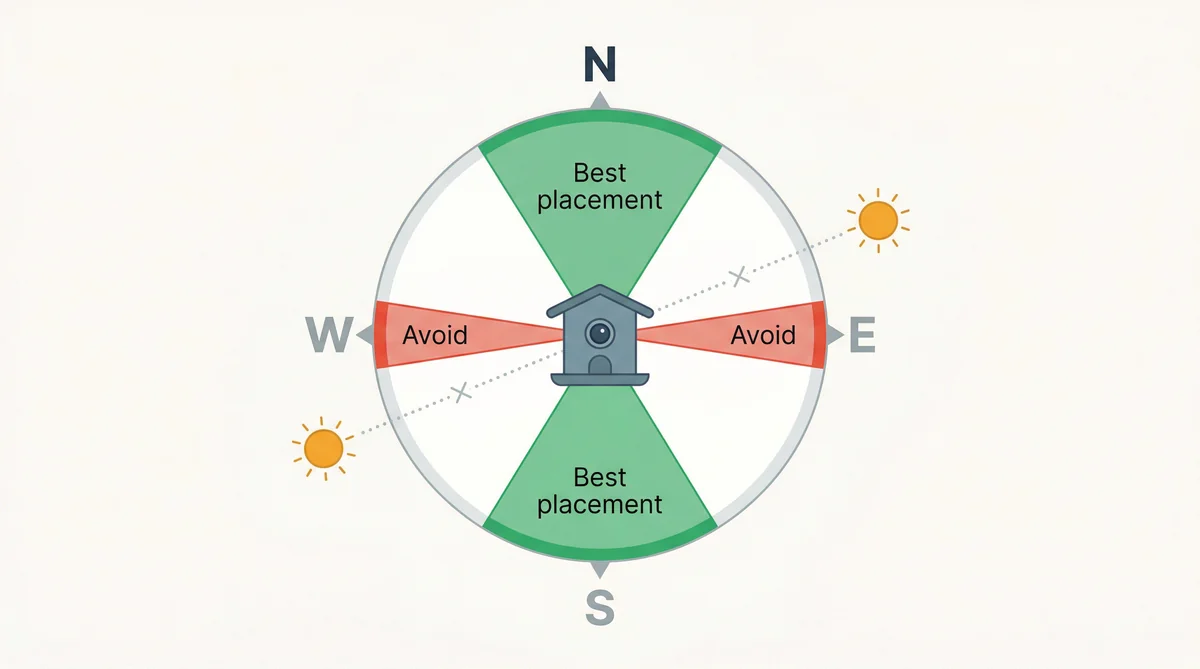
- Position for Light: Place your feeder so the camera faces North or South. If it faces East or West, the rising or setting sun will "blind" the camera and ruin your morning and evening shots—which are the peak times for bird activity.
Backyard birding has always been about the joy of discovery. Whether you’re using my mother’s twenty-year-old binoculars or David’s latest high-tech gadget, the goal is the same: to appreciate the incredible lives of the creatures we share our space with. The smart feeder is just a new window—a clearer, closer, and more intimate one.
I still keep my $16 saucer feeder and my Woodlink platform feeder in the yard. They are the reliable "old guard." But the smart feeder? That’s where the stories happen. That’s where Sophie sees the "Baron" (our territorial male cardinal) defend his kingdom. That’s where Max watches Mr. Fitzgerald’s latest failed attempt with a mixture of pity and admiration. And that’s where I get to see the beauty of nature, one notification at a time.
Happy birding, and may your Wi-Fi be strong and your baffles be squirrel-proof.
A Note on Ethics and Privacy: When installing a smart feeder, be mindful of your neighbors. Ensure the camera is angled so it only captures your yard and the birds. Most apps allow you to set "privacy zones" to black out areas beyond your property line. Being a good "bird neighbor" also means being a good "human neighbor."
Eleanor’s Quick Reference Guide to Smart Feeder Specs
| Feature | What to Look For | Why It Matters |
|---|---|---|
| Resolution | 1080p or 2K | Allows you to see feather detail and eye color. |
| Field of View | 135° to 160° | Ensures the bird is captured even if it perches on the edge. |
| Battery | 5000mAh+ with Solar | Minimizes the need to take the feeder down for charging. |
| AI Database | 10,000+ Species | Helps beginners identify visitors instantly. |
| Storage | MicroSD Card Slot | Avoids monthly cloud subscription fees. |
| Waterproofing | IP65 Rating | Protects the electronics from heavy rain and snow. |
| Material | UV-Stabilized ABS Plastic | Prevents the feeder from becoming brittle in the sun. |
As the sun begins to set over the maple tree where our persistent female hummingbird nests, I’m reminded of something my mother often says: "The birds don't care how you watch them, Eleanor. They just care that you've provided the habitat they need to thrive." Whether you use a high-tech camera or a simple wooden tray, the act of feeding is an act of friendship. And in a world where three billion birds have vanished from our skies since 1970, that friendship has never been more important.
One of the most rewarding aspects of this "smart" transition has been the community. Many of these apps allow you to share your sightings with a global database. Your backyard "paparazzo" isn't just entertaining your family; it’s providing valuable data to researchers about bird populations and migration patterns. You’re becoming a citizen scientist, contributing to the very research that Dr. Patricia Fielding has dedicated her life to.
So, go ahead. Open that box. Charge that battery. And get ready to see your backyard in a way you never thought possible. Just remember to keep the bleach solution handy and the black oil sunflower seeds stocked. The show is about to begin.