Best Bird Feeder Camera No Subscription: 2024 Guide
Finding the Best Bird Feeder Camera No Subscription Required
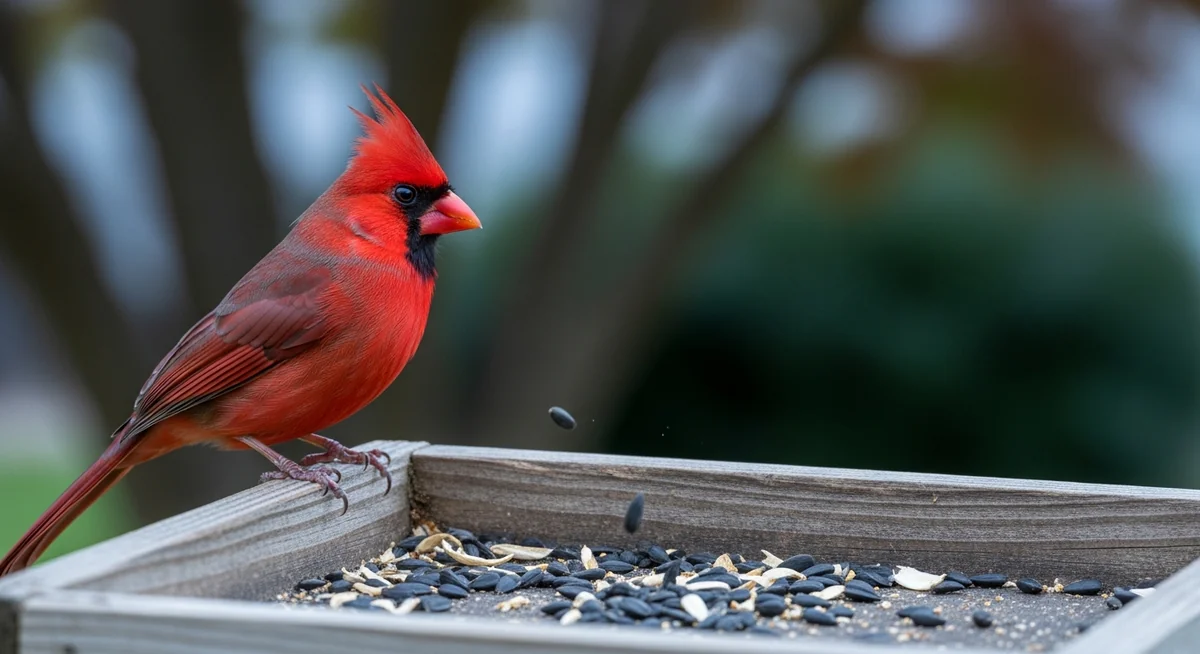
You're standing at your kitchen window, coffee cooling in your hand, watching a Northern Cardinal land on the edge of your platform feeder. You know exactly what happens next because you’ve seen it every morning for three years: he’s going to perform his twelve-second scan. He freezes, those dark eyes darting, assessing the nearby maple tree and the dense shrubs ten feet away, ensuring no neighborhood cats are lurking. Only after that precise internal clock hits twelve does he dip his conical beak into the black oil sunflower seeds. It’s a beautiful, fleeting moment of wildness, but the second you step toward the glass to get a better look, he’s gone—a flash of red retreating into the cover.
This frustration is exactly what led me down the rabbit hole of avian surveillance. I wanted to see the "unseen" moments—the way the juveniles clumsy their way through their first feedings or the exact second the Baron (my resident territorial Ruby-throated hummingbird) arrives for his 6:47 AM breakfast. But as I started researching, I hit a wall that felt more like a shakedown: the subscription model. It seems every piece of modern technology wants a monthly "membership" just to let you look at your own footage. David, my husband, already has a dedicated category in his spreadsheet for our $47-per-month bird seed budget; adding a $10-per-month cloud storage fee for every camera felt like paying rent to watch my own backyard.
After testing several models and admittedly adding another $424.99 to my "Learning Tax"—which now stands at a staggering $2,271.99—I’ve discovered that you don't have to choose between high-tech features and financial sanity. You can have AI-powered identification and 2K resolution without a recurring bill. It just takes a bit of the scientific rigor my mother, Dr. Patricia Fielding, instilled in me, mixed with the hard-earned lessons of someone who has accidentally bought gear that required a "pro" plan just to save a ten-second clip of a chickadee.
Key Takeaways
- Select cameras with microSD or TF card slots to maintain data ownership without recurring cloud fees.
- Maintain a 2 Mbps upload speed within 20 feet of the home for stable 2K video streaming.
- Utilize 'Endurance' grade microSD cards to prevent data corruption from constant video overwriting.
- Implement the 5-7-9 rule using a dedicated pole and cylinder baffle to protect equipment from squirrel damage.
The Freedom of a Bird Feeder Camera No Subscription
The primary reason to insist on a bird feeder camera no subscription is simple: ownership. When you buy a smart feeder that relies entirely on the manufacturer's cloud, you aren't really buying a product; you're leasing a service. If that company goes out of business or decides to triple their monthly rates, your expensive high-tech feeder becomes a very fancy, very heavy plastic box. By choosing models that prioritize local storage—usually via a microSD card—you ensure that your footage belongs to you, stored right there on the device or your phone, forever.
There is also a psychological component to this. Birdwatching is my escape from the "ever-connected" world of pings and payments. There is something fundamentally contradictory about connecting with nature through a device that requires a monthly credit card authorization. When I look at the footage of a female cardinal bringing her three juveniles to the feeder, I want that to be a pure observation, not a "premium feature."
In the 2026 market, we've finally seen a shift. Manufacturers have realized that birders are a fiercely independent lot. We would rather spend that $120 a year on high-quality safflower seeds (to keep the squirrels at bay) than on "AI Cloud Processing." The best bird feeder cameras 2026 has to offer have moved the "brains" of the operation onto the device itself or into a free companion app, giving us the tech we crave without the "Learning Tax" of hidden fees.
Evaluating the Best Bird Feeder Cameras 2026
When looking at the current landscape, the Bird Buddy Smart Feeder Pro stands out as the premium benchmark. My daughter Sophie, who has become quite the citizen scientist with her bird journal, absolutely loves the "postcards" this feeder sends to her tablet. It captures 2K vertical video and 5-megapixel stills that are sharp enough to see the individual barbs on a feather. While Bird Buddy does offer a subscription for expanded features, the core experience—the species identification and the beautiful video captures—is available without a monthly fee. It’s a significant investment, but for the quality of the "Nature Documentaries" it produces of your own backyard, it’s hard to beat.
However, if you’re like me and you have a healthy skepticism of anything that even mentions a cloud, the BROAIMX series is where I’ve found the most peace of mind. They offer models in both 1080p and 2K HD that are built specifically around local storage. Most of their units come with a 32GB or 64GB TF card (the same thing as a microSD) right in the box. This is the gold standard for "no subscription" gear. The AI bird identification free of charge on their app can recognize over 11,000 species. While no AI is perfect—it once insisted a particularly fluffy squirrel was a "Great Horned Owl"—it’s remarkably accurate for most common backyard visitors.
Then there is the Vico Home Bird Feeder Camera, which has gained a bit of a cult following in the birding community. It’s a mid-range workhorse that doesn't try to be flashy. It just works. Users consistently report that the app is stable and, most importantly, doesn't nag you to upgrade to a "Gold Plan" every time you open it. It represents that sweet spot of reliability and cost-effectiveness that my neighbor Margaret always looks for. She’s been using a rusty platform feeder for forty years, but even she was impressed when I showed her a clear, full-color night vision clip of a flying squirrel raiding the suet at 2:00 AM.
The Science of AI Bird Identification Free of Charge
You might wonder how a camera can identify a bird without sending the data to a massive server in the cloud. This is where the tech has really made leaps. Modern smart feeders use "Edge AI," meaning the processing happens on a tiny chip inside the camera or through the processing power of your smartphone. When the camera sees movement, it compares the shape, color, and size of the visitor against a pre-loaded database.
My mother, Dr. Fielding, was initially skeptical. She spent forty years identifying birds through a pair of 8x32 binoculars and a tattered field guide. "Eleanor," she told me during our Sunday call, "a chip can't feel the difference between a Downy and a Hairy Woodpecker." But even she had to admit that the 2026 algorithms are getting better at spotting the subtle differences in beak length and tail spots that usually require a PhD and a lot of patience.
The beauty of having AI bird identification free is that it turns a hobby into a data-gathering mission. For our Nectar Corridor Project—my attempt to document the local species we're losing to the new housing development—the camera acts as a 24/7 researcher. It logs every visit, allowing me to see if the Baron is truly returning every 12 to 15 minutes or if we have a new competitor in the yard. It bridges the gap between the old-school field notes Mom loves and the digital world Sophie lives in.
Setting Up a Smart Bird Feeder Without Subscription
If you're ready to make the jump to a smart bird feeder without subscription, there are a few technical hurdles you need to clear to ensure you don't end up with a $200 paperweight. First and foremost is your WiFi signal. Most of these cameras require a minimum of 2 Mbps upload speed at the installation site.
I learned this the hard way when I tried to place my first camera 40 feet out near the oak trees. The app kept timing out, and I spent two hours "troubleshooting" (which is David's polite word for me standing on a ladder and sighing loudly) before realizing the signal just couldn't penetrate the brick walls of our house. Now, I keep my smart feeders within 20 feet of the house. This not only ensures a stable 2K stream but also keeps the birds within that 10-to-15-foot "safety zone" of cover they prefer.
Storage is the next consideration. If you’re going the "no subscription" route, you are responsible for your data. I recommend buying high-end "Endurance" microSD cards. Traditional cards aren't designed for the constant overwriting that happens with security and nature cameras. A 64GB card will typically hold weeks of bird "postcards" before it needs to loop back and record over the oldest footage.
Lastly, consider the power source. Most of these units, like the Kiwibit Beako or the BROAIMX 2K, come with integrated solar panels. This is a life-saver. My first-ever camera feeder didn't have solar, and I found myself bringing it inside to charge every four days. Not only was it a chore, but I inevitably missed the most interesting visitors—like the time a Pileated Woodpecker supposedly stopped by while the camera was sitting on my kitchen counter plugged into a USB port.
Applying the 5-7-9 Rule to Avian Surveillance
Even the most advanced camera won't help you if a squirrel decides it’s a new chew toy. Mr. Fitzgerald, our resident squirrel nemesis, views any new piece of equipment as a personal challenge. When I first installed a camera feeder, I ignored the physical placement rules, thinking the "AI sirens" and "two-way audio" would scare him off.
I was wrong. I once spent ten minutes shouting "Get down, Mr. Fitzgerald!" into my phone while at the grocery store, only to have him look directly into the lens and continue eating my expensive black oil sunflower seeds. The AI siren didn't even make him flinch; it just provided a rhythmic soundtrack to his feast.
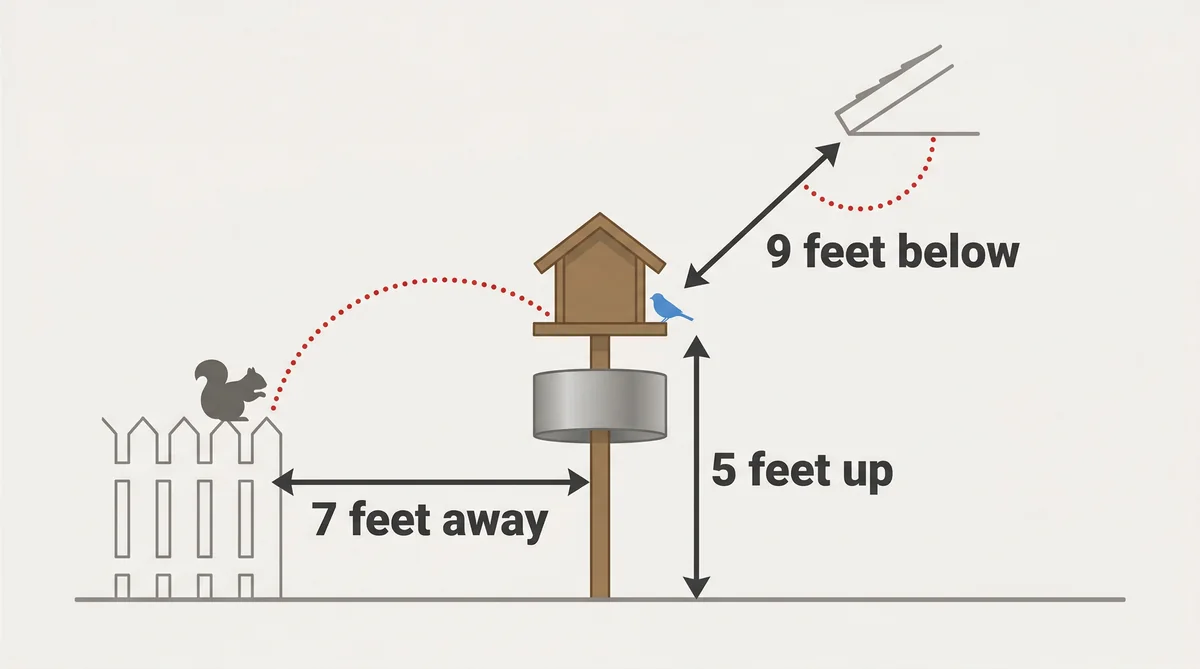
This is why you must still follow the 5-7-9 rule. Your expensive smart feeder needs to be:
- 5 feet off the ground (to prevent vertical leaps).
- 7 feet away from any lateral jumping point (like a fence or branch).
- 9 feet below any overhead launching pad (like an eave or a gutter).
I’ve found that the best way to protect a smart feeder is to mount it on a dedicated pole with a high-quality cylinder baffle. While some feeders, like the Adomii, have beautiful wood housings that look great in the yard, they are vulnerable to the gnawing teeth of a determined squirrel. If you're going with a wood-housed camera, a baffle isn't just a suggestion; it's an insurance policy for your "Learning Tax."
Budget Options and Emerging Tech
Not everyone wants to drop $200+ on a Bird Buddy. If you're looking for a budget-friendly entry point, the Adomii Smart Bird Feeder or the BROAIMX 1080p models are fantastic. They might lack the 2K "cinematic" feel of the premium models, but for identifying who is visiting and getting a notification when a new species arrives, they are more than adequate.
We’re also seeing interesting modular systems like the Coolfly Aura, which debuted at CES 2026. These allow you to move the camera between different types of feeders—from a hopper to a suet cage—giving you more flexibility. And for the hummingbird enthusiasts, the VistaFledge 2K is finally bringing high-speed sensors to the nectar world, capturing those 50-to-80-wing-beats-per-second in a way that doesn't look like a blurry mess.
Why This Matters for the Future of Birding
As I watch Sophie use the "no subscription" app to identify a Tufted Titmouse, I realize that these cameras are doing more than just providing entertainment. They are building a bridge. My mother’s generation relied on patience and paper. My generation relies on binoculars and experience. Sophie’s generation will rely on data and accessibility.
By choosing a bird feeder camera no subscription, you are ensuring that this data remains accessible. You are creating a digital record of your yard's ecosystem that doesn't disappear if a credit card expires. Whether you're tracking the Baron's arrival times to the second or documenting the success of the Nectar Corridor Project, these tools give us a front-row seat to the resilience of nature.
The "Learning Tax" I’ve paid over the years—all $2,271.99 of it—has taught me that the best gear is the gear that gets out of the way. You want a camera that captures the cardinal's twelve-second scan without making you scan your bank statement every month. You want to see the "unseen" without the "unwanted" fees.
In the end, the technology should serve the birds and the birder. When I get a notification on my phone and see a 2K full-color image of a Rose-breasted Grosbeak—a bird I haven't seen in my yard in two years—the cost of the equipment feels like a bargain. It’s a moment of pure discovery, delivered straight to my pocket, owned entirely by me. And as I show the clip to David, even he has to admit: that’s a data point worth every penny of the seed budget.
So, take the plunge into avian surveillance, but do it on your own terms. Look for the microSD slot, check the upload speeds, and remember that no amount of AI can replace a good old-fashioned squirrel baffle. Your backyard is a world of stories waiting to be told; you just need a camera that lets you own the narrative.