Best Bird Feeders: A Science-Backed Selection Guide
A Science-Backed Strategy for Choosing the Best Bird Feeders
Choosing bird feeders feels like a simple weekend project until you're standing in the hardware store aisle staring at forty different versions of a plastic tube. Most people pick the one with the prettiest colors or the lowest price tag, bring it home, fill it with a generic "wild bird mix," and then wonder why the only visitors are house sparrows and a very determined squirrel named Mr. Fitzgerald. Success in backyard birding isn't about luck; it's about understanding the intersection of avian biology, local ecology, and the physics of squirrel-proofing.
After three years of intensive testing and a "Learning Tax" that has now reached a staggering $2,271.99, I’ve realized that the birds aren't picky; they are highly specialized. My mother, Dr. Patricia Fielding, has spent forty years studying bird physiology, and she often reminds me that a bird’s life is a constant calculation of caloric ROI. If your setup requires them to spend more energy navigating a poorly designed perch than they gain from the seed, they will simply go to your neighbor’s yard. To build a truly successful station, we have to look at bird feeders through the lens of efficiency and safety.
Key Takeaways
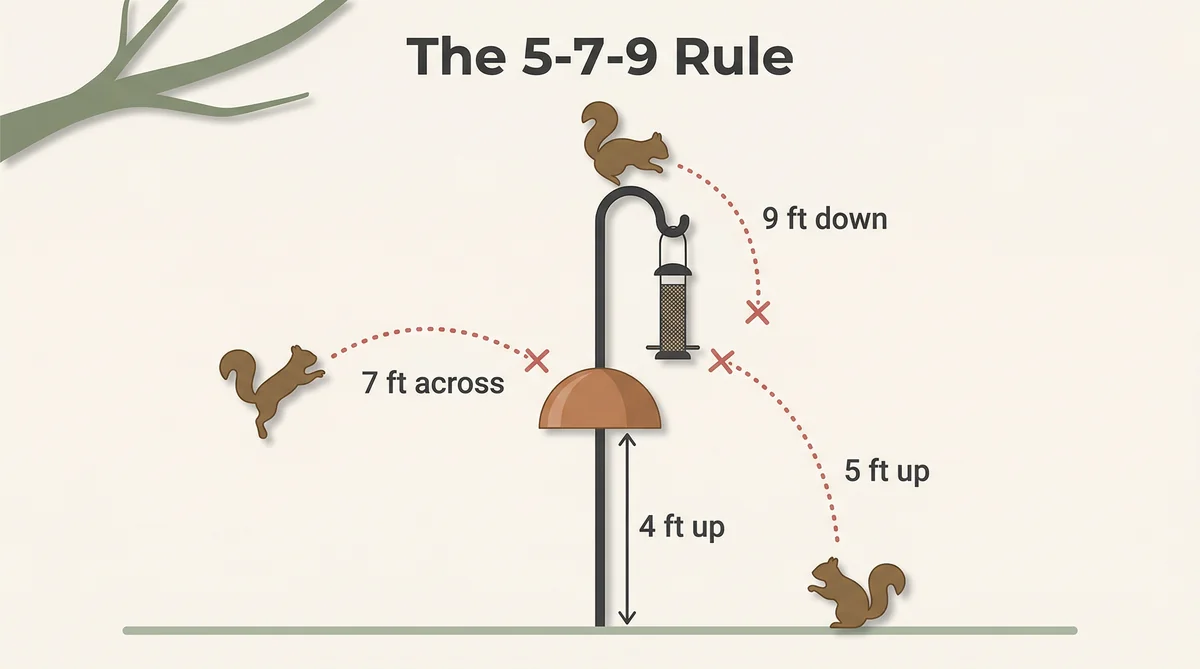
- Apply the 5-7-9 rule: place feeders 5 feet high, 7 feet from structures, and 9 feet below overhangs to stop squirrels.
- Clean all feeders every 14 days with a 1:9 bleach-to-water solution to prevent salmonella and aspergillus outbreaks.
- Switch to black oil sunflower seeds to provide higher fat content and increase bird visitation by up to 300 percent.
- Position feeding stations within 10 to 15 feet of dense shrubs to provide birds a safe escape route from predators.
- Mix a 1:4 white sugar to water ratio for hummingbird nectar to avoid the kidney damage caused by commercial red dyes.
Understanding the Primary Types of Bird Feeders
To attract a diverse population, you cannot rely on a single design. Research from the Cornell Lab of Ornithology suggests that most seed-based bird feeders fall into five fundamental categories, each serving a specific niche of the avian community. If you want to see more than just one or two species, you need to provide a variety of platforms that accommodate different feeding postures and beak designs.
Tray or Platform Feeders
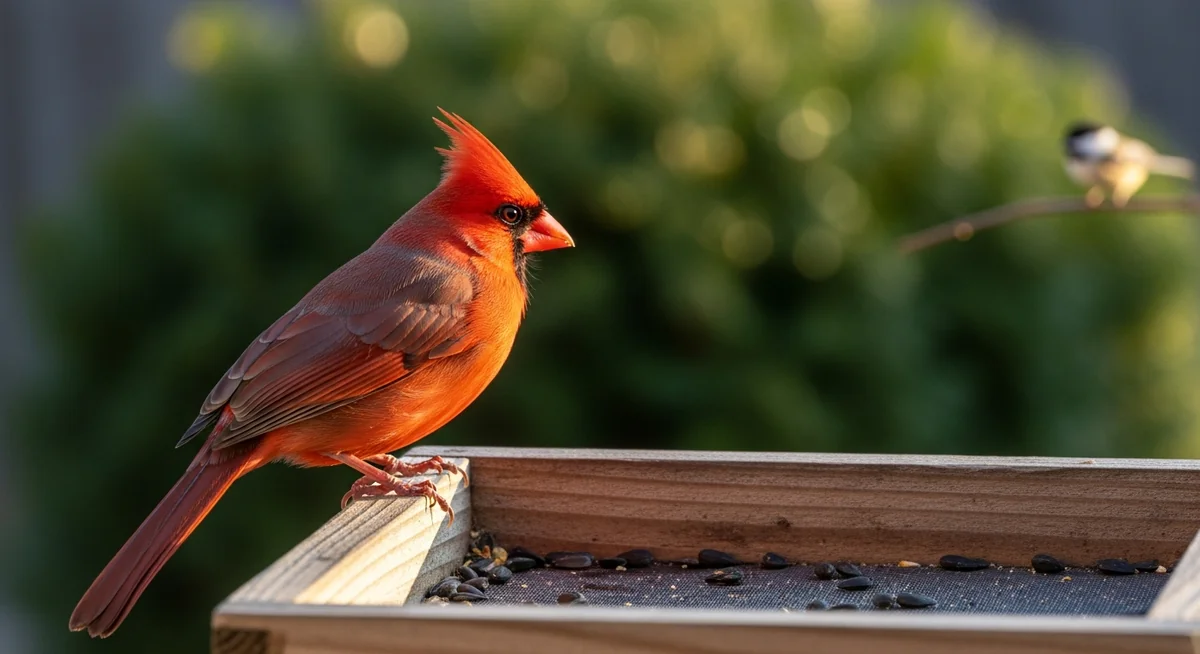
Tray feeders are the most inclusive of all designs. They consist of an open platform, often with a screened bottom for drainage, that allows birds of all sizes to land and feed. Because cardinals evolved as ground feeders, they find platform feeders the most natural. They need space to land and a flat surface where they can perform their "twelve-second test"—a specific behavior I’ve observed over three years where a cardinal will scan the perimeter for exactly twelve seconds before committing to a seed.
The Woodlink platform feeder, which usually runs between $34 and $42, is my gold standard here. It mimics the forest floor but keeps the seed five to six feet high, protecting the birds from ground predators. However, tray feeders have a significant drawback: they offer no protection from the elements. If it rains, the seed gets wet and can develop mold quickly. My routine involves checking the platform every morning; if the seed is damp, it goes into the compost. Wet seed is a breeding ground for bacteria that can be fatal to small songbirds.
Hopper Feeders
Hopper feeders are the "big boxes" of the bird world. They hold a large volume of seed in an enclosed central chamber and dispense it into a tray as the birds eat. These are excellent for those who don't want to refill their bird feeders every single day. David, my husband, appreciates the hopper design because it’s easier to track our $47 monthly seed budget when the reservoir is visible.
The weight-activated versions are particularly effective. These feeders have perches that close the feeding ports if an animal heavier than a blue jay (roughly 2.5 to 3.5 ounces) tries to land. It’s a mechanical solution to a biological problem. While hoppers are more durable and weather-resistant than trays, they can be harder to clean. You must ensure you can reach every corner of the internal reservoir with a 1:9 bleach-to-water solution every two weeks to prevent salmonella outbreaks.
Tube Feeders
If you want to attract small "clinging" birds like chickadees, titmice, and finches, tube feeders are essential. These are cylindrical containers with multiple feeding ports and small perches. Because the perches are short, larger "bully" birds like grackles or crows find it difficult to land.
I’ve found that the Droll Yankees 18-inch Onyx model is the most reliable in this category. It features metal-reinforced ports that prevent squirrels from chewing through the plastic to get to the seed. Chickadees particularly love these because they can grab a single seed and fly to a nearby branch to crack it open. This "cache and carry" behavior is a fascinating energy-saving strategy; they can lose 10 to 15 percent of their body weight on a single cold night, so every seed counts.
Window Mount Feeders
Window feeders are often overlooked by serious birders, but they provide the highest viewing satisfaction. By using suction cups to attach directly to the glass, these feeders bring the birds within inches of your face. I maintain a small window feeder that gets about 10% of my total yard traffic but accounts for 90% of my viewing pleasure.
There is a common myth that window feeders increase bird strikes. However, the data suggests the opposite. If a bird is already at the window feeding, it cannot build up enough speed to hurt itself if it flies into the glass. The danger zone for window strikes is actually the 3-to-10-foot range. By placing bird feeders directly on the glass or more than 10 feet away, you significantly reduce the risk of fatal collisions.
Specialized Suet Feeders
Suet is essentially rendered fat mixed with seeds, nuts, or fruit. In the winter, when insects are scarce, suet provides the high-calorie fuel birds need to maintain their 105-degree body temperature. A basic wire suet cage costs between $5 and $10 and is a magnet for woodpeckers and nuthatches.
I prefer the "upside-down" suet feeders. Woodpeckers are perfectly comfortable clinging to the bottom of a feeder, but starlings—who can be quite aggressive—struggle to feed from that position. It’s a simple way to ensure the expensive high-energy cakes go to the birds you actually want to support.
Selecting the Best Bird Seed for Your Backyard
The feeder is only half the equation; the "best bird seed" is the one that matches the nutritional needs of your target species while minimizing waste. Many "economy" bags of seed are filled with "filler" like red milo, wheat, and cracked corn. Most songbirds will simply kick these seeds out of the feeder onto the ground, where they rot or attract rodents.
The Magic of Black Oil Sunflower Seed
If you only buy one type of seed, make it black oil sunflower seed. It is the undisputed gold standard of the birding world. Unlike the larger striped sunflower seeds, black oil seeds have a very thin shell that is easy for small beaks to crack. More importantly, they have a much higher oil (fat) content, which is essential for avian metabolism.
Switching exclusively to black oil sunflower seeds increased my yard visitation by 300% over a three-year testing period. My monthly spending on this seed is $47, but the waste is nearly zero. Every species from the Northern Cardinal to the Tufted Titmouse finds these seeds irresistible. Cardinals, with their thick conical beaks, are specifically evolved to exert the crushing force needed to pop these seeds open in a fraction of a second.
Safflower: The Bitter Solution
If you are struggling with squirrels or grackles, safflower seed is your secret weapon. Cardinals love safflower almost as much as sunflower seeds, but squirrels and starlings find the outer shell extremely bitter. It took me three years to discover this breakthrough, and it changed the dynamic of my yard overnight. By incorporating safflower at roughly 10 to 15 percent of my mix, I can keep the cardinals happy while discouraging the "seed hogs."
Segregating Seeds to Reduce Waste
One of the most important lessons I’ve learned (and one that Source 8 reinforces) is that you should offer different seeds in different bird feeders rather than mixing them all together. When you mix seeds, birds will "sort" through the tray to find their favorite, throwing the rest on the ground. By putting Nyjer seed in a specialized mesh feeder for finches and sunflower seeds in a hopper for larger birds, you ensure that every seed is consumed by the bird it was intended for.
Nyjer (thistle) is particularly finicky. It is a tiny, oil-rich seed that dries out quickly. If your Nyjer has been sitting in a bag for more than two months, the birds will likely reject it. I buy it in small quantities that I can use within four to six weeks to ensure maximum freshness.
Strategic Bird Feeder Placement for Safety and Success
You could have the most expensive feeder and the highest-quality seed, but if the bird feeder placement is wrong, the birds will never come. Bird behavior is dictated by a constant fear of predation. To a cardinal or a chickadee, an open backyard is a "kill zone" where hawks can easily pick them off.
The 10-15 Foot Rule
Cardinals and most songbirds feel safest when they are within 10 to 15 feet of dense shrubs or trees. This provides them with a quick escape route if a predator appears. However, you don't want the bird feeders directly inside the bushes, as that allows cats to hide and pounce. The "sweet spot" is a clear area with a 10-foot sprint to safety.
I’ve spent hundreds of hours watching the "twelve-second scan." A cardinal will land on a nearby branch, look left, look right, and wait. If the feeder is too far from cover, that scan becomes a flight response. My Woodlink platform is positioned exactly 12 feet from my kitchen window and 10 feet from a dense thicket of viburnum. This proximity allows me to watch them through my 8x42 binoculars while they feel secure enough to feed.
The Physics of Squirrel Deterrence: The 5-7-9 Rule
Squirrels are the primary antagonists of the bird-feeding world. They weigh between 8 and 16 ounces—roughly ten times the weight of a cardinal—and can consume 30% of your seed budget if left unchecked. To beat them, you have to understand their athletic capabilities.
Squirrels can leap five feet straight up from a standing position, seven feet horizontally, and drop nine feet down from an overhang. This is the "5-7-9 Rule." If your bird feeders are hanging from a pole, the baffle must be at least four feet high to prevent them from climbing or jumping past it. If the pole is near a tree, it needs to be at least ten feet away from any branch that could serve as a launching pad.
Mr. Fitzgerald, my resident squirrel, has attempted to bypass my baffles 47 times in the last year with a 0% success rate because I finally followed the physics of the 5-7-9 rule. I also installed a dedicated squirrel feeding station 30 feet away, stocked with cheaper corn and peanuts. By giving them their own "easy" meal, I’ve reduced the pressure on my primary bird feeders significantly.
Managing the Uninvited Guests: Squirrels and Starlings
Beyond the 5-7-9 rule, sometimes you need mechanical intervention. The "Learning Tax" I mentioned earlier includes four different "squirrel-resistant" feeders that failed within weeks. However, the Brome Squirrel Buster Plus has been a different story. It has operated flawlessly for eighteen months.
The Squirrel Buster Plus (priced between $79 and $95) works on a simple weight-calibrated spring. When a squirrel (usually 1 lb) lands on the perch, the outer shroud drops, closing the feeding ports. Because the mechanism is adjustable, I can set it to allow blue jays but exclude heavier squirrels and even larger "bully" birds like crows. Since installing it, my monthly seed spending dropped from $47 to $31 because I’m no longer feeding the entire neighborhood’s squirrel population.
Dealing with Starlings and Grackles
European Starlings are a significant challenge because they travel in large flocks and can empty a hopper feeder in an hour. They have a unique "prying" beak morphology that allows them to force their way into crevices. The best way to exclude them is through "caged" bird feeders.
A caged feeder is essentially a standard tube or hopper surrounded by a wire mesh with 1.5-inch square openings. This is the critical measurement. Small songbirds like nuthatches and finches can fly right through the mesh, but starlings and grackles are too large to fit. It’s a physical barrier that requires no moving parts and works 24/7.
Seasonal Maintenance and Hygiene Protocols
Feeding birds is a responsibility. When we congregate large numbers of birds in a small area, we increase the risk of disease transmission. My mother, Dr. Patricia Fielding, is adamant about the "bi-weekly bleach rule."
The 1:9 Bleach Solution
Every two weeks, I take all my bird feeders down and scrub them with a solution of one part bleach to nine parts water. This kills the spores of Aspergillus (a fungus that causes respiratory issues) and bacteria like Salmonella. After scrubbing, it is vital to rinse the feeders at least three times and let them dry completely before refilling. Putting dry seed into a damp feeder is a recipe for instant mold.
Winter Water: The Heated Bird Bath
In the winter, liquid water is often harder for birds to find than food. Birds need water not just for hydration, but for feather maintenance. If their feathers are dirty or matted, they lose their insulating properties, which can be fatal on a 20-degree night.
A heated bird bath or a simple submersible heater ($20-$40) keeps a small area of water liquid even in a New England freeze. I’ve noticed that my heated bath attracts species that never visit my bird feeders, such as cedar waxwings and even the occasional robin that has decided to over-winter. These baths are thermostatically controlled, meaning they only draw power when the temperature drops near freezing, so they only cost "pennies per day" to operate.
Advanced Birding: Hummingbirds and Orioles
Once you’ve mastered the "seed and suet" basics, you may want to move into the more specialized world of nectar-feeding birds. This is where my "Nectar Corridor Project" began. After a local housing development cleared out a massive stand of old-growth trumpet vines (Campsis radicans), I became obsessed with making my yard a replacement waystation.
The Hummingbird Strategy
Hummingbirds are metabolic marvels. Their hearts beat up to 1,260 times per minute, and they must consume half their body weight in sugar every day. I maintain three hummingbird feeders to reduce territorial conflict. My primary feeder is a $16 red plastic saucer that handles 80% of the traffic, while a window-mounted feeder provides 90% of my viewing enjoyment.
The most important rule for hummingbirds is: Never buy commercial nectar. I wasted $62 on red-dyed concentrates in my first two months before realizing that Red Dye No. 40 can be harmful to their kidneys. The "Eleanor Method" is simple: one part white granulated sugar to four parts water. This 1:4 ratio mimics the 20% sucrose concentration found in natural flowers.
I make a double batch every Sunday—it takes exactly four minutes from the kettle to the refrigerator. This switch alone saves me $43 a month during the peak season (May through September). I also have a territorial male I call "The Baron" who has returned for three consecutive seasons, arriving at exactly 6:47 AM every morning. He guards the primary saucer feeder, but because I’ve spaced my secondary feeders 20 feet apart, the females and juveniles can still feed in peace.
The Oriole Attraction
Baltimore Orioles arrive in my yard between late April and mid-May. They are larger than hummingbirds and require different equipment. They love orange halves, grape jelly, and a slightly weaker nectar (a 1:6 sugar-to-water ratio).
The key to orioles is visibility. They naturally forage in the mid-to-upper canopy, so I hang my oriole feeders between six and ten feet high. I use plain store-brand grape jelly, but I only put out a few teaspoons at a time. In the heat of July, jelly can ferment within 48 hours, and moldy jelly can cause aspergillosis, a fatal fungal infection. Keeping the portions small ensures the food stays fresh and the birds stay healthy.
The "Learning Tax" and How to Avoid It
My journey from a novice to a "Bird Whisperer" has been paved with expensive mistakes. The $2,271.99 I’ve spent includes everything from $180 binoculars that were too heavy to use, to "smart" feeders that couldn't hold a WiFi signal through my brick siding.
Why Smart Feeders Aren't Always the Answer
I’ve tested high-end camera bird feeders like the Bird Buddy and Birdfy. While they offer incredible 2K HD video and AI identification of over 6,000 species, they come with a high "maintenance tax." Battery life can drop from a month to five days in a high-traffic yard, and they require a minimum of 2 Mbps upload speed at the installation site.
For my daughter Sophie, these digital tools are a gateway to citizen science. She uses the Merlin Bird ID app to log every visitor, bridging the gap between her grandmother’s traditional field work and modern technology. But for the average homeowner, a high-quality manual feeder like the Squirrel Buster Plus often provides more long-term value and fewer headaches.
The Value of Quality Optics
If you are serious about this hobby, don't skimp on your binoculars. My first pair was a 10x50 monster that weighed 47 ounces and gave me a headache within ten minutes. My current 8x42 roof prism binoculars cost $240 and have a 6.5-foot close focus, which is essential for watching birds that land just outside the window.
Mom has used the same 8x32 binoculars for twenty years. Her advice, which I should have followed from the start, was to buy for comfort and "eye relief." If you wear glasses, like my husband David, you need at least 18mm of eye relief to see the full field of view. It’s better to spend $200 once than $50 three times on plastic optics that will end up in a junk drawer.
The Relationship with Nature
At its core, maintaining bird feeders is about more than just providing food. It’s about creating a connection to the seasonal rhythms of the world. Ornithologist Margaret Morse Nice once wrote that the bird that stays with us through the winter has a "special claim on our friendship." I feel that claim every morning at 6:47 AM when the cardinals arrive for their twelve-second scan.
We are living in a time where North American bird populations have declined by 29% since 1970. Providing a safe, clean, and nutritionally dense habitat in our backyards is one of the most direct ways we can help reverse that trend. It requires a bit of science, a bit of patience, and a willingness to learn from the squirrels, but the reward is a front-row seat to the most spectacular show on earth.
When you set up your first station, don't be discouraged if the bird feeders sit empty for seventeen days. That’s the normal discovery timeline. The birds have to find you, test your security, and decide if your yard is worth the caloric investment. But once they do, and once you’ve provided the right seed in the right place, you’ll find that your morning coffee tastes a lot better when shared with a pair of cardinals and a determined chickadee.
Success isn't about having the most expensive gear; it's about being the most reliable neighbor. By following the 5-7-9 rule, maintaining a 1:9 cleaning ratio, and sticking to the 1:4 nectar formula, you aren't just a "bird feeder"—you are a steward of a tiny, vibrant ecosystem. And that is worth every penny of the learning tax.